For anyone who wears eyeglasses 8+ hours a day—from office professionals to students, designers to frequent travelers—comfort is no longer a bonus feature. It is the baseline expectation that determines whether a frame becomes a daily essential or ends up forgotten in a drawer. Poorly designed eyewear leads to nasal pressure points, temple headaches, slippage, and visual fatigue, eroding both user satisfaction and brand loyalty.
Building truly wearable all-day eyeglasses is not about guessing what “feels light.” It is a systematic engineering practice that combines material science, ergonomics, facial anthropometry, and precision craftsmanship. Below we break down the core design principles that separate premium comfortable frames from average ones, with actionable insights for independent brands and designer labels.
1. Weight Optimization: The Foundation of All-Day Comfort
The human nose and ear are highly sensitive to sustained pressure. Even a few extra grams become noticeable after hours of wear, causing red marks, soreness, and subconscious adjustment habits. Weight optimization is the first and most impactful step toward all-day comfort.
Front-to-back weight balance
A common design mistake is concentrating most of the weight on the front of the frame (lenses + rim). This creates a forward tipping force that presses hard into the nose and requires tighter temple clamping to stay in place. The solution is balanced weight distribution:
Shift structural weight toward the temple ends to counterbalance front-heavy lenses
Use lighter materials for the front rim and slightly denser, more stable materials for temple tips
For high-prescription lenses, pair smaller eye sizes with thinner high-index lenses to reduce front mass
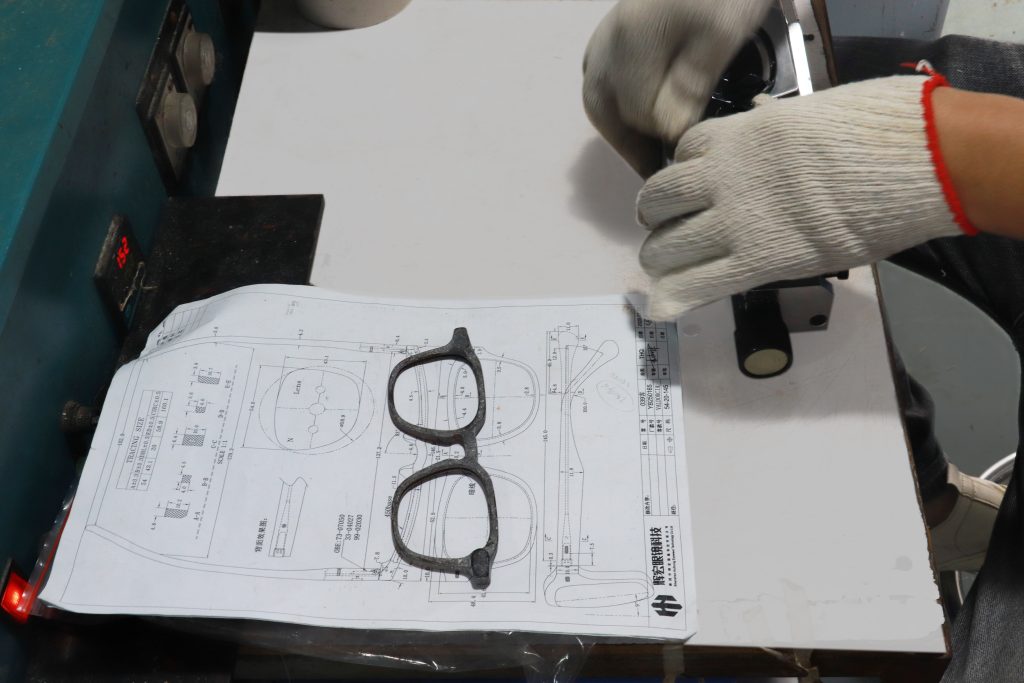
Structural lightweighting without losing strength
Premium manufacturers use several techniques to cut weight while retaining durability:
Thin-wall technology for acetate frames: precision-machined inner rims reduced to 0.8–1.2 mm thickness at non-stress areas
Hollow temple construction for metal and titanium frames
Topology-optimized hinge and endpiece designs that remove unnecessary material
As a reference: pure titanium has a density of only 4.5 g/cm³ — roughly 48% lighter than conventional copper alloys — making it one of the best materials for ultralight all-day frames. Well-executed titanium full-rim frames can weigh less than 10 grams complete, approaching “forget-you-are-wearing-them” levels.
2. Ergonomic Frame Geometry: Fit That Disappears on the Face
Lightweight alone does not guarantee comfort. If the frame geometry does not match human facial anatomy, even the lightest frame will cause fatigue. Three optical-ergonomic parameters are non-negotiable.
Pantoscopic tilt
Pantoscopic tilt is the angle between the lens plane and the vertical axis. For East Asian facial profiles, the optimal range is 8°–10°; for deeper European eye sockets, 12°–15° is standard.
An incorrect tilt does more than feel awkward — it shifts the optical center away from the pupil, introduces unintended prism effect and astigmatism, and forces the eyes to constantly re-focus, leading to digital eye strain during long screen hours. It also causes the bottom rim to rub against the cheek or the top rim to sit too far from the face.
Vertex distance
Vertex distance (VD) measures the gap between the back surface of the lens and the corneal apex. The industry standard baseline is 12 mm, with a comfortable tolerance of 10–14 mm.
Too close: eyelashes brush the lens back, smudging optics and causing irritation
Too far: alters effective lens power, especially for high prescriptions, and distorts peripheral vision
Vertex distance is primarily controlled by nose pad height and angle. For brands targeting multiple regional markets, adjustable nose pad systems are critical to standardizing optical performance across different nose bridges.
Face form (wrap angle)
Face form describes the horizontal curvature of the front frame. Most daily-wear optical frames work best with a nearly flat front (170°–180°) to avoid vertical prism distortion. Excessive wrap, while popular in sunglasses, can cause peripheral image warping and discomfort during prolonged near-vision tasks like reading and computer work.
3. Nose Pad System: Pressure Distribution Without Slippage
The nose bears roughly 60–70% of a frame’s weight, making the nose pad system the most critical contact point for all-day comfort. A great nose pad design does three things at once: spreads pressure evenly, stays in place when sweating, and accommodates different nose shapes.
Contact area over point pressure
Small, hard nose pads concentrate weight onto tiny spots, causing pain and red marks within hours. Wider, anatomically shaped pads distribute force across a larger surface area of the nasal bridge, significantly reducing peak pressure.
For acetate frames with integrated nose pads, CNC-machined saddle bridges matched to regional anthropometric data deliver far better comfort than generic one-shape molds. For metal and titanium frames, adjustable silicone nose pads are the gold standard — soft, hypoallergenic, and fine-tunable to individual nose height and width.
Anti-slip performance
Slippage is not just an annoyance; every time a wearer pushes their glasses back up, the optical center shifts, and the eyes must readjust. Over a full workday, this repeated micro-adjustment adds up to measurable visual fatigue.
Solutions include:
Medical-grade silicone pad material with natural friction
Slightly downward-angled pad stems that create a gentle cradling effect
Textured pad surfaces for humid climates and active wearers
4. Temple & Ear Rest Design: Stable Hold Without Tension
Temples (arms) are responsible for the remaining 30–40% of frame support, and their design determines whether a wearer ends the day with temple headaches.
Hugging contour, not squeezing
Traditional straight temples press hard on the temples of the head and rely on the ear bend alone to hold the frame in place. Modern ergonomic design uses a gradual hugging contour that follows the natural curve of the skull, spreading contact pressure along a longer section of the temple instead of pinching at two narrow points.
This “wrap-around support” principle is especially valuable for users with wider head sizes, as it eliminates the “clamp” feeling common in cheap frames.
Temple tip ergonomics
The ear bend area deserves special attention:
Rounded, smooth edges with no sharp corners or exposed mold lines
Soft, skin-friendly tip covers (TPE or silicone) for sensitive skin
Correct bend position aligned with the top of the ear, not pressing into the back of the ear cartilage
For premium metal and titanium frames, β-titanium temples offer ideal flexibility — they hold their shape but yield gently to head movement, maintaining consistent light pressure without tightness.
Hinge feel
A smooth, properly tensioned hinge contributes indirectly to comfort by keeping the frame’s opening angle consistent. Loose hinges cause the temples to splay outward and the frame to slide down the nose. Over-tight hinges create uneven clamping force. Premium eyewear uses precision-machined hinges with controlled torque that remain consistent for thousands of open-close cycles.
5. Material-Specific Comfort Tuning: Acetate, Titanium, and Metal
Different materials have different inherent comfort properties. Optimizing for all-day wear means working with each material’s strengths, not against them.
Acetate frames
Acetate is loved for its rich colors, premium feel, and hypoallergenic properties, but standard thick acetate can feel heavy for all-day use. Comfort-focused acetate design requires:
Precision milling of the inner frame to remove excess material while preserving rim strength
Hand-polished edges and contact surfaces so no sharp edges touch the face
Heat-adjustable nose bridges and temples for personalized fitting
Lightweight laminated acetate or thin-profile sheets for modern minimalist designs

Titanium frames
Titanium is the benchmark for all-day comfort thanks to its ultra-light weight, high strength, corrosion resistance, and natural hypoallergenic properties — it does not cause skin reactions even with prolonged skin contact during sweating.
To maximize comfort:
Use β-titanium for temples to take advantage of its spring-like flexibility
Keep wire rims thin but rigid through precision forming
Pair with silicone nose pads and TPE temple tips for soft contact points
Avoid unnecessary decorative parts that add dead weight
Metal frames
High-quality metal frames (stainless steel, monel, high-nickel alloys) offer great adjustability and structural stability, but they require careful comfort engineering:
Use vacuum-ion plating for a smooth, long-lasting surface that resists skin irritation
Add soft sleeve covers on temple ends to isolate metal from skin
Engineer spring hinges for adaptive clamping force
Control overall weight by thinning non-structural sections
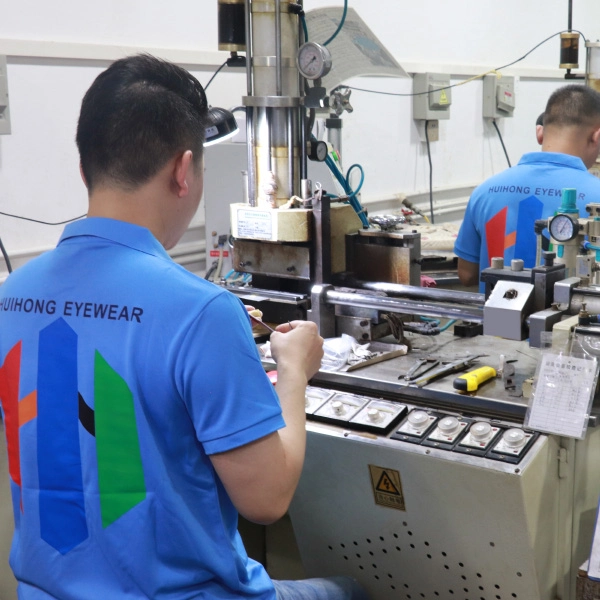
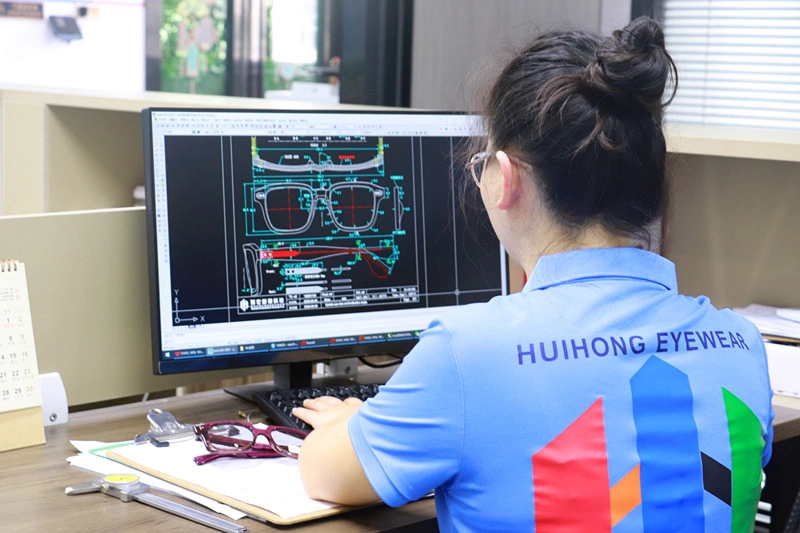
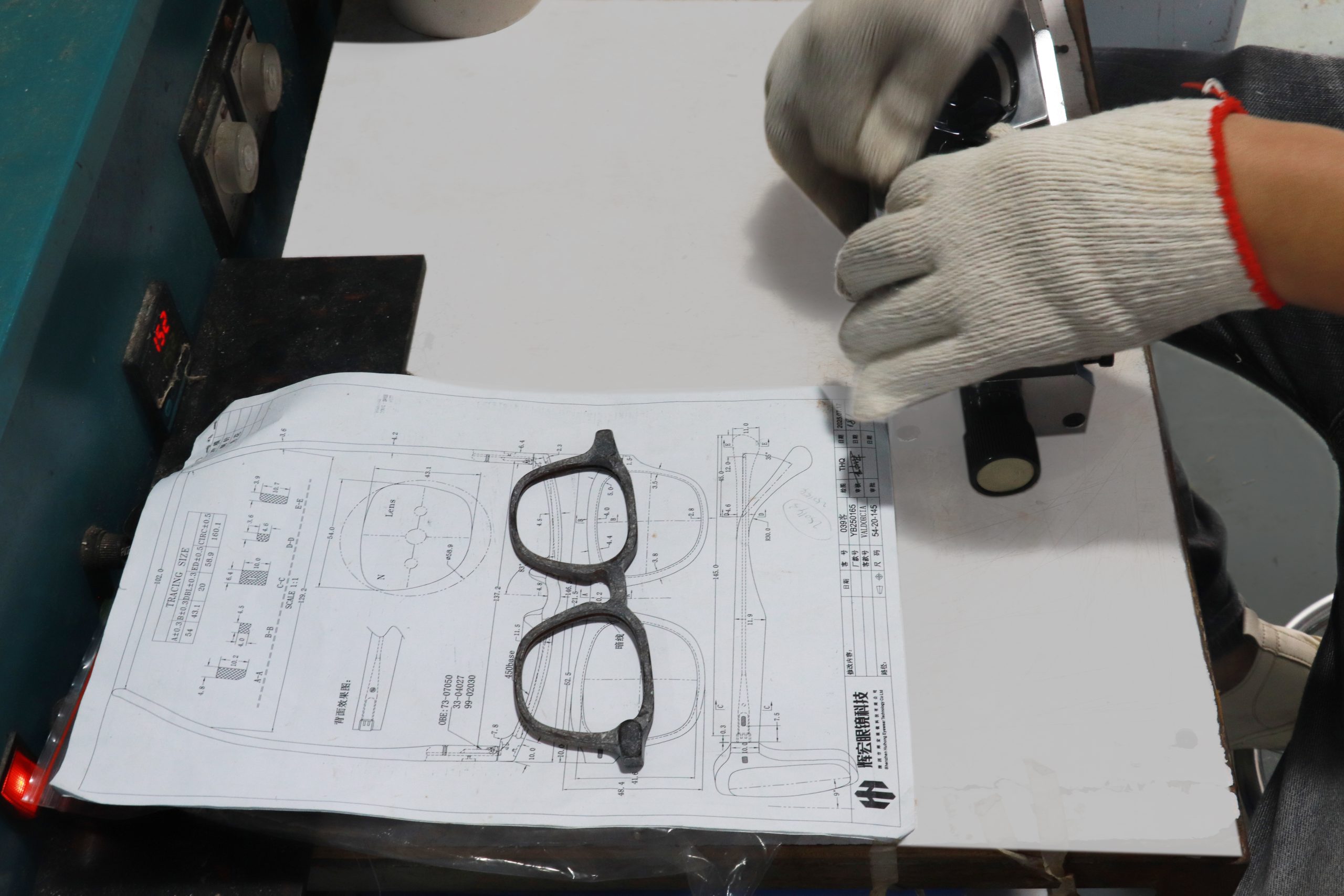
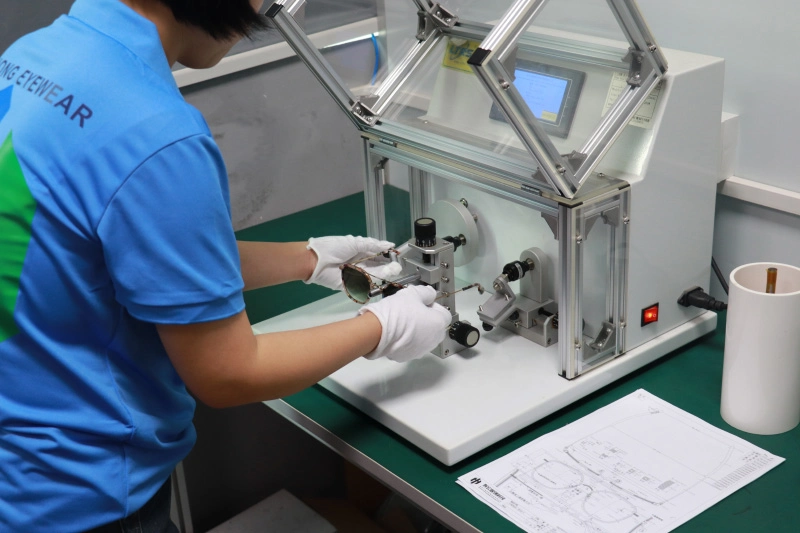
At Shenzhen Huihong Eyewear Technology Co., Ltd., we specialize in all three material families — acetate, titanium, and metal — and tailor every construction detail to all-day wear performance. Our engineering team evaluates weight distribution, pressure points, and ergonomic fit at the prototyping stage, so your designs deliver consistent comfort from the very first production run.
6. Low-Volume Customization: Tailored Comfort for Niche Audiences
Mass-produced frames are designed around average head measurements, which means they never fit anyone perfectly. For premium brands, designer labels, and niche markets, customized fit is the biggest competitive advantage in comfort.
Regional fit tuning: separate base molds for Asian, European, and North American facial profiles — different nose bridge heights, temple lengths, and pantoscopic tilts
Size grading: multiple sizes per style instead of one-size-fits-all
Material customization: swapping nose pad materials, temple tips, or hinge types for specific customer groups (e.g., hypoallergenic options for sensitive skin)
Small-batch iteration: testing fit improvements on 50–200 piece runs before full launch
This level of flexibility is exactly where low-volume, high-quality manufacturing adds the most value. Brands no longer need to commit to huge MOQs to refine fit and comfort.
Partner With Huihong Eyewear to Build Your Premium Comfort-First Eyewear Line
Shenzhen Huihong Eyewear Technology Co., Ltd. is a specialized manufacturer dedicated to the design, development, and OEM/ODM production of high-end eyewear. Since our founding, we have collaborated with independent brands, designer labels, and premium retailers worldwide — bringing unique eyewear visions to life through exceptional craftsmanship and reliable service.
We support our partners at every step, from initial concept prototyping to bulk delivery, with flexibility, speed, and precision. Our deep expertise in acetate, titanium, and metal frames, combined with strong low-volume custom production capabilities, helps brands launch comfortable, durable, premium-quality eyewear without compromise.
Our clients span Japan, Korea, Europe, and North America, many of whom return to us not just for quality, but for trust and shared value. If you are building an all-day wear eyewear collection and want a manufacturing partner that treats comfort as an engineering discipline — not a marketing buzzword — we are ready to help.