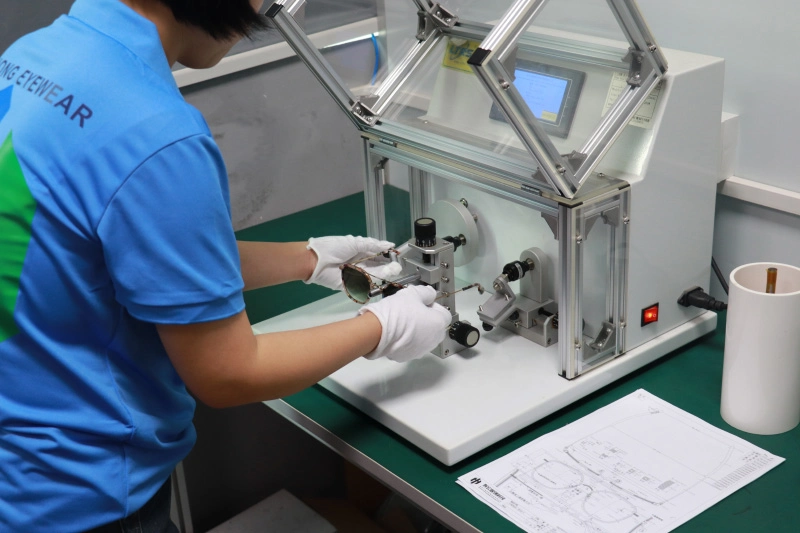
In today’s global eyewear market, where consumer expectations for design uniqueness, material quality, and delivery speed continue to rise, selecting the right manufacturing partner is no longer a tactical purchase decision—it is a strategic investment in your brand’s reputation and long-term growth. For independent brands, designer labels, and premium retailers worldwide, sourcing eyewear involves balancing three critical pillars: uncompromising quality standards, flexible custom production capabilities, and proactive supply chain risk mitigation.
This guide breaks down the core principles of strategic eyewear procurement, providing actionable frameworks, evaluation checklists, and industry best practices to help you identify, vet, and build enduring partnerships with reliable OEM/ODM manufacturers.
1. Quality Assurance: The Non-Negotiable Foundation of Eyewear Sourcing
Quality is the single most important factor that defines customer satisfaction, return rates, and brand equity in the eyewear industry. A single batch of substandard frames can erode years of brand trust. Strategic sourcing begins with a structured quality assurance framework that extends far beyond final inspection.
1.1 Material Verification: Start at the Source
Eyewear quality is built on raw material integrity. When evaluating suppliers, confirm full traceability for core frame materials:
Acetate: Premium cellulose acetate should come from reputable suppliers (typically Italian or Japanese origins), with consistent color depth, surface smoothness, and resistance to shrinkage and deformation.
Titanium: Pure titanium or beta-titanium alloys must meet material composition standards, offering lightweight strength, corrosion resistance, and hypoallergenic properties.
Stainless steel & metal alloys: Verify thickness uniformity, plating adhesion, and nickel content compliance with international safety standards (EU REACH, FDA).
Reputable manufacturers provide material certificates upon request and maintain incoming quality control (IQC) protocols to test every batch of raw materials before production.
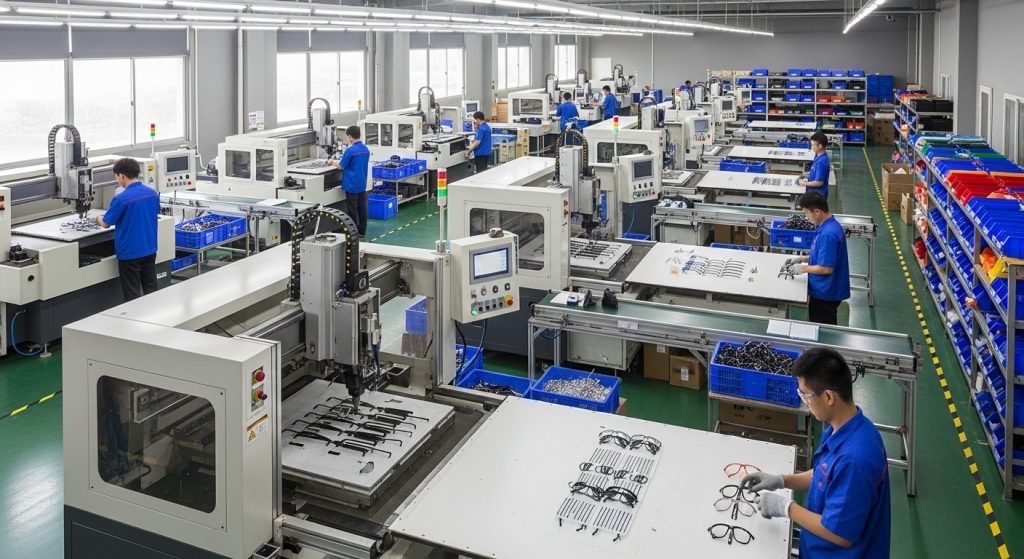
1.2 In-Process Quality Control (IPQC) Checkpoints
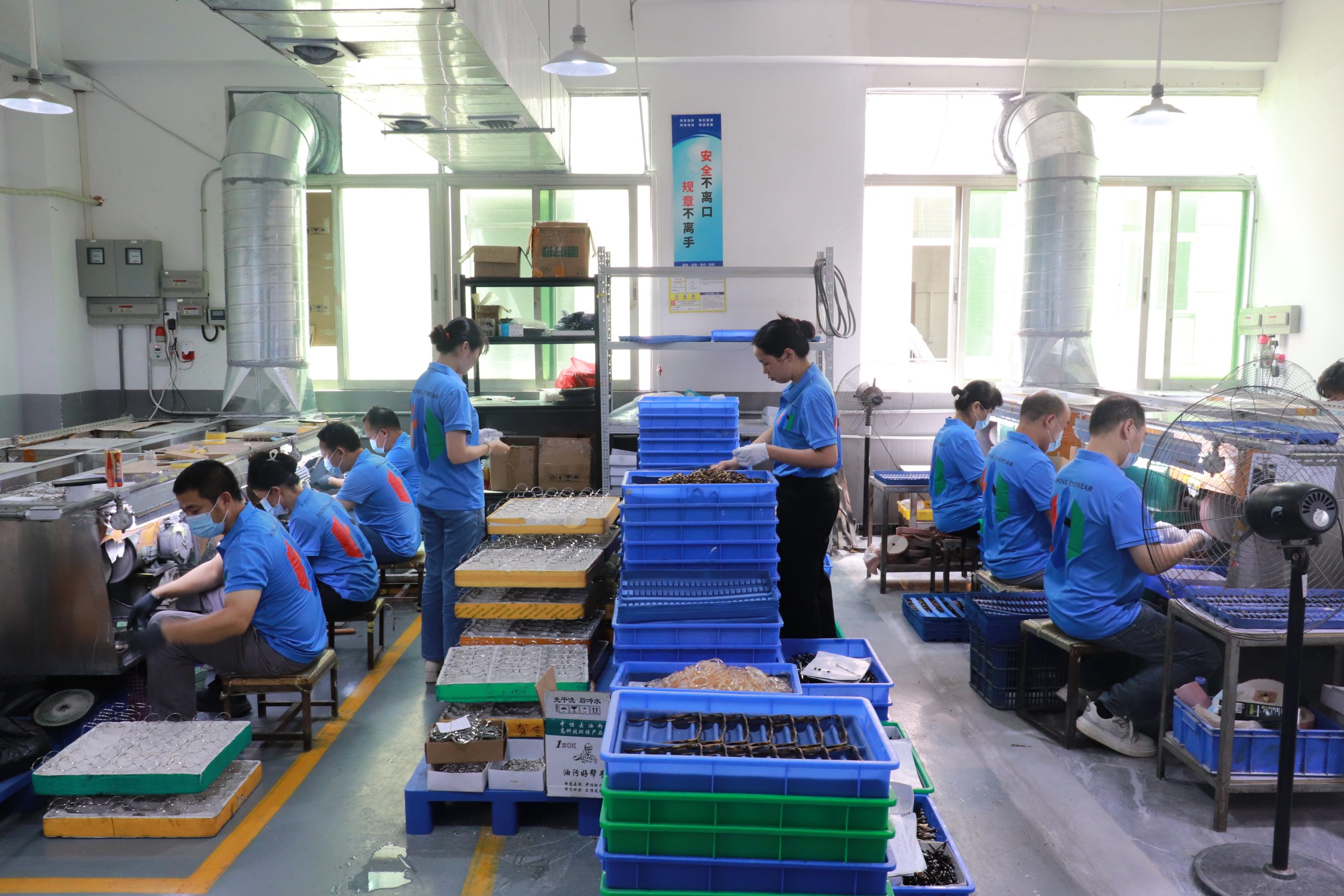
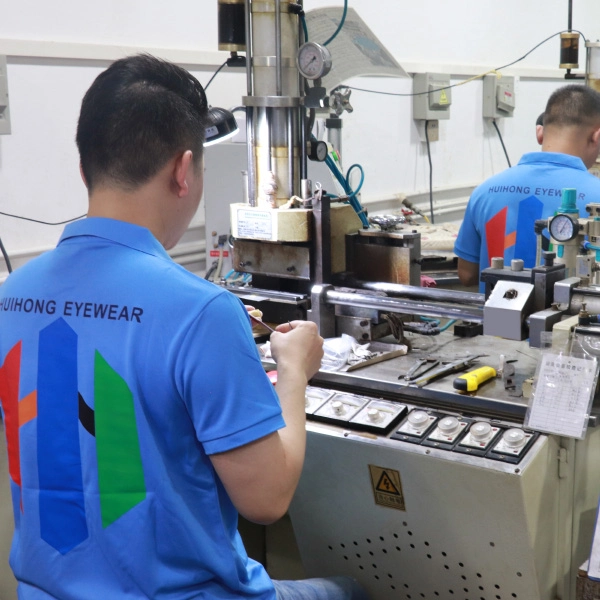
Strong quality systems embed inspection at every production stage rather than relying only on end-of-line checks. Key checkpoints include:
Cutting and shaping precision for acetate frames
Hinge installation alignment and tension testing
Welding integrity for metal and titanium frames
Plating and coating thickness uniformity
Temple flexibility and fatigue testing
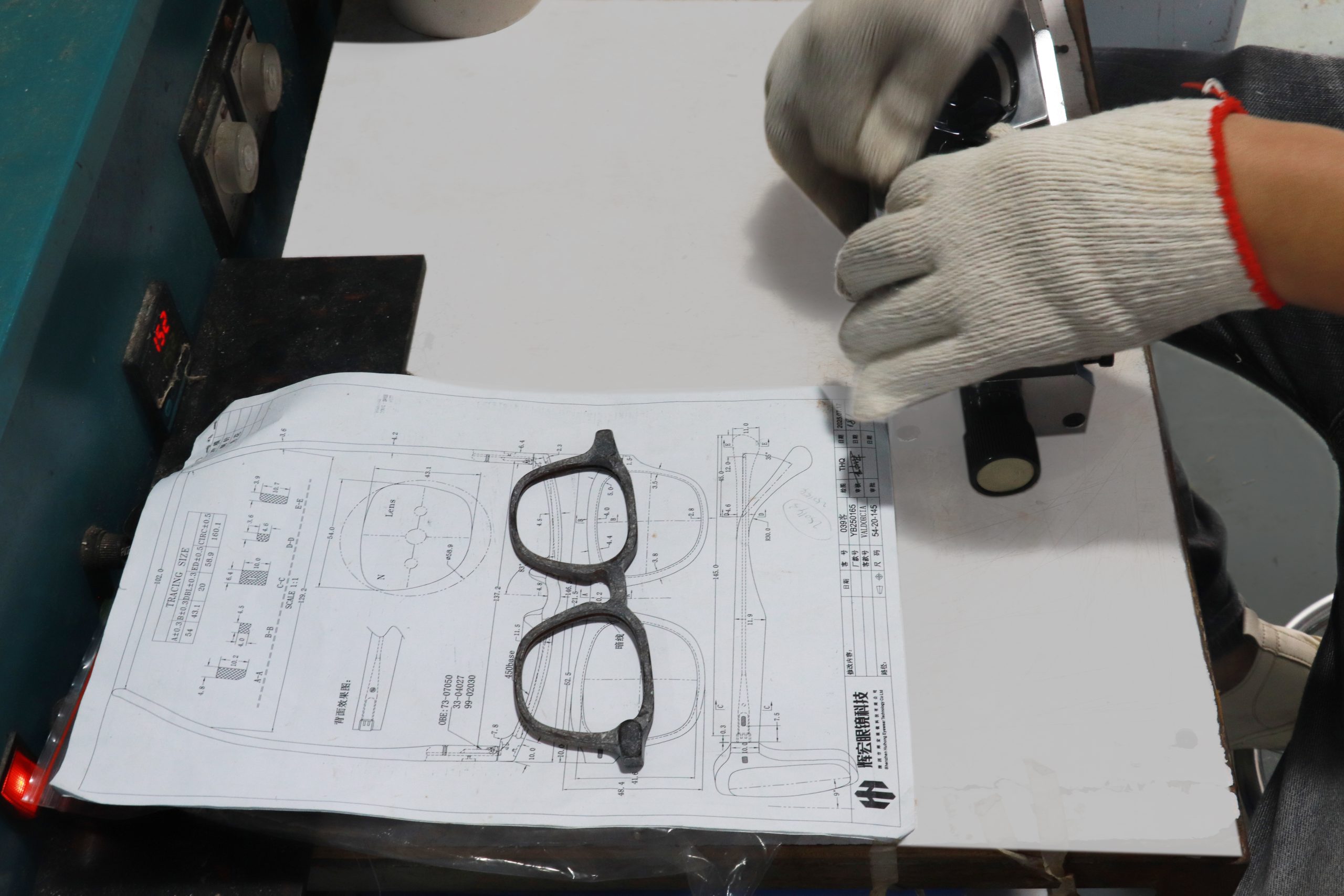
Dimension verification against technical drawings
Look for suppliers that operate standardized production lines with documented SOPs (Standard Operating Procedures) and dedicated QC personnel at each workstation.
1.3 Final Inspection & Compliance Certification
Before shipment, finished frames should undergo 100% visual inspection plus AQL (Acceptable Quality Level) sampling for functional testing. Critical tests include:
Screw torque and hinge durability
Frame dimensional accuracy
Surface finish and color consistency
Lens fitting compatibility
Environmental simulation testing (temperature, humidity)
For global distribution, verify that the manufacturer holds or can support compliance with relevant certifications such as CE, FDA, and ISO 9001 quality management systems.
2. Custom Manufacturing: OEM, ODM & Low-Volume Production Capabilities
The modern eyewear market rewards differentiation. Whether you are launching a designer collection, testing a new product line, or scaling an established brand, your supplier’s customization capabilities directly determine your competitive agility.
2.1 Understanding the OEM vs. ODM Spectrum
Custom eyewear production falls on a spectrum, and the best partners support both models:
OEM (Original Equipment Manufacturing): You provide complete design files, technical specifications, and branding requirements. The manufacturer executes production to your exact standards. This is ideal for brands with established design teams and clear product visions.
ODM (Original Design Manufacturing): The manufacturer provides pre-developed design concepts, material recommendations, and engineering support, which you can adapt and brand as your own. This accelerates time-to-market for brands with limited internal design resources.
Top-tier manufacturers support hybrid approaches—for example, modifying existing ODM frames with custom colors, materials, and branding details to create semi-custom collections efficiently.
2.2 Low-Volume, High-Quality Production Flexibility
One of the biggest pain points for emerging brands and designer labels is rigid minimum order quantities (MOQs). Strategic sourcing partners recognize that many brands need to test markets, produce limited-edition collections, or maintain curated assortments.
When evaluating customization capabilities, ask:
What is the MOQ per style, per color, and per material type?
Can small-batch orders be produced alongside larger runs without quality compromises?
What is the typical lead time for custom prototype development?
How many design revisions are included in the sampling phase?
Suppliers with strong low-volume expertise maintain flexible production scheduling, skilled artisan teams, and efficient material sourcing for smaller runs—enabling brands to launch with lower inventory risk.
2.3 Prototyping & Sampling Best Practices
The sampling stage is your most important validation step before committing to bulk production. A rigorous sampling process should include:
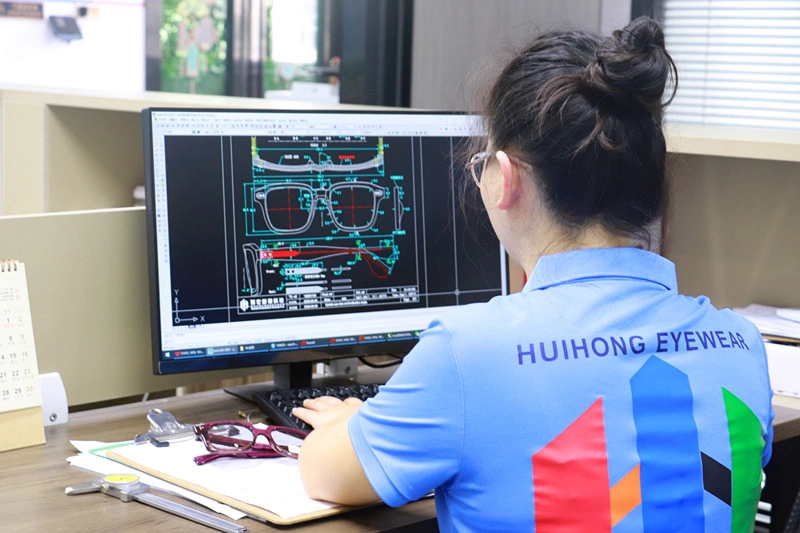
Technical review: Joint review of CAD drawings, material specifications, and tolerances before prototyping begins.
First sample: Physical prototype for fit, aesthetics, and basic functionality evaluation.
Revised sample: Incorporation of feedback and adjustments.
Golden sample: Final approved sample that serves as the reference standard for mass production.
Clear communication during prototyping prevents costly rework later. Suppliers that assign dedicated project managers to guide you through this process deliver smoother outcomes and faster time-to-market.
3. Supply Chain Risk Management: Identify, Assess & Mitigate
Even the most promising supplier relationships carry inherent risks. Strategic procurement means anticipating potential disruptions and building resilience into your supply chain before issues arise.
3.1 Common Risks in Eyewear Manufacturing
Understanding the most frequent risks helps you target your due diligence:
Quality inconsistency: Sample quality does not translate to mass production due to process drift or material substitution.
Delivery delays: Production bottlenecks, raw material shortages, or logistics disruptions cause missed launch windows.
Communication gaps: Time zone differences, language barriers, or unclear requirements lead to costly errors.
Intellectual property concerns: Design leakage or unauthorized production of your branded styles.
Compliance failures: Materials or processes fail regulatory testing for target markets.
Financial instability: Supplier financial distress threatens order fulfillment.
3.2 Supplier Vetting Checklist
Before entering a partnership, conduct systematic due diligence across these dimensions:
Production capability: Factory size, equipment level, monthly capacity, and specialization in your target materials (acetate, titanium, metal).
Track record: Client references, years in operation, and experience serving markets you distribute to (Japan, Korea, Europe, North America).
Quality systems: Internal QC processes, inspection standards, certification status, and defect rate data.
Communication infrastructure: English proficiency, dedicated account management, and response time commitments.
Transparency: Willingness to provide factory audits, production progress updates, and material traceability records.
Whenever possible, conduct on-site factory audits or arrange third-party inspections to verify claims. For initial engagements, remote video walkthroughs and detailed production documentation are reasonable alternatives.
3.3 Risk Mitigation Strategies
Implement these proven strategies to reduce sourcing risk:
Start with pilot orders: Never jump directly into large-scale production. Begin with a small but representative MOQ order to validate quality consistency, communication efficiency, and delivery reliability across the full order lifecycle.
Define clear contractual terms: Formal agreements should specify quality standards, acceptance criteria, delivery schedules, penalty clauses for delays, and IP protection terms.
Establish production milestones: Require progress updates at key stages (material preparation, production start, first-piece inspection, packaging) to catch issues early.
Diversify strategically: For critical product lines, maintain relationships with a primary strategic partner plus a secondary qualified supplier to mitigate single-source risk.
Build collaborative relationships: Suppliers prioritize partners they trust. Transparent forecasting, timely payments, and open communication create mutual accountability and faster problem resolution.
4. Building Long-Term Strategic Partnerships
The most successful eyewear brands treat their manufacturers as extensions of their own team, not just vendors. A true strategic partner contributes engineering expertise, market insights, and proactive problem-solving—adding value beyond production itself.
4.1 What Differentiates a Strategic Supplier from a Commodity Vendor

4.2 Keys to Collaborative Success
Share forecasts: Provide rolling demand forecasts so suppliers can plan materials and capacity, reducing lead times and cost fluctuations.
Involve suppliers early: Engage manufacturing partners during the design phase. Their engineering and material expertise can improve manufacturability, reduce costs, and enhance durability.
Give constructive feedback: Share quality data, customer returns, and market feedback. Good manufacturers use this information to improve processes and materials.
Align on values: Partner with manufacturers that share your commitment to quality, ethical production, and long-term business relationships. Shared values create the trust that underpins resilient supply chains.
Why Huihong Eyewear Is a Trusted Strategic Sourcing Partner
At Shenzhen Huihong Eyewear Technology Co., Ltd., we understand that behind every frame is a brand with a vision—and that great manufacturing partnerships are built on craftsmanship, reliability, and mutual trust.
Since our founding, we have specialized in the design, development, and OEM/ODM production of high-end eyewear, collaborating with independent brands, designer labels, and premium retailers across Japan, Korea, Europe, and North America. Many of our clients return to us not just for consistent quality, but for the confidence and shared value that come from a true long-term partnership.
Our Core Capabilities
Material expertise: We specialize in premium acetate, titanium, and metal frames, with deep engineering knowledge of each material’s properties, processing requirements, and quality benchmarks.
Low-volume, high-quality custom production: We designed our operations specifically to support brands that need flexibility. Whether you are launching a limited designer collection or scaling an established line, we deliver precision craftsmanship at MOQ levels that work for your business.
End-to-end support: From concept prototyping and technical refinement to bulk production and final delivery, we support brands through every step of the journey with flexibility, speed, and meticulous attention to detail.
Global client focus: Our team is experienced in serving international markets, with streamlined communication, clear project management, and a deep understanding of regional quality and compliance requirements.
We believe sourcing eyewear should be more than a transaction—it should be a collaboration that brings your unique vision to life, on time and to the standard your customers expect.
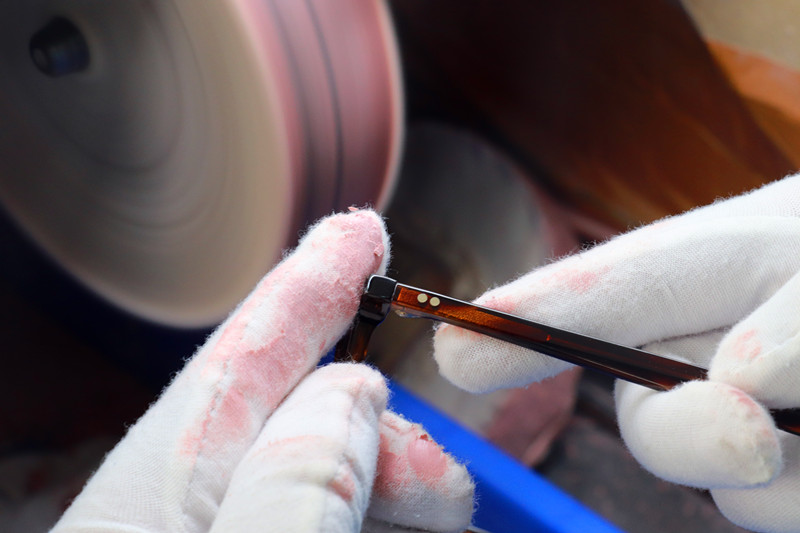
Key Takeaways
Strategic eyewear sourcing is a systematic process that evaluates quality systems, customization flexibility, and risk resilience—not just unit price. By applying the frameworks in this guide, you can move beyond reactive vendor selection to build supply chains that protect your brand, enable growth, and create lasting competitive advantage.
Remember:
Quality must be built in at every stage, from raw material inspection to final testing.
Customization flexibility and low-volume capability are strategic advantages in today’s market.
Risk management begins with thorough vetting and structured pilot engagements.
The best outcomes come from collaborative, long-term partnerships with aligned values.
For brands seeking a reliable eyewear manufacturing partner with proven expertise in premium custom production, transparent quality systems, and a track record of serving global clients, we invite you to explore how Huihong Eyewear can support your next collection.