Introduction: Metal Frames Are Back—And They’re Better Than Ever
After several seasons dominated by oversized acetate shapes, metal eyewear is experiencing a powerful resurgence. Lighter, sharper, and more refined than ever before, today’s metal frames offer a clean, considered counterpoint to the bulkier styles that have filled the optical market in recent years.
For independent brands, designer labels, and premium retailers, this shift represents a significant opportunity. The question is no longer whether to include metal frames in a collection, but how to do so with the right materials, craftsmanship, and manufacturing partner.
This guide explores the key trends, materials, and manufacturing considerations that brand owners need to know when developing a metal eyewear collection—and what to look for in an OEM partner who can bring that vision to life.
2026 Metal Frame Trends: What’s Driving the Market
The Return of Refined Minimalism
The eyewear trends for 2026 can be summed up in three words: elegance, boldness, refinement. In metal frames, this translates to softened geometric shapes that better complement the face, combined with high-end materials like titanium and ultra-light stainless steel. Matte and satin finishes are replacing high-gloss polishes, offering a more luxurious and modern aesthetic. As one industry observer notes, the idea is “a return to basics without losing personality”—glasses that don’t scream but get noticed.
Brands are moving toward lighter constructions and sharper geometry, focusing on frames defined by balance, proportion, and careful finishing. Familiar shapes are being updated with subtle variations: hexagonal lenses introduce a slightly futuristic edge, while slim rectangular silhouettes tap into refined ‘90s minimalism.
Matte Metals and Dual-Tone Finishes
Matte-finish stainless steel and titanium frames are on the rise. Consumers seeking a professional or clean look are choosing brushed gold, graphite, and rose-tone metals over shiny silver or black. Beyond matte finishes, dual-color treatments—such as inner gold paired with outer black—are adding a fresh perspective to bestsellers like gold, rose gold, and black.
Ultra-Thin Constructions
Titanium and stainless steel are widely used for slim, wire-like designs because they combine relatively low weight with notable strength. This allows designers to create frames with sleek profiles that feel nearly invisible on the face while maintaining structural integrity for everyday wear.
Metal Frame Materials: A Technical Deep Dive
Understanding the properties of different metals is essential for any brand developing a eyewear collection. The material you select directly impacts product quality, manufacturing costs, retail positioning, and ultimately customer satisfaction.
Titanium: The Premium Standard
Titanium is particularly esteemed in the eyewear industry for its exceptional strength-to-weight ratio. Weighing approximately 40% less than stainless steel and 50% less than Monel, titanium features the highest strength-to-weight ratio of any eyeglass metal.
Key advantages:
Hypoallergenic and corrosion-resistant – ideal for users with sensitive skin or those exposed to varied climates
Exceptional durability – a typical titanium frame weighs between 8 and 15 grams, roughly half what a comparable steel frame would weigh
Flexibility – beta-titanium alloys incorporate elements like vanadium and aluminum to enhance flexibility and shape retention
As one eyewear designer describes it, titanium represents “a certain kind of quiet confidence. It does not demand attention, yet it performs exceptionally well in everyday life”. Titanium frames often become the ones people forget they are wearing—and perhaps that is the greatest compliment a frame can receive.
Stainless Steel: Precision and Value
Where titanium offers lightness and subtle strength, stainless steel brings a different character—something beautifully precise. Stainless steel allows manufacturers to create clean lines and refined silhouettes with remarkable accuracy.
Key advantages:
Excellent durability and corrosion resistance – though it doesn’t quite match titanium’s long-term resilience
More affordable than titanium – making it ideal for mid-range collections
Available in matte, polished, and glossy finishes
Many modern stainless steel frames are designed to be nickel-free or low-nickel at skin contact points, which can be important for wearers concerned about metal sensitivity.
Material Comparison at a Glance

The Manufacturing Process: From Concept to Finished Frame
Understanding how metal frames are made helps brands appreciate what distinguishes a quality manufacturer from a commodity supplier.
Design and Tooling
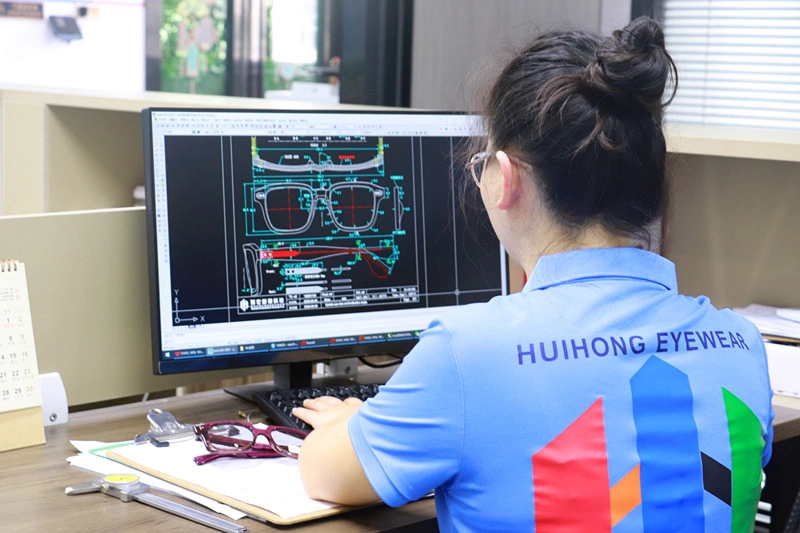
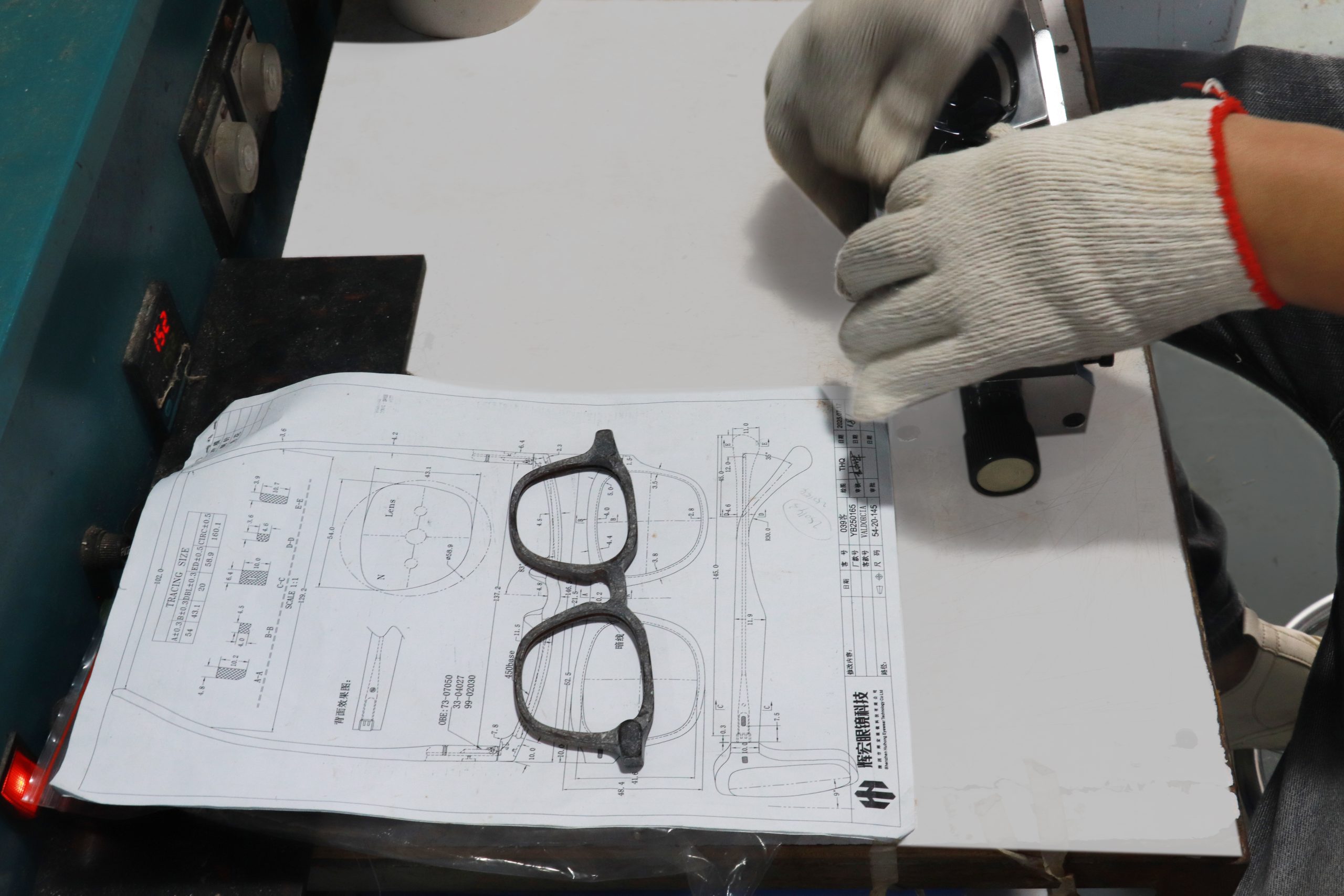
Every frame begins as a sketch or 3D model, with designers mapping out the frame front, temples, nose bridge, hinges, and other components. Precision in this stage is critical—even small errors in component dimensions can affect assembly accuracy.
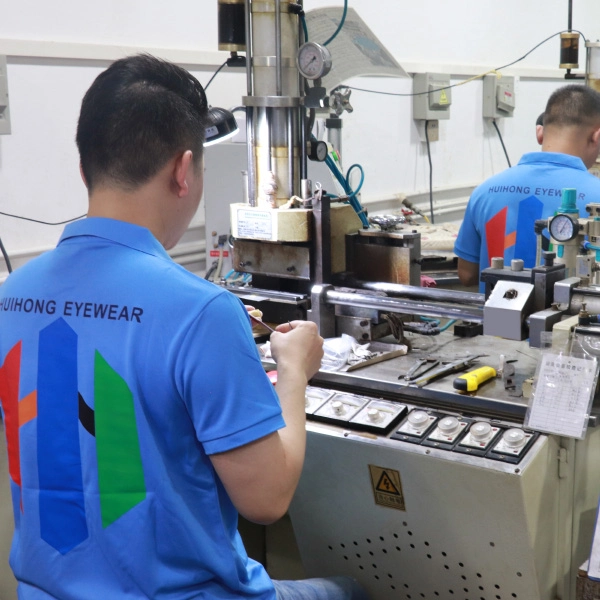
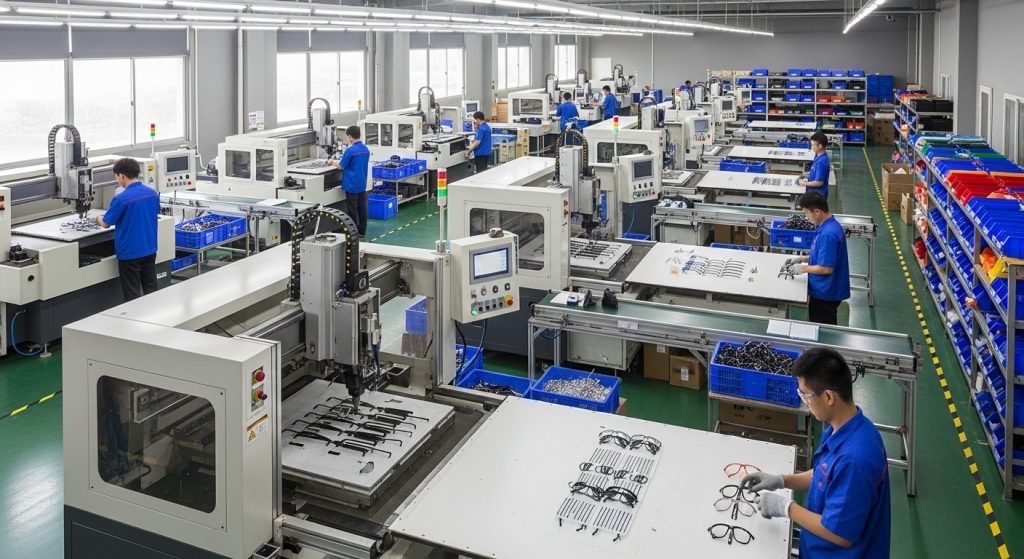
For metal frames, the next step involves creating molds or tooling. Some manufacturers use traditional methods like carving molds from solid metal, with craftsmen making fine adjustments under magnification. Others employ advanced techniques like laser cutting from stainless steel sheets.
Cutting and Shaping
Metal components can be produced through several methods:
Stamping and winding – processes often completed by skilled artisans
Laser cutting – offers ultra-fine precision for complex geometries
Chemical etching – allows for intricate patterns and thin profiles
Welding and Assembly
Metal frame manufacturing involves multiple welding operations to join components like the oculars to the nose bridge. Both laser welding and manual welding are available, with laser welding increasingly preferred for its precision and smooth finish.
Surface Treatment
Surface treatments are applied regardless of the base material. Common finishing processes include:
Electroplating – creates thin, tough structures with metallic finishes
PVD (Physical Vapour Deposition) – a vacuum-chamber process that applies a thin layer of precious metal alloy for superior durability and aesthetics
Quality Control
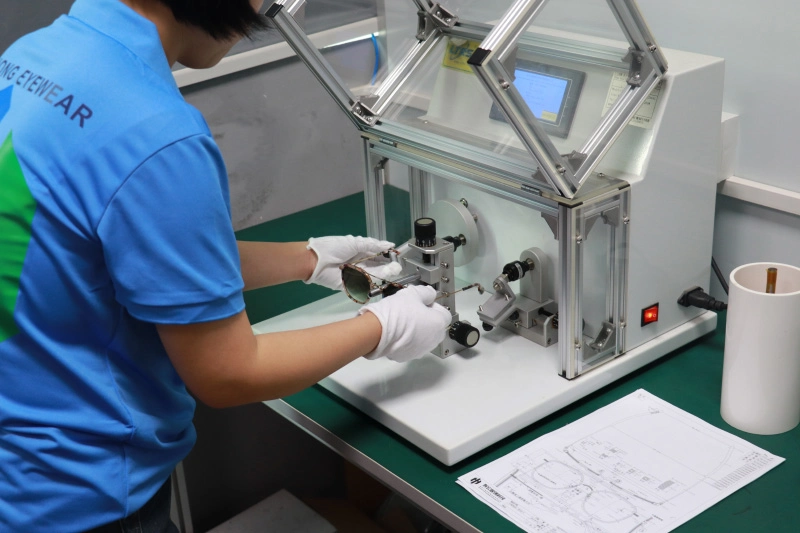
Each frame undergoes rigorous quality inspection before packaging and shipping. This includes testing hinge durability (industry standards often require a minimum of 5,000 open/close cycles), finish consistency, and structural integrity.
Choosing an OEM Partner: What Brands Should Look For
Selecting the right manufacturing partner involves more than just comparing prices—it requires a holistic assessment of operational excellence, quality control, and long-term partnership potential.
1. Material Expertise and Capabilities
Not all manufacturers handle all metals equally. Look for partners with demonstrated expertise in the materials you plan to use—whether titanium, stainless steel, or other alloys. Manufacturers with in-house R&D teams and tooling workshops can support full OEM/ODM services, from custom molds to branded packaging.
2. Quality Management Systems
Prioritize suppliers with recognized quality management certifications such as ISO 9001 (quality management) and ISO 13485 (medical device standards for optical products). These certifications indicate structured processes, traceable documentation, and consistent output. Additional compliance with EU CE marking and U.S. FDA standards is essential for brands targeting international markets.
3. Low-Volume, High-Quality Production
The eyewear market is increasingly fragmented, with independent brands and niche designers requiring flexible production runs. Manufacturers who support low minimum order quantities (MOQs) and fast prototyping are better positioned to serve emerging brands. This is particularly valuable for brands testing new designs or entering new markets without large capital commitments.
4. Customization Flexibility
Verify that the manufacturer supports custom branding, material variations, lens prescriptions, and packaging options. The ability to collaborate on design and material selection, followed by technical development, is a hallmark of a true OEM partner.
5. Global Export Experience
Manufacturers with established export relationships to key markets—Japan, Korea, Europe, and North America—bring valuable insights into regional preferences, regulatory requirements, and quality expectations.
Why Shenzhen Huihong Eyewear Technology Co., Ltd.
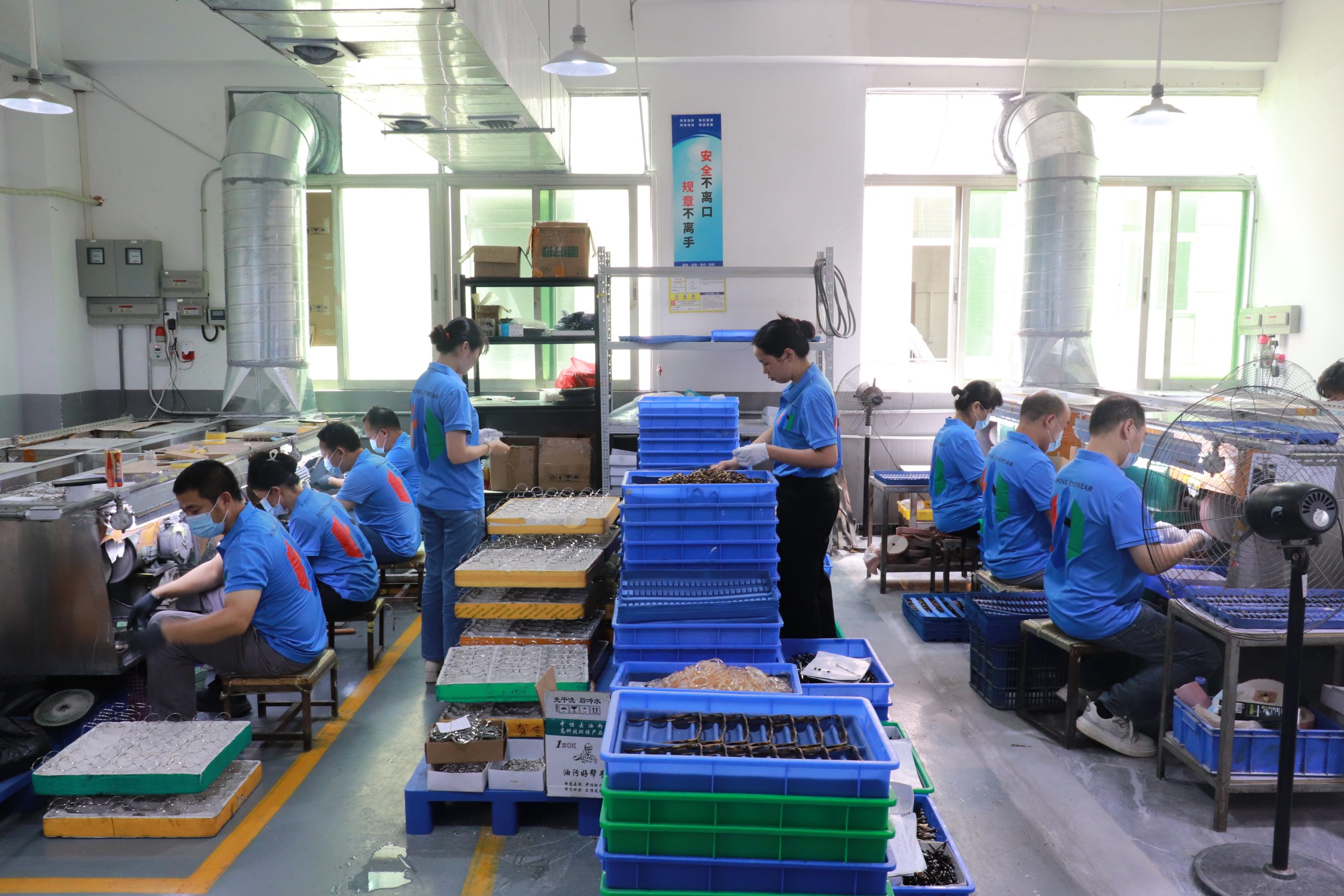
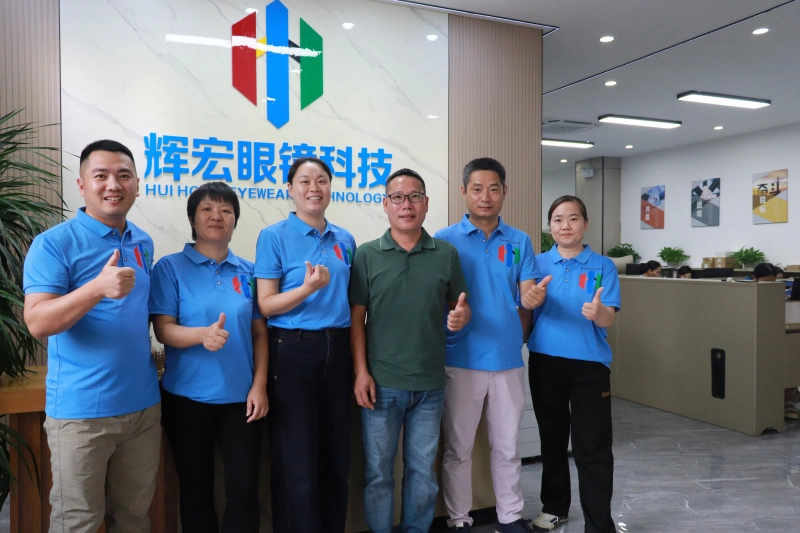
At Shenzhen Huihong Eyewear Technology Co., Ltd., we have built our reputation on exactly these principles. Since our founding, we have collaborated with independent brands, designer labels, and premium retailers worldwide—bringing unique eyewear visions to life through exceptional craftsmanship and reliable service.
Our specialization spans acetate, titanium, and metal frames, with a strong capability in low-volume, high-quality custom production. From concept prototyping to bulk delivery, we support brands through every step of the journey—with flexibility, speed, and precision.
Our clients span Japan, Korea, Europe, and North America, many of whom return to us not just for quality, but for trust and shared value.
What sets us apart:
Deep expertise in titanium and stainless steel frame manufacturing
ISO-certified quality management systems
Low MOQ capabilities for emerging and independent brands
Full OEM/ODM services from design to delivery
Global export experience with established quality standards
Final Thoughts
The resurgence of metal eyewear represents more than a passing trend—it reflects a broader shift toward refined minimalism, quality materials, and thoughtful design. For brands looking to capitalize on this movement, the choice of manufacturing partner is critical.
The right partner doesn’t just produce frames; they help translate your vision into a product that feels effortless to wear, durable in everyday life, and timeless in design. They understand that a frame should not only look good when first tried on—it should still feel right months and years later.