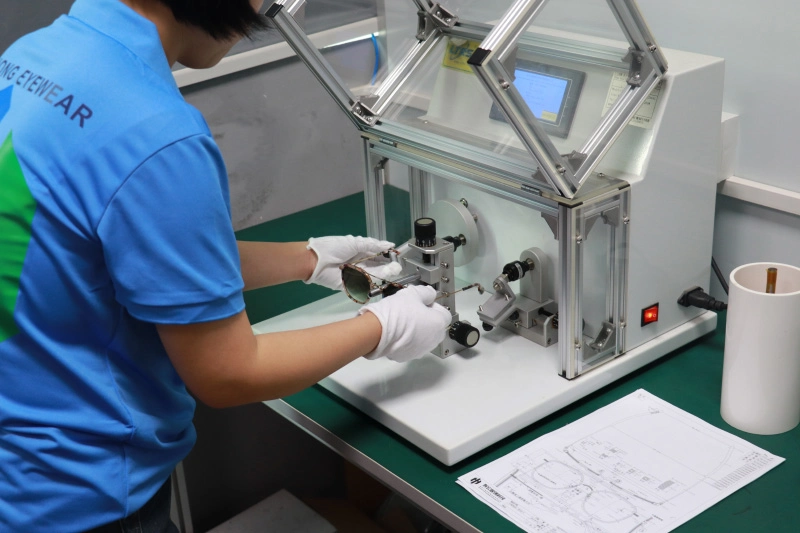
Selecting the right eyeglasses manufacturer is one of the most consequential decisions for eyewear brands, distributors, and private label businesses. A reliable partner delivers consistent quality, on-time delivery, and technical expertise that protects your brand reputation and reduces costly returns. Yet many buyers focus only on price and overlook deeper factors that determine long-term success.
This guide breaks down what to look for in a premium eyeglasses manufacturer, clarifies OEM versus ODM models, and outlines the quality standards you should never compromise on.
OEM vs. ODM Eyewear: Which Model Fits Your Brand?
Before approaching any eyewear manufacturer, clarify which production model aligns with your stage and resources.
OEM (Original Equipment Manufacturing) means you provide complete design files, technical specifications, and brand requirements, and the factory executes production accordingly. This model is ideal for established brands with proprietary designs and existing product IP. It offers full creative control but requires higher upfront tooling costs and longer development timelines.
ODM (Original Design Manufacturing) means the manufacturer provides pre-developed frame designs that you can customize with your logo, colorways, materials, and packaging adjustments. This is the fastest path to market for new brands, test orders, and mid-sized buyers who want proven base designs with lower upfront investment.
A professional eyeglasses manufacturer should offer both models and guide you toward the best fit based on your order volume, budget, and launch schedule.
7 Critical Factors to Evaluate a Premium Eyeglasses Manufacturer
1. In-House Production Capabilities, Not Trading Intermediaries
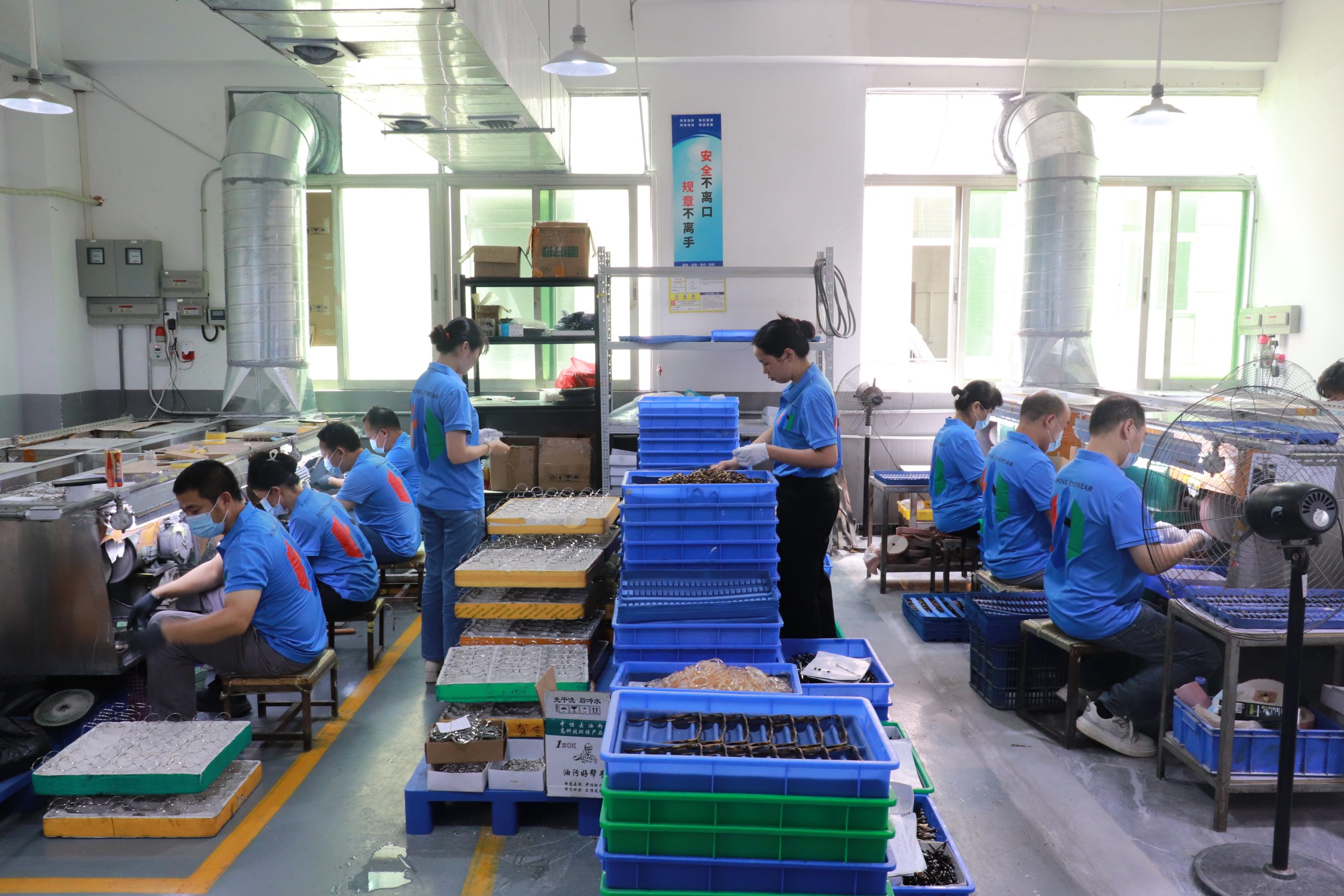
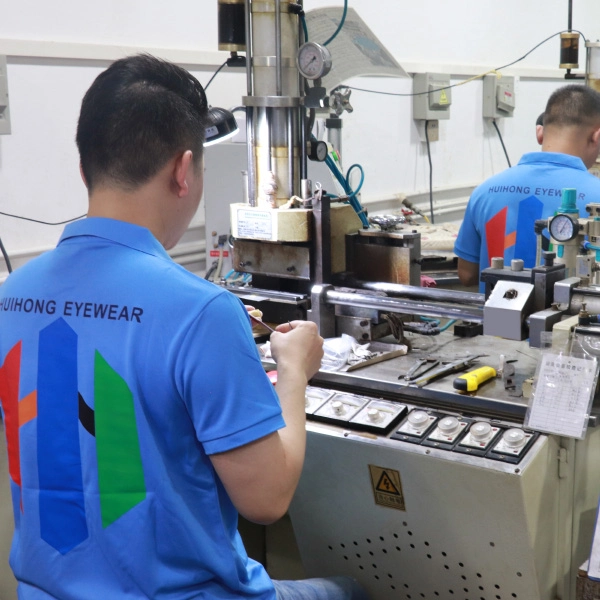
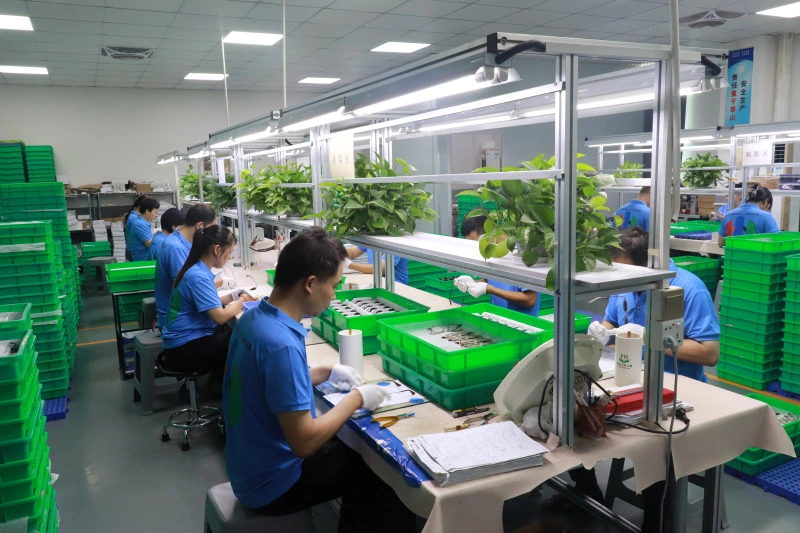
Many suppliers advertise as factories but operate as trading companies. Verify that the manufacturer owns its own production lines, tooling workshops, and finishing departments. Ask for factory floor photos, video tours, and worker count. True optical frames manufacturers control every step from cutting and polishing to assembly and coating, which means tighter quality control and faster problem resolution.
2. Material Expertise Across Premium Frame Categories
High-end eyewear demands specialized material knowledge. A capable sunglasses manufacturer and optical frame maker should demonstrate mastery of acetate, TR90, stainless steel, titanium, and hybrid constructions. Each material requires different processing techniques — for example, hand-polished acetate frames demand skilled craftsmanship, while titanium frames require precision welding and hypoallergenic finishing.
3. International Compliance Certifications
Certifications are non-negotiable for cross-border sales. Verify that the custom eyeglasses manufacturer holds ISO 9001 quality management certification, and that products meet CE, FDA, and REACH standards. These credentials confirm structured production processes, material safety, and regulatory compliance — and prevent costly customs rejections.
4. Full-Cycle Quality Control System
Quality control should not be a single final inspection. Look for a three-stage QC process:
Incoming material inspection: verifies acetate sheet consistency, metal corrosion resistance, and lens clarity
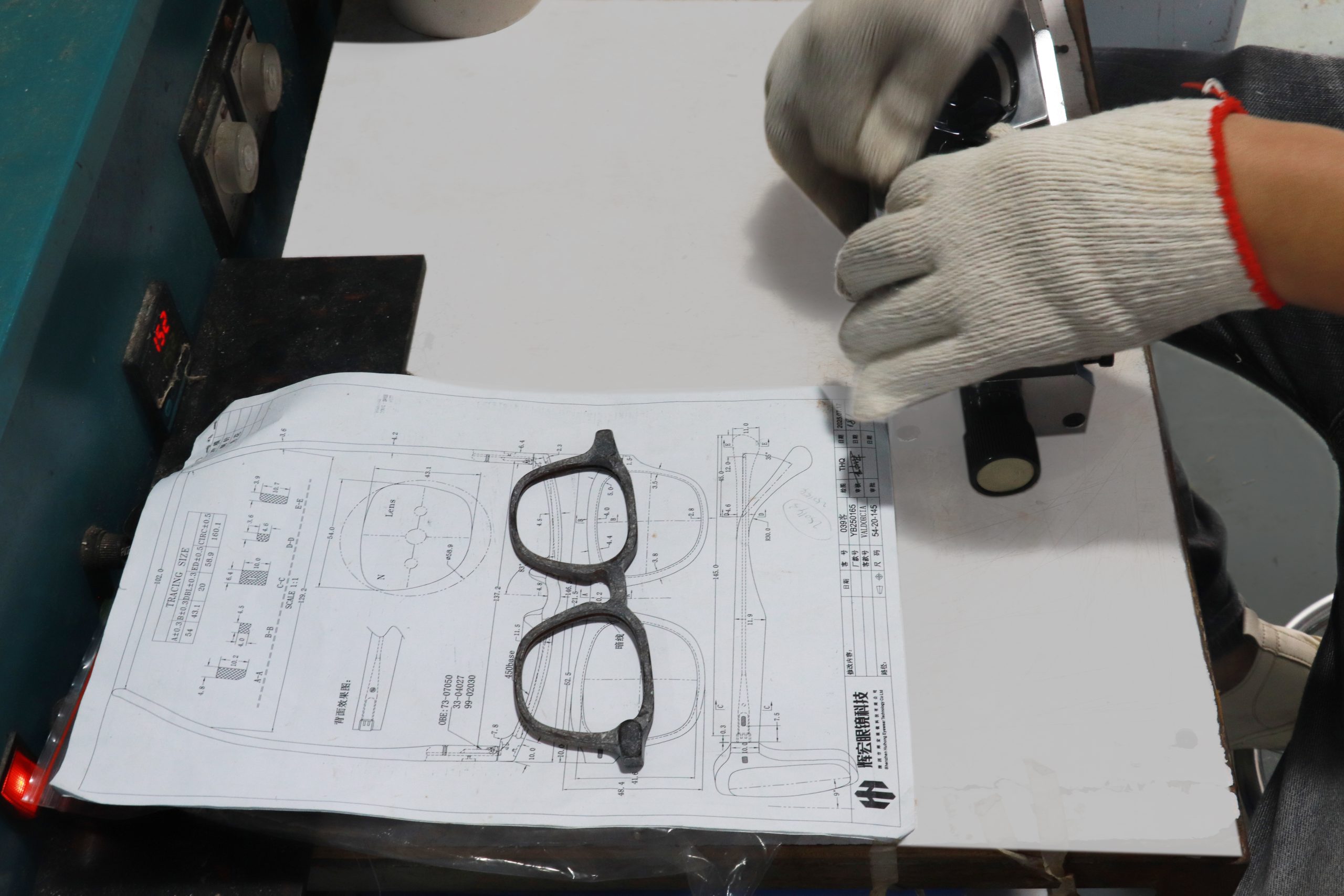
In-process inspection: checks dimensional accuracy, hinge fitting, and surface finish at each production stage
Final pre-shipment inspection: evaluates visual, dimensional, and functional criteria against AQL sampling standards (typically ISO 2859-1)
Reputable private label eyewear manufacturers maintain defect rates well below 1% through systematic in-process checks.
5. Design and Engineering Support
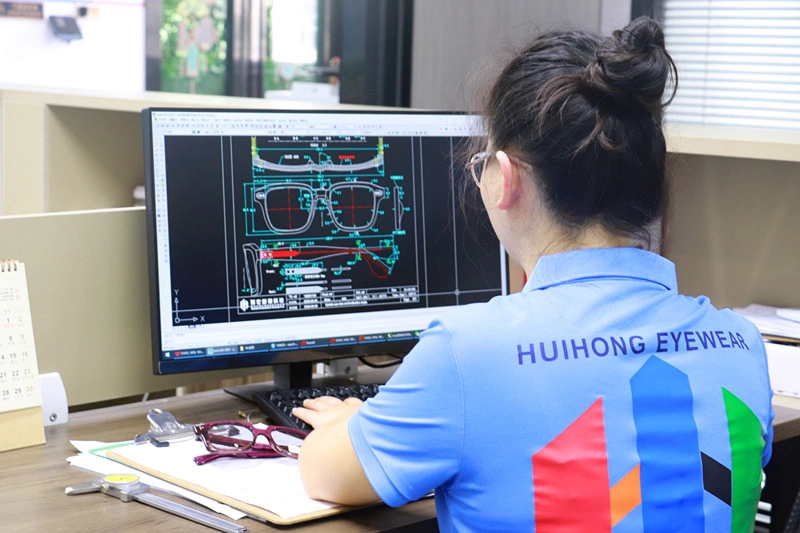
A strong eyeglasses manufacturer does more than execute — it improves your designs. Look for in-house industrial designers and structural engineers who can refine your concepts for manufacturability, suggest material substitutions, and advise on current market trends. This technical partnership reduces sampling rounds and prevents costly production issues later.
6. Transparent Production Timelines
Ask for a clear timeline breakdown. Standard sampling takes 7–15 days depending on customization complexity. Mass production typically runs 30–45 days for acetate frames and 25–35 days for metal frames, depending on order volume and process requirements. A manufacturer that cannot provide a detailed schedule is likely to miss delivery windows.
7. MOQ Flexibility and Scalability
Startups and growing brands need room to test. A manufacturer that supports reasonable minimum order quantities for initial runs — and can scale to tens of thousands of units for mature lines — offers the best long-term value. Avoid factories that force excessively high MOQs on your first order, as this signals inflexible operations and poor customer focus.
What to Expect During a Typical Production Flow
Understanding the standard workflow helps you plan your launch calendar:
Design confirmation — technical drawings, material selection, and Pantone color matching
Prototype sampling — 1–2 rounds of physical samples for fit, finish, and branding approval
Tooling preparation — mold fabrication for custom shapes (for OEM projects)
Mass production — cutting, shaping, polishing, hinge installation, coloring, and assembly
Quality inspection — full AQL inspection before packaging
Packaging and shipping — branded packaging, labeling, and logistics arrangement
Final Thoughts
Partnering with a premium eyeglasses manufacturer is an investment in your brand’s credibility. The cheapest quote rarely delivers the lowest total cost when you account for defects, delays, rework, and damaged customer trust. By evaluating production capabilities, material expertise, certification status, QC systems, engineering support, lead times, and scalability, you can identify a manufacturing partner that grows with your brand and delivers consistent quality batch after batch.
If you are evaluating custom eyewear OEM/ODM partners for your next collection, request a sample kit to assess craftsmanship, material quality, and finishing standards firsthand.