Finding the right eyewear manufacturer is one of the most consequential decisions for any eyewear brand, whether you are launching your first collection or scaling an established product line. A reliable manufacturing partner does more than produce frames — it shapes your product quality, brand reputation, time-to-market, and long-term profitability.
In this comprehensive guide, we break down everything you need to know about sourcing high-end eyewear, including the differences between OEM and ODM models, critical evaluation criteria, the full production workflow, and answers to the most common questions from brand owners and procurement teams.
Understanding Eyewear OEM vs. ODM: Which Model Fits Your Brand?
Before approaching any supplier, it is essential to clarify which cooperation model aligns with your brand strategy. Many buyers search for “eyewear OEM” and “eyewear ODM” interchangeably, but the two models serve very different purposes.
What is OEM Eyewear Manufacturing?
OEM (Original Equipment Manufacturing) means you provide complete design files, technical specifications, and branding requirements, and the factory produces the frames exactly to your standards. This model is ideal for brands that have their own design team, established product identity, and want full control over every detail from material selection to silhouette.
With OEM eyewear production, you own the design intellectual property, and the manufacturer executes your vision through precision engineering and mass production.
What is ODM Eyewear Manufacturing?
ODM (Original Design Manufacturing) means the manufacturer provides pre-developed designs, and you select, modify, and brand them under your own label. This model significantly shortens development cycles, reduces upfront design costs, and allows faster market entry.
Reputable ODM eyewear suppliers maintain in-house design teams that track global fashion trends, material innovations, and ergonomic research, offering brands ready-to-launch collections with customizable details such as colors, logos, and lens options.
Key Differences at a Glance
Design ownership: OEM = brand-owned design; ODM = factory-originated design
Development time: OEM typically requires 60–90 days for tooling and sampling; ODM can proceed to sampling within 15–30 days
MOQ threshold: OEM usually has higher minimums due to custom mold costs; ODM often offers lower minimums per model
IP protection: OEM designs remain exclusive to the brand; ODM designs may be offered to multiple clients unless exclusivity is contracted
7 Critical Factors to Evaluate When Selecting an Eyewear Manufacturer
Not all custom eyewear manufacturers are created equal. When vetting potential partners, focus on these seven core dimensions to avoid costly missteps.
1. Material Expertise & Sourcing Capability
Premium eyewear starts with premium materials. A professional manufacturer should demonstrate deep knowledge of all major frame materials and provide full material traceability.
Common high-end frame materials include:
Acetate cellulose: Plant-derived, hypoallergenic, rich in color depth, ideal for luxury optical frames
Titanium & beta-titanium: Ultra-lightweight, corrosion-resistant, preferred for premium metal frames
Stainless steel: Durable, cost-effective, widely used in both optical and sun frames
TR90 / nylon: Super flexible, impact-resistant, excellent for sports and youth eyewear
Bio-based polymers: Sustainable alternatives meeting growing eco-conscious market demand
For lenses, verify the supplier can deliver CR-39, polycarbonate, high-index, and nylon lenses with multiple coating options — hard coat, anti-reflective, hydrophobic, oleophobic, mirror, and blue-light filtering.
2. In-House Design & Engineering Strength
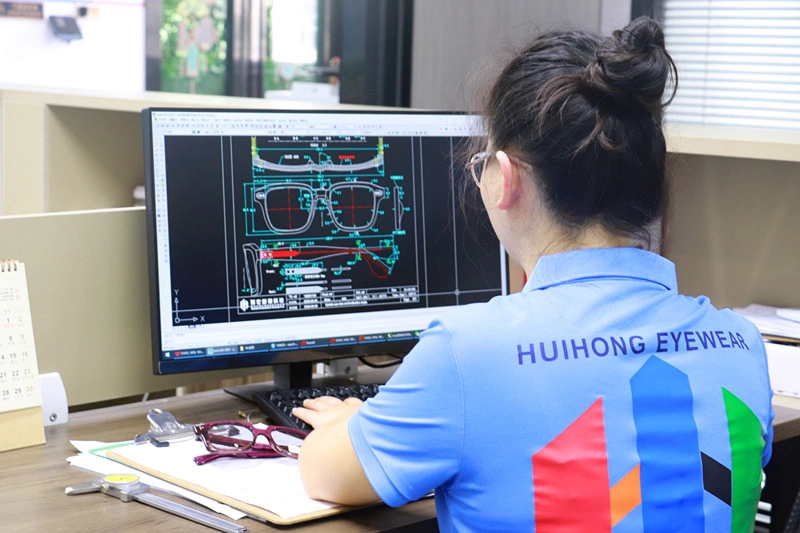
A manufacturer with strong in-house engineering capabilities can turn conceptual sketches into production-ready products while solving structural challenges early. Look for teams proficient in:
3D CAD modeling and digital prototyping
Ergonomic fit analysis for different face shapes
Hinge mechanism engineering and durability testing
Mold design and tooling fabrication
For brands pursuing OEM projects, engineering support directly determines whether your design can be mass-produced reliably, comfortably, and at target cost.
3. Production Capacity & Scalability
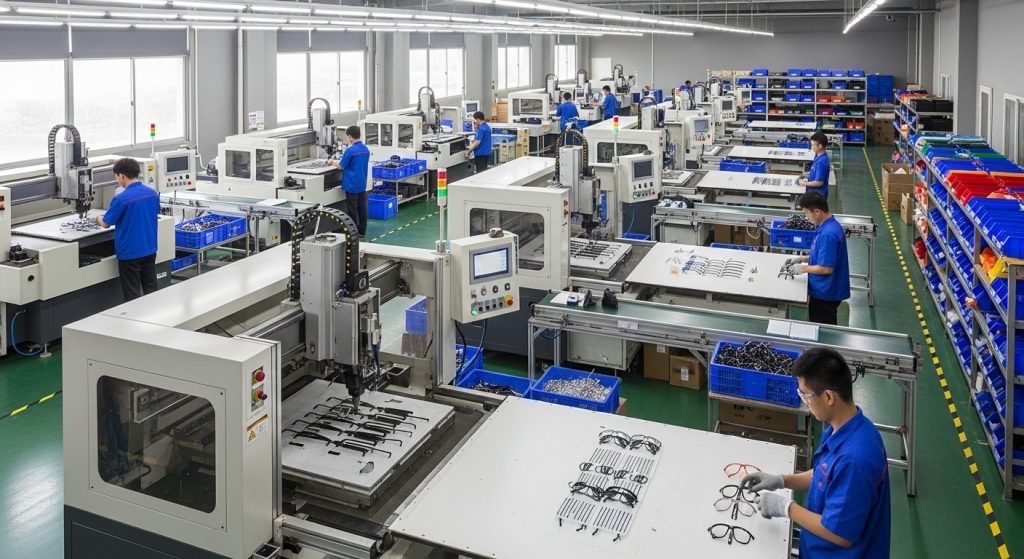
Production capacity is not just about maximum output — it is about consistent quality at your required volume. When assessing a private label eyewear manufacturer, ask about:
Number of dedicated production lines for different materials
Monthly output capacity for acetate, metal, and injection frames
Lead times for sample development, tooling, and mass production
Ability to scale up for peak seasons without sacrificing quality
A mature manufacturer should be able to handle both small-batch trial orders and large-scale repeat production with uniform standards.
4. Multi-Stage Quality Control System
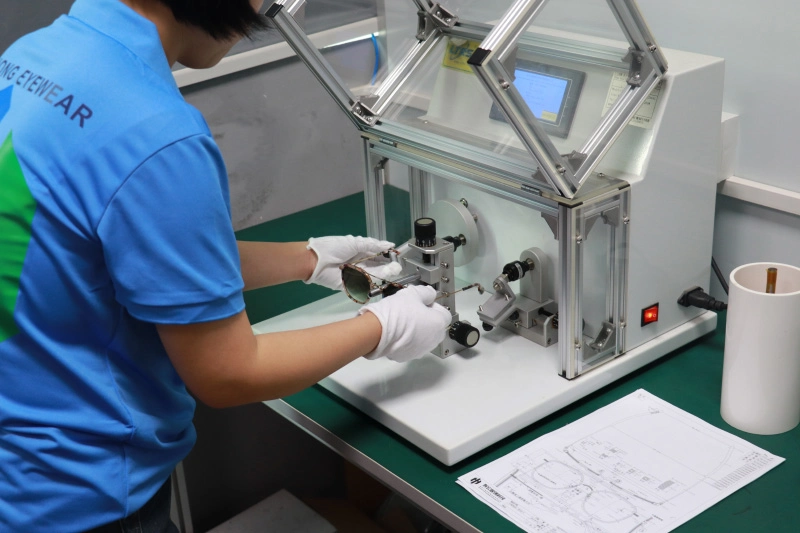
Quality inconsistency is the number one cause of brand damage in eyewear sourcing. A rigorous quality control (QC) system should cover every production stage:
Incoming Material Inspection (IQC): Verifies material composition, thickness, color consistency, and defect rates before production
First Article Inspection (FAI): Validates the first production piece against all specifications before full batch production
In-Process QC (IPQC): Checkpoints at cutting, milling, polishing, coating, and assembly stages
Optical testing: Lens power, prism, optical center, UV protection level, and coating adhesion verification
Final QC (FQC): 50+ point inspection covering appearance, function, fit, and measurements
Outgoing QA (OQA): Statistical sampling of packed goods before shipment
For high-end collections, look for suppliers that perform hinge fatigue testing (20,000+ cycles), salt spray corrosion testing, and impact resistance testing.
5. International Certifications & Compliance
Selling eyewear into major markets requires strict regulatory compliance. Verify that your eyewear supplier holds or can produce products compliant with:
CE marking: Mandatory for the European Economic Area
FDA registration / ANSI Z80.3: Required for the US market
ISO 9001: Quality management system certification
RoHS: Restriction of hazardous substances in metal components
REACH: EU chemical regulation compliance
Reputable manufacturers maintain full documentation traceability and can provide test reports for every material and coating used.
6. MOQ Flexibility & Tiered Solutions
Minimum Order Quantity (MOQ) directly impacts your cash flow and inventory risk. A customer-centric eyewear OEM/ODM manufacturer offers tiered MOQ solutions:
White label / ready-to-brand: Lower MOQs for testing new markets or styles
Semi-custom: Modified existing molds with custom colors and logos
Full custom OEM: Higher MOQs covering mold development and exclusive tooling
Industry standard for fully custom acetate frames is typically 300 pieces per model, often split across 2–3 color options.
7. Communication & Project Management
Cross-border manufacturing succeeds or fails on communication. Evaluate:
Dedicated project managers assigned to each account
Response time for inquiries and issue resolution
English proficiency of technical and sales teams
Proactive problem-solving — flagging design risks before production
Regular production updates with photos or videos
A manufacturer that communicates clearly during the sales process will likely be equally responsive when issues arise during production.
The Full Eyewear Manufacturing Process, Step by Step
Understanding the production workflow helps you set realistic timelines and ask the right questions. Below is the standard process for premium custom eyewear.
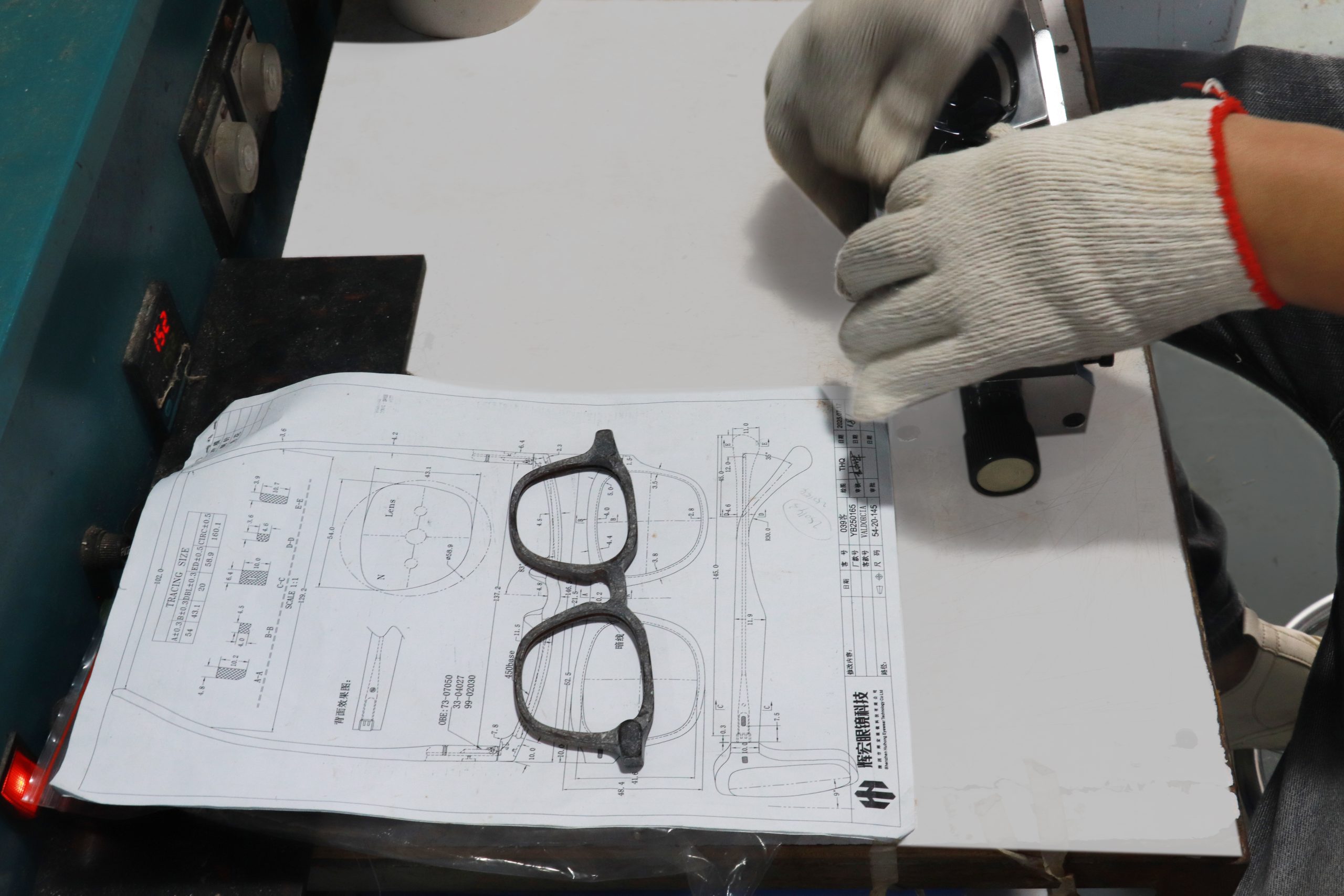
1. Design & Development
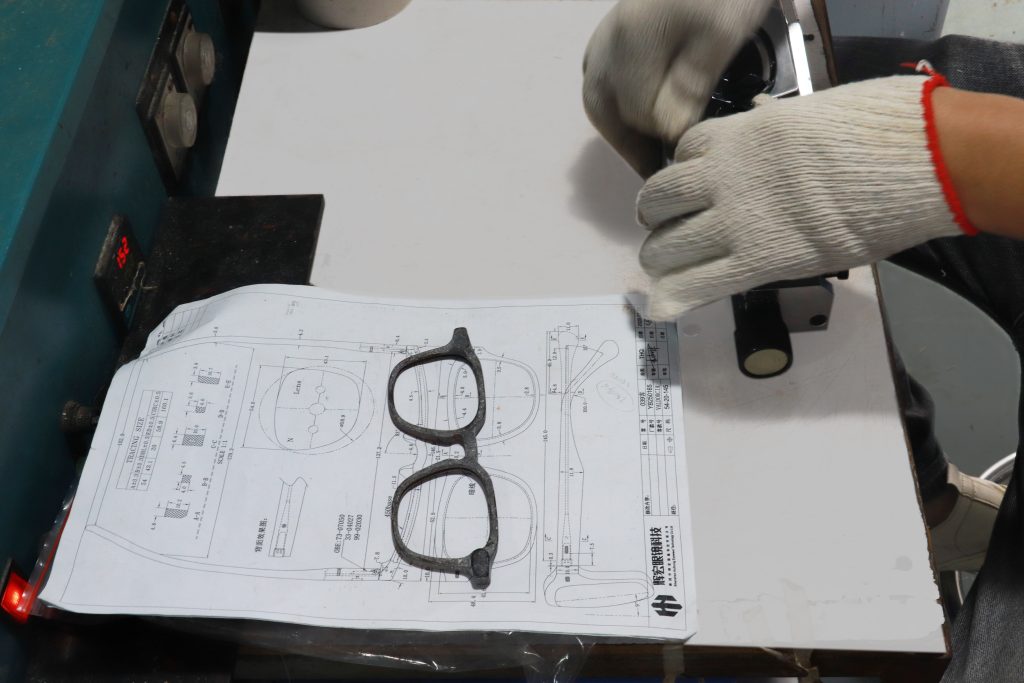
The process begins with concept discussion, reference images, or technical drawings. The engineering team converts ideas into 3D CAD files, confirming dimensions, hinge positions, lens grooves, and structural feasibility.
2. Prototype & Sampling
A prototype is produced — either 3D printed for fit verification or handcrafted for a finished sample. You then evaluate aesthetics, ergonomics, weight, and material feel, and request revisions until the sample is approved.
3. Tooling & Mold Preparation
Once the sample is confirmed, the factory fabricates production molds and fixtures. This is the longest lead-time stage for custom OEM projects, typically taking 25–45 days depending on frame complexity.
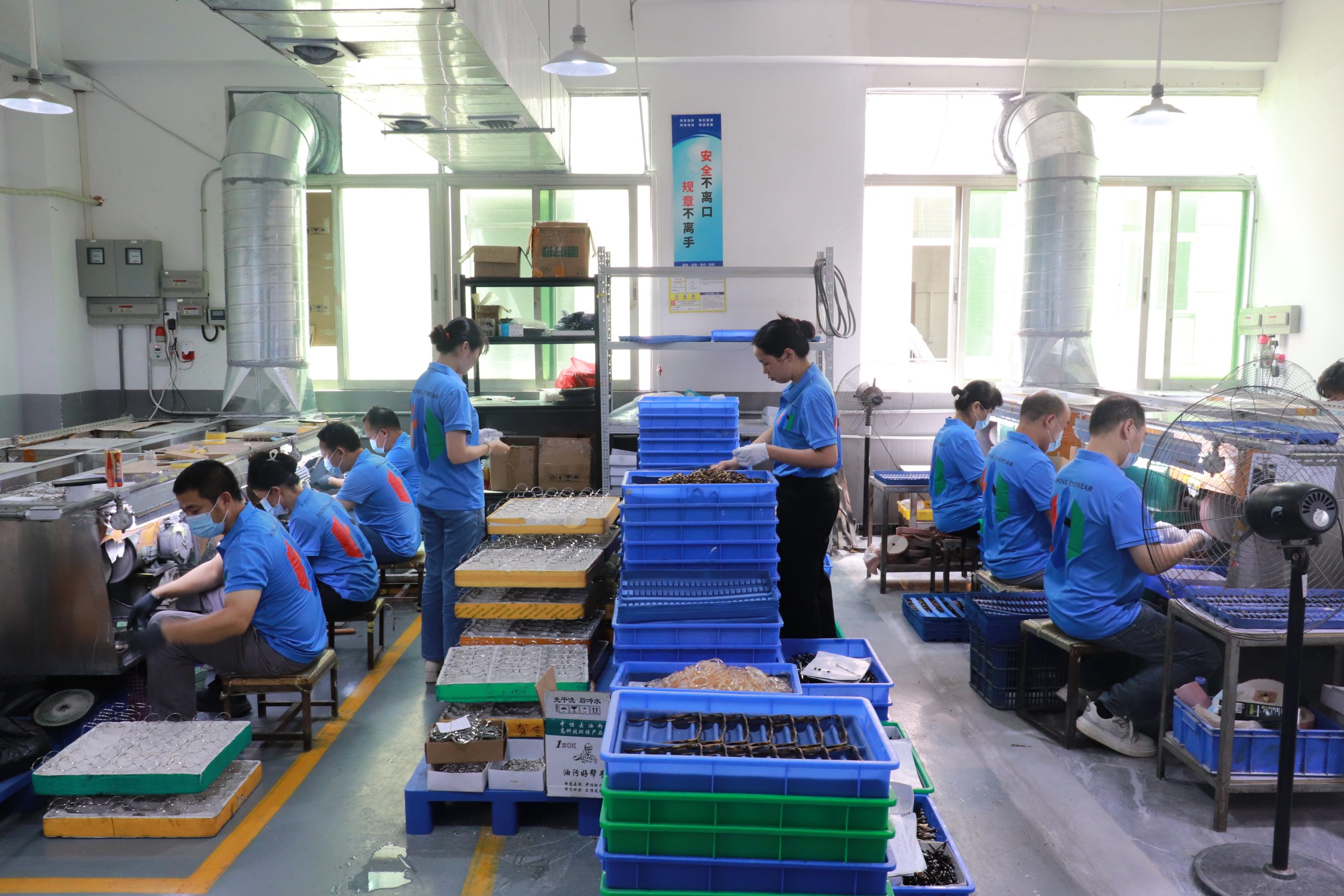
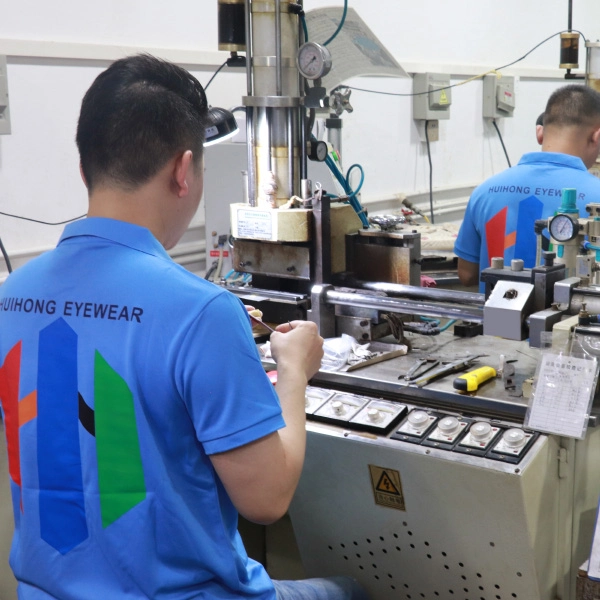
4. Frame Production
For acetate frames: Sheet cutting → CNC milling → tumbling & polishing → hinge installation → temple forming → surface finishing
For metal frames: Wire cutting → stamping → soldering / laser welding → polishing → plating / anodizing → assembly
For injection frames: Material drying → injection molding → deflashing → tumbling → assembly
5. Lens Processing & Coating
Lenses are cut, edged, and treated with functional coatings in vacuum coating chambers. Coatings are applied layer by layer under controlled conditions to ensure uniform performance and durability.
6. Assembly & Final Inspection
Frames and lenses are assembled, adjusted for proper alignment and temple tension, and passed through final inspection. Every unit is checked against specification sheets before packaging.
7. Packaging & Shipping
Finished eyewear is packed according to brand requirements — including cases, microfiber cloths, hangtags, and outer cartons. Shipping arrangements are coordinated with your preferred logistics method.
Frequently Asked Questions About Eyewear Manufacturing
How long does custom eyewear production take?
Standard lead time is 60–90 days from sample approval to finished goods for full OEM projects. ODM projects with existing molds typically take 30–45 days. Complex designs, special coatings, or peak season may add 10–15 days.
Can I get samples before placing a bulk order?
Yes. Reputable eyewear manufacturers always offer sample service. You can order prototype samples or pre-production samples to verify quality, fit, and branding details before committing to mass production. Sample fees are often refundable or deductible from bulk orders.
What is the typical MOQ for custom eyewear?
MOQ varies by material and customization level. Full custom acetate frames usually start at 300 pieces per model. Metal frames often start at 300–500 pieces. Injection-molded frames may have higher minimums due to mold costs. Many suppliers offer lower MOQs for ODM selections.
How do I protect my design intellectual property?
Work with manufacturers willing to sign NDAs (Non-Disclosure Agreements) before sharing design files. In your manufacturing agreement, clearly state ownership of molds, tooling, and design IP. For OEM projects, since you provide the original design, IP ownership is easier to establish contractually.
What packaging options are available?
Most manufacturers offer standard packaging and fully custom branded packaging. Options include rigid gift boxes, magnetic closure boxes, vegan leather pouches, microfiber cleaning cloths, branded hangtags, and barcode labels. You can also supply your own packaging materials for the factory to assemble.
Final Thoughts
Selecting a premium eyewear manufacturer is an investment in your brand’s future. The right partner brings not just production capacity, but also material expertise, engineering insight, quality discipline, and proactive support — all of which directly translate into better products and stronger market performance.
Whether you are looking for an eyewear OEM partner to bring your original designs to life, or an ODM supplier to help you expand your collection efficiently, prioritize manufacturers that demonstrate transparency, technical depth, and a genuine commitment to quality.
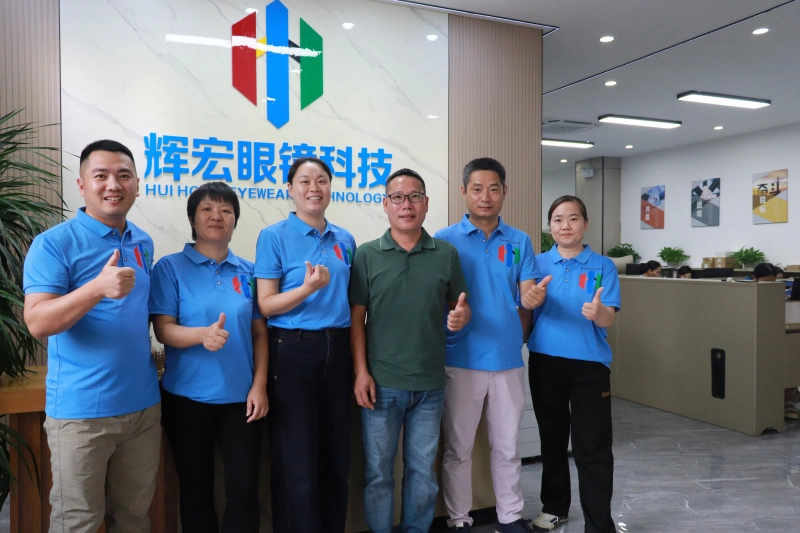
If you are evaluating manufacturing partners for your next eyewear collection and would like to discuss your project requirements, our team of design, engineering, and production specialists is ready to provide tailored solutions and professional guidance.