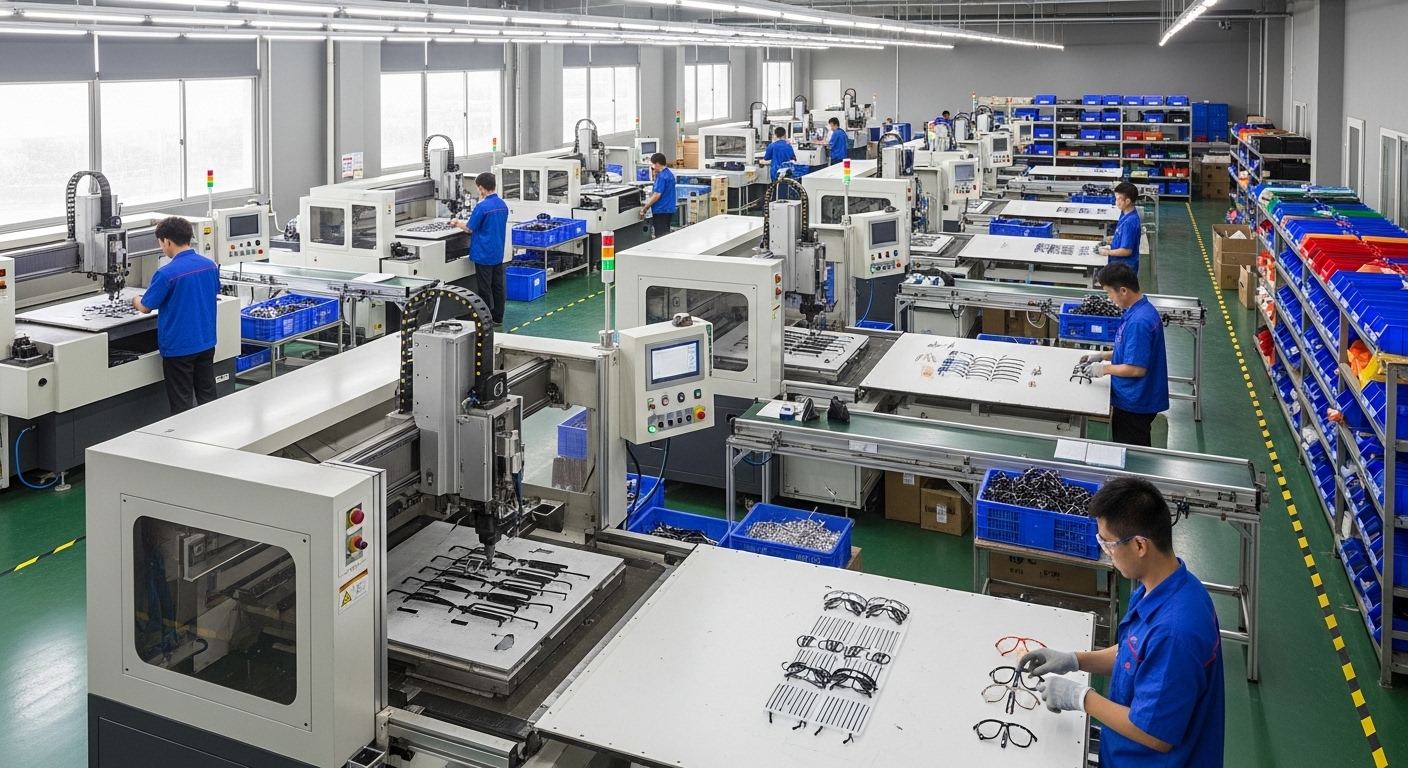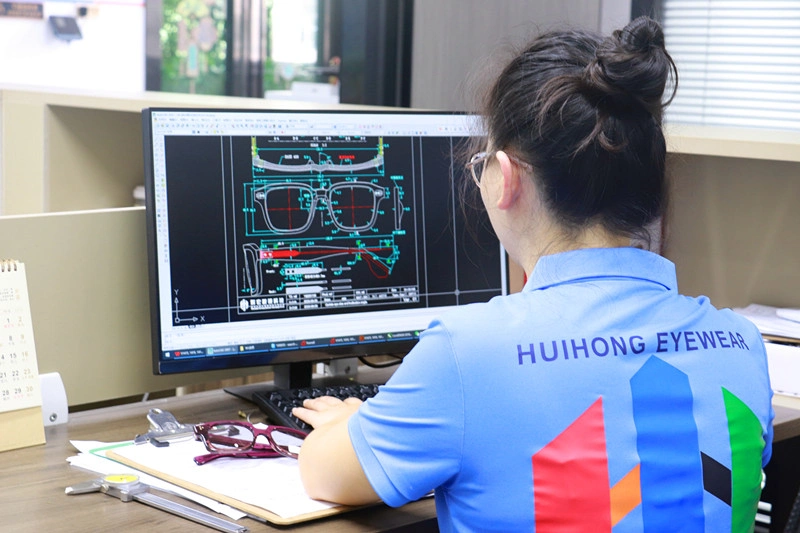
Sourcing eyewear in 2026 is not just about comparing quotations. MOQ, lead time, QC, and compliance are connected. A 600-piece order in one color is not the same as 600 pieces across six colors. A titanium frame with a new hinge is not the same timeline as an acetate style using an existing cutting program.
This guide explains what buyers should ask—and how a specialized eyewear manufacturer can reduce risk from sampling to bulk delivery.
MOQ: What Really Drives the Number
MOQ is not one factory-wide rule. It depends on material, tooling, color complexity, and specification.
Acetate frames: commonly around 200–300 pieces per style/color for standard and eco acetate.
Metal and titanium frames: higher setup costs usually push MOQ to around 300–500 pieces, depending on construction.
Injection/TR90 and standard metal: often 600 pieces or more when new molds are required.
Existing tooling: can lower MOQ because mold or cutting-program costs are already amortized.
New tooling, multiple colors, custom logos, or special lenses: each adds setup work and may raise the minimum.
A factory quoting the same MOQ for every material and design is giving a commercial position, not an engineering fact. Huihong Eyewear supports brands with flexible entry points on existing shapes and scalable OEM/ODM programs for full custom production.
Lead Time: Where the Weeks Go
Lead time is the sum of sampling, tooling, production, and compliance documentation.
Sampling: about 20–40 days for custom frames; existing samples can move faster.
Mass production: commonly 30–60 days after deposit for established factories.
Premium acetate and titanium: often 75–90 days for more complex construction.
Compliance documentation: add 2–4 weeks for CE files, ISO batch records, or third-party testing.
The best ways to shorten lead time are structural: phase the launch with a pilot order, consolidate SKUs, approve coatings and packaging early, and work with a manufacturer that handles design, prototyping, and production in-house. Huihong’s OEM/ODM workflow keeps these steps connected, so specification changes are resolved before they delay bulk production.
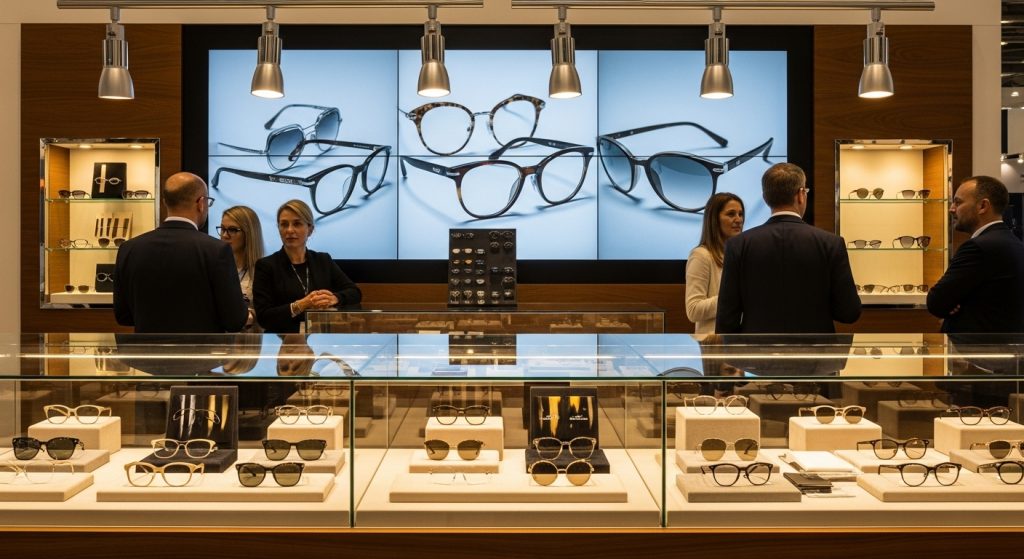
QC: AQL Is the Floor, Not the Ceiling
Most eyewear buyers use AQL 2.5 for major defects and AQL 4.0 for minor defects, based on ISO 2859-1. Premium and regulated-market programs may require AQL 1.5/2.5 or tighter.
But AQL alone is not enough. A real QC system includes material-specific testing:
Hinge cycle testing—10,000 cycles is a common benchmark
Torque and bend testing for hinges, bridges, and temples
Acetate dimensional stability and perspiration resistance under ISO 12870
Plating adhesion and salt-spray testing for metal frames
Nickel release testing for regulated markets
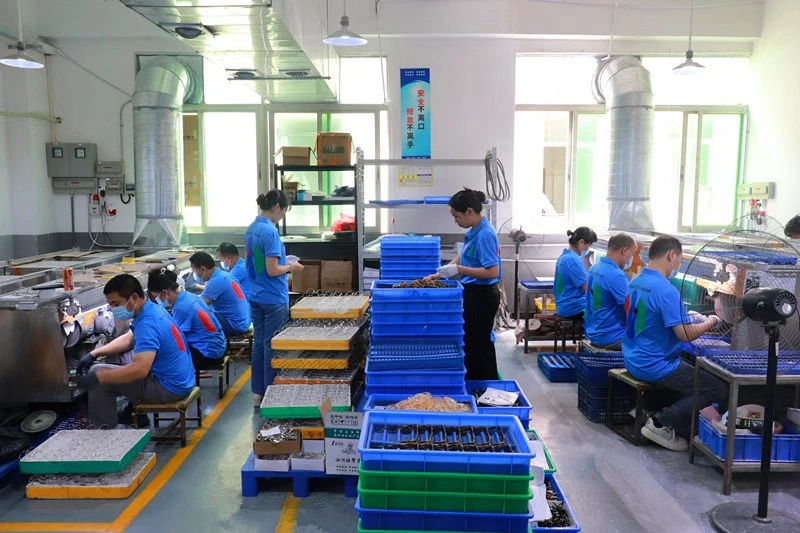
Acetate and titanium require different inspection experience. A manufacturer with dedicated acetate and metal workshops can apply the right criteria at the right stage. Huihong’s workshop structure supports material-specific QC, helping keep defect rates low when the inspection protocol is agreed before production.
Compliance: The 2026 Market Picture
Compliance is now a production variable, not an administrative afterthought.
United States: Spectacle frames are regulated as Class I medical devices. Plastic frames must meet flammability requirements. Nickel-containing alloys need coating integrity or low-nickel formulations. Sunglasses require UV performance data; prescription lenses must meet drop-ball impact resistance under 21 CFR 801.410.
European Union and UK: Optical frames are Class I medical devices under EU MDR 2017/745. Non-corrective sunglasses fall under PPE Regulation (EU) 2016/425 and EN ISO 12312-1. Safety eyewear follows EN 166 or EN ISO 16321-1. The UK operates UKCA alongside CE, with CE accepted in Great Britain under current transitional arrangements.
A key 2026 update is EN 16128:2025, the revised nickel release test method for spectacle frames and sunglasses. It tightened sample handling and testing protocol, including migration testing of all parts if coating tests fail and keeping lenses mounted during simulated wear and corrosion. Metal-frame programs should confirm compliance against the new method.
Japan and Korea: Japan applies JIS B 7285 and labeling requirements under the Household Goods Quality Labeling Law. Korea references KS G ISO 12870 and KS G ISO 12312-1, with a 2026 update adding an equivalent nickel dissolution test procedure. A CE file alone does not automatically cover Japan or Korea.
The common requirement across markets is a traceable technical file: material declarations, test reports, batch records, and a declaration of conformity that matches the actual production run.
Why Huihong Eyewear
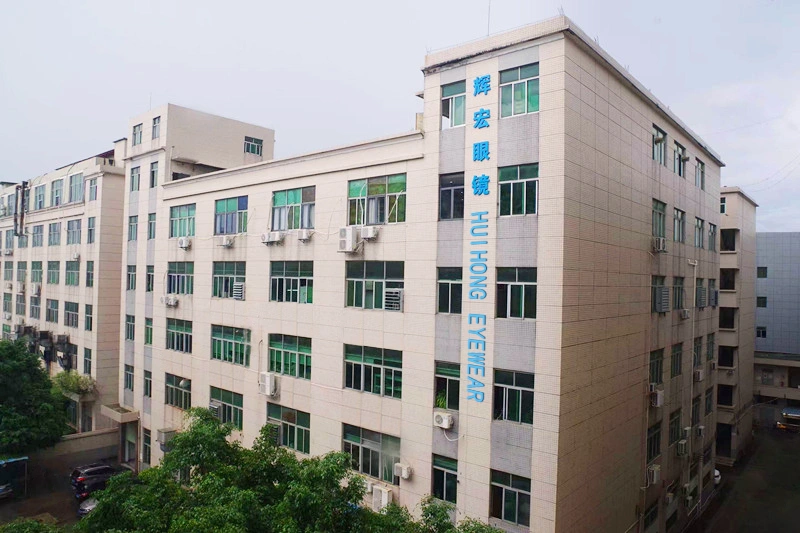
Huihong Eyewear specializes in the design, development, and OEM/ODM production of high-end eyewear. We focus on acetate, titanium, and metal frames, with strong custom production capability from concept prototyping to bulk delivery.
Our clients across Japan, Korea, Europe, and North America return for quality, flexibility, speed, and trust. Because we specialize in these material families, our MOQ ranges, QC criteria, and compliance planning reflect real production economics—not generic export promises.
FAQ
What is a typical MOQ for custom eyewear?
It depends on material and tooling. Acetate often starts around 200–300 pieces per style/color; metal and titanium typically start around 300–500 pieces.
How long does eyewear production take?
Sampling usually takes 20–40 days. Bulk production commonly takes 30–60 days, with premium acetate and titanium often taking 75–90 days.
What QC standard should buyers request?
AQL 2.5/4.0 is common. Premium programs may require AQL 1.5/2.5 or tighter, plus material-specific testing.
What compliance documents should a factory provide?
Material declarations, test reports, batch records, and a declaration of conformity matching the production run.
Planning a 2026 Eyewear Program?
If you are pressure-testing MOQ, lead time, QC, or compliance for an upcoming collection, start with a specification-level conversation. Huihong Eyewear works with brands before tooling is cut and before the PO is issued—when the decisions still have room to be made correctly.
Contact Huihong Eyewear to discuss your acetate, titanium, or metal frame program.