For premium eyewear brands and designer labels, partnering with a manufacturer that can deliver complex custom frames is more than a sourcing decision—it directly determines whether your vision reaches the market with precision, quality, and speed. Many factories claim to offer customization, but few possess the end-to-end development capability to execute intricate designs in acetate, titanium, and metal at consistent quality levels.
This guide breaks down the seven critical criteria you should use to evaluate a factory’s real development strength for custom eyewear, so you can identify a true production partner rather than a basic order-taker.
1. In-House Tooling and Mould Development
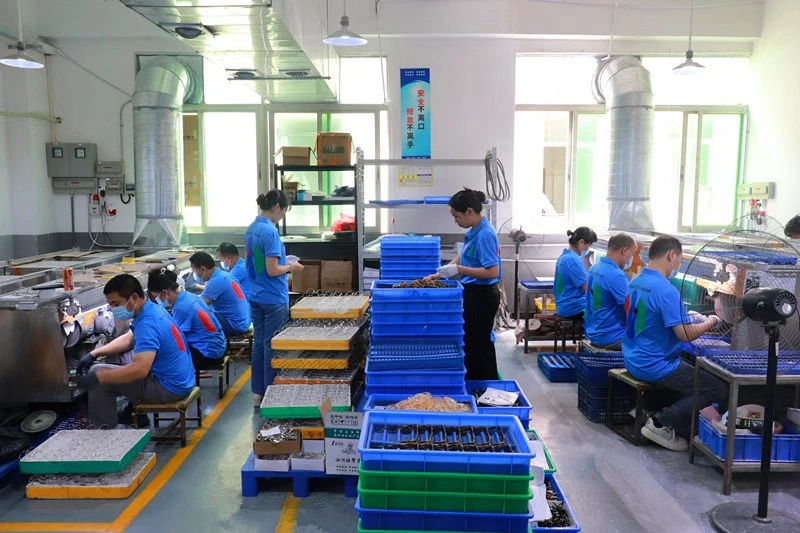
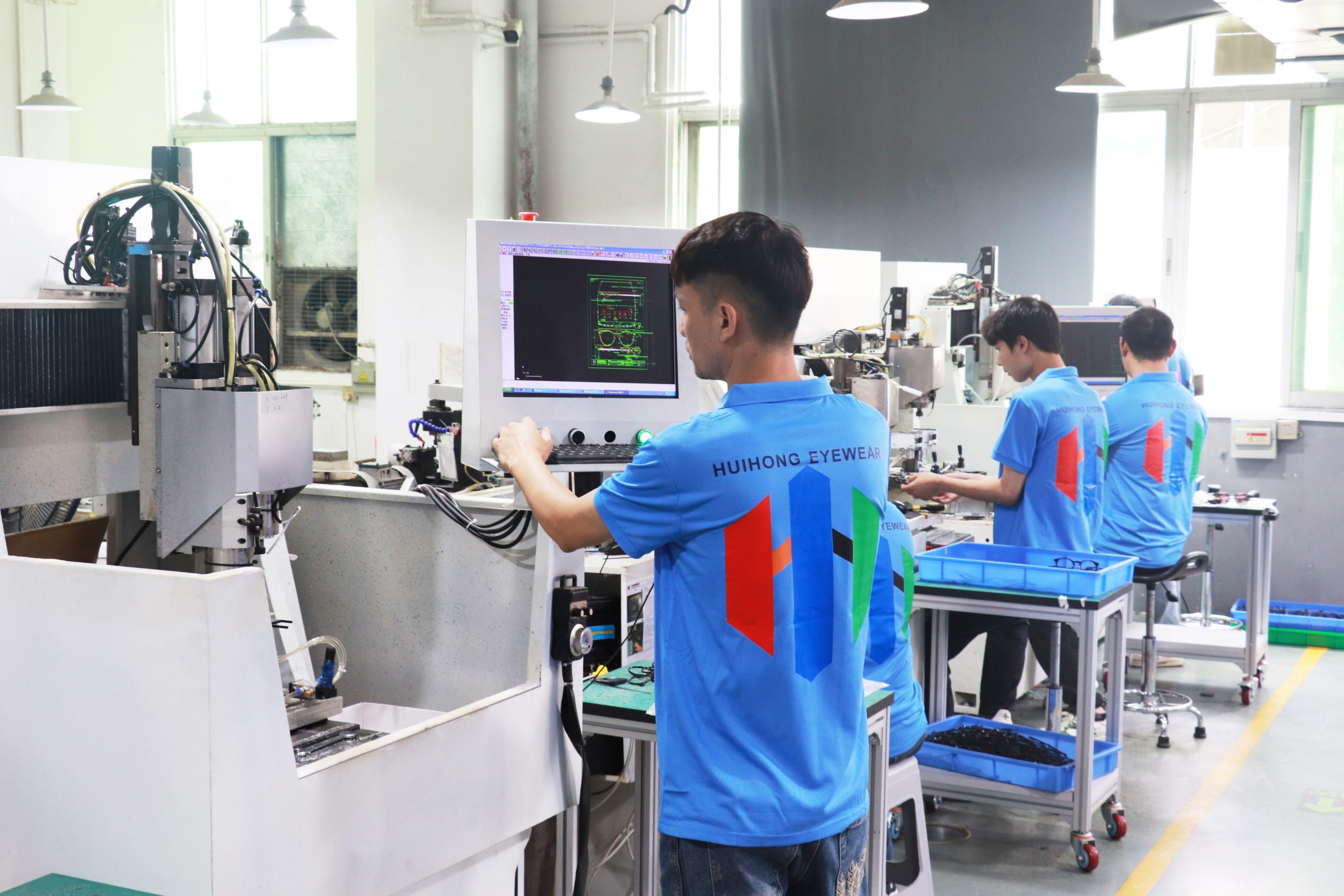
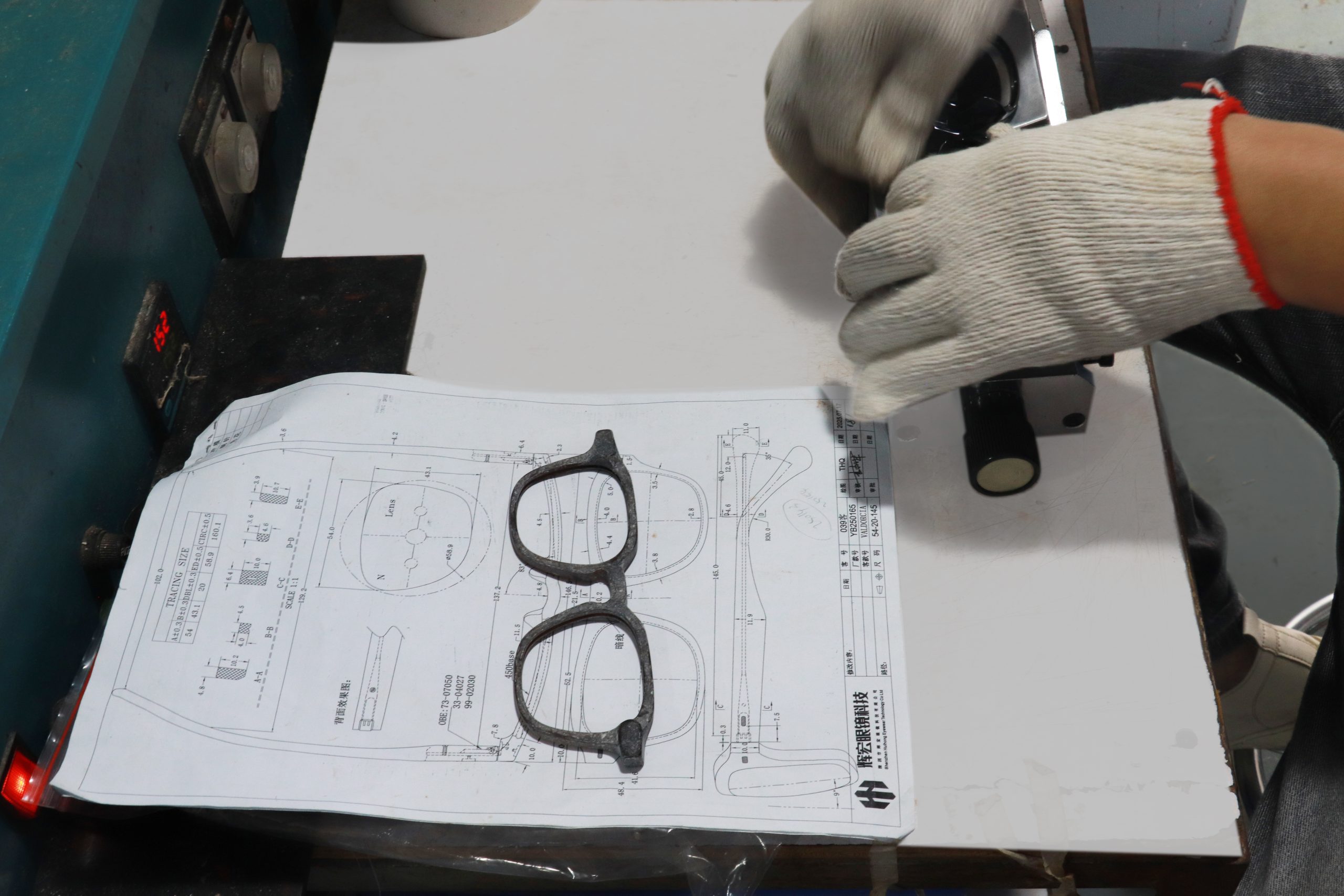
The single strongest predictor of development performance is whether a factory builds and adjusts its own tooling on site. When mould engineering stays in-house, design revisions are resolved in days, not weeks, and engineering teams can troubleshoot fit and finish issues directly at the production bench.
What to verify:
Are moulds, jigs, and fixtures designed and machined internally, or outsourced to third-party workshops?
How many revision rounds are included in the development fee, and what is the typical turnaround for a single adjustment?
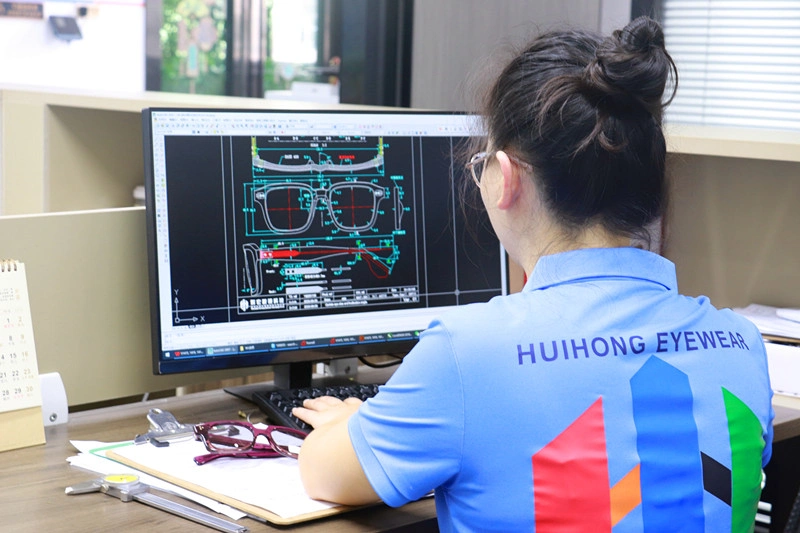
Does the factory use 3D CAD/CAM software and CNC machining for mould production, or rely on manual toolmaking?
Factories that outsource tooling create a three-party communication chain that slows every iteration and dilutes technical accountability. For complex custom frames—especially those with unusual bridge geometries, intricate temple details, or mixed-material constructions—in-house mould capability is non-negotiable.
2. Material Expertise Across Acetate, Titanium, and Metal
A factory may excel at basic acetate frames but struggle with titanium soldering or precision metal stamping. True development capability means deep, proven expertise across every material your collection uses.
Evaluation checklist by material:
Acetate: Can they produce custom laminate patterns, hand-finished bevels, and heat-formed front curves? Do they work with premium Italian and Japanese acetate sheets?
Titanium: Do they have dedicated soldering stations, laser welding equipment, and technicians experienced with beta titanium and pure titanium frames?
Metal (monel, stainless steel): Can they execute fine detailing such as wire rim construction, intricate engraving, and consistent plating finishes?
Beware of suppliers that present a full material catalogue but actually outsource titanium or metal production to partner workshops. This creates hidden quality variation and longer lead times. Always ask what percentage of each material type is produced on their own factory floor.
3. Design Collaboration and Prototyping Capability
There is a clear line between a factory that executes your drawings and one that collaborates as a development partner. For complex custom frames, you need the latter.
A capable development partner can:
Work from mood boards, sketches, or reference samples—not only finished technical drawings
Propose material alternatives, structural improvements, and cost-optimization ideas early in the process
Deliver accurate first prototypes within a predictable timeframe
Provide digital renderings or 3D-printed mock-ups before cutting expensive tooling
The speed and accuracy of the prototyping phase reveal a great deal about the factory’s overall development discipline. A factory that consistently delivers on-spec first samples within 10–15 days typically has strong engineering coordination and process control. A factory that takes 30+ days and still misses key details will likely cause headaches throughout the entire production relationship.
4. Quality Control Systems for Custom Production
Mass-produced stock frames rely on established processes and repeatable moulds. Custom frames, by definition, are new and unique—and that is where quality issues most often appear. A factory’s development capability is only as strong as its quality control (QC) framework for custom orders.
Key QC indicators to assess:
In-process inspection points: How many QC checkpoints exist across cutting, forming, assembly, and finishing stages?
Measurement tools: Do they use calibrated digital calipers, gloss meters, hinge torque testers, and optical comparators?
Standards compliance: Do they test against ISO 12870 requirements including sweat corrosion resistance, mechanical fatigue, thermal stability, and nickel release?
Sample approval protocol: Is there a formal golden sample sign-off process that becomes the reference standard for bulk production?
Strong factories build QC into every development step. Weak factories only inspect finished goods—and by then, defects are already baked into the batch.
5. Production Flexibility and Scalability
Custom frame programs often start small and scale as designs prove successful. Your chosen factory should be able to grow with you without sacrificing quality or lead times.
Consider:
What is the minimum order quantity for fully custom designs versus modified standard frames?
What is the monthly capacity for custom acetate, titanium, and metal frames respectively?
How does the factory handle peak-season scheduling without pushing custom orders to the back of the queue?
Can they support small-batch runs for limited-edition designer collections?
The most valuable development partners offer flexibility across order sizes—from trial runs of 100 pairs per model up to bulk production for established retail brands. This flexibility allows you to test designs with lower risk and scale up confidently when demand grows.
6. Communication and Project Management
Development capability is not only about machines and technicians—it is also about how information flows between your team and the factory. Miscommunication during custom development leads to wrong samples, missed details, and delayed launches.
Signs of strong project management:
A dedicated account manager or engineer who understands your brand and technical requirements
Clear, written confirmation of every specification change and revision
Regular progress updates during sampling and tooling phases
English-proficient staff who can discuss technical details without interpretation delays
Transparent documentation of costs, timelines, and revision limits
For brands working across time zones—particularly those in Japan, Korea, Europe, and North America—responsive and clear communication is as critical to successful custom development as technical skill.
7. Proven Track Record with Premium and Designer Brands
Past performance is the most reliable indicator of future results. A factory that has successfully delivered complex custom frames for independent designer brands and premium retailers has already solved the kinds of problems your project will face.
What to review:
Client portfolio and case studies of custom projects
Client retention rates and repeat-partnership stories
Geographic reach—do they regularly supply brands in your target markets?
Longevity—how many years have they specialized in high-end custom eyewear?
Factories that serve premium markets understand that quality, consistency, and discretion matter as much as price. They treat your designs as intellectual property, protect your brand identity, and deliver finishes that meet luxury retail standards.
Key Evaluation Questions to Ask Every Supplier
Before committing to a custom frame development partnership, get clear answers to these questions:
Is all tooling, mould-making, and sample production done in-house?
Which materials do you manufacture on site, and which do you outsource?
What is the typical timeline from design brief to first approved prototype?
How many sample revisions are included in the development cost?
What QC standards and tests apply to custom frame orders?
What is the MOQ for a fully custom model, and can we start with a trial batch?
Can you provide references from premium or designer brands you currently produce for?
Why Development Capability Matters More Than Low Unit Price
Choosing the cheapest quote for custom eyewear almost always costs more in the long run. Development failures, repeated sampling rounds, hidden rework charges, and quality issues in bulk production erode margins and damage your brand reputation.
A factory with strong development capability may have slightly higher unit prices, but it delivers:
Fewer sampling rounds and faster time-to-market
Higher first-approval rates on prototypes
Consistent quality across bulk production
Fewer defects and lower rejection rates
Reliable lead times you can plan marketing and launch schedules around
For premium and designer eyewear brands, development excellence is the foundation of product excellence.
Work With a Development-Focused Custom Eyewear Manufacturer
Huihong Eyewear is a specialized manufacturer dedicated to the design, development, and OEM/ODM production of high-end eyewear. Since our founding, we have collaborated with independent brands, designer labels, and premium retailers worldwide—bringing unique eyewear visions to life through exceptional craftsmanship and reliable service.
We specialize in acetate, titanium, and metal frames, with a strong capability in custom production. From concept prototyping to bulk delivery, we support brands through every step of the journey—with flexibility, speed, and precision. Our clients span Japan, Korea, Europe, and North America, many of whom return to us not just for quality, but for trust and shared value.
We do not carry stock frames—every project is built to your design and specifications. If you are evaluating manufacturers for a complex custom eyewear collection, we welcome the opportunity to discuss your project, share our development process, and show you samples of our work.
Frequently Asked Questions
Q: How long does custom frame development typically take?A: From design finalization to first prototype, most custom frames take 10–20 days depending on material complexity. Titanium and mixed-material designs may require slightly longer due to additional tooling and soldering steps. After sample approval, bulk production usually takes 30–45 days.
Q: What is the minimum order quantity for fully custom frames?A: MOQs vary by material and construction. Acetate frames typically start at 200–300 pairs per model, while titanium and metal frames may have slightly higher minimums. We work with brands to structure orders that balance cost efficiency with their inventory needs.
Q: Can you develop frames from a sketch or reference photo?A: Yes. Our in-house design and engineering team can work from sketches, mood boards, reference samples, or technical drawings. We will translate your concept into production-ready specifications and provide feedback on feasibility, material options, and cost considerations.
Q: Do you offer private labeling and custom packaging?A: Yes. We support full OEM/ODM branding including custom laser engraving, hot stamping, metal logo plates, and custom packaging solutions. All branding elements are integrated into the development process so your frames arrive retail-ready.