If you are sourcing custom acetate eyewear, there is no single “best” factory. The right partner depends on your color complexity, order size, and lamination requirements. What separates top-tier acetate frame factories from sample shops is narrower: who controls lamination in-house, who can prevent color migration, and who can repeat a custom colorway in bulk production.
This guide is for brands sourcing custom color and lamination work—not stock frames with a logo. It explains how to evaluate factories on the variables that determine whether your colorway survives from sample to bulk, and where a custom-only OEM/ODM partner like Huihong Eyewear fits in.
Why Custom Color and Lamination Are the Real Quality Dividers
Acetate is different from injection materials because the color lives inside the material. That makes premium acetate frames distinctive, but it also exposes process weaknesses. A solid-color frame can hide defects. A laminated acetate frame cannot.
If the bond between layers is uneven, if heat and pressure are inconsistent, or if colorants migrate during pressing, the defect appears in the finished frame—often after polishing. The best acetate factories are therefore not judged by how many colors they show on a sample card. They are judged by whether they can repeat a colorway, control bleeding between layers, and hold dimensional tolerance after lamination.
Five Criteria for Evaluating Acetate Factories
1. In-House Lamination Capability
Many factories say they are “lamination capable” because they buy pre-laminated sheets and cut frames from them. That works for standard patterns at high volume. But for proprietary color combinations, sheet mill MOQs can make this route impractical.
In-house lamination means the factory stacks thin acetate sheets in the required color sequence and fuses them under controlled heat and pressure. This allows custom color combinations without being limited by a sheet mill’s catalog or minimums. It is also often necessary for thicker end pieces and nose pad areas.
Ask directly: Do you laminate in-house, or do you buy pre-laminated sheet? A real lamination factory will have a press area, documented parameters, and a clear explanation of how it prevents delamination and color migration.
2. Color Migration Control
Color migration, or bleeding, is the most common hidden defect in multi-layer acetate. Plasticizers and colorants move from one layer into another under heat and pressure, blurring the boundary and creating a muddy appearance.
Serious factories control this with customized lamination molds, imported lamination liquids or adhesives, controlled heating profiles, and core insertion methods that manage pressure distribution. Some use T-shape core structures and pre-drilling to reduce bleeding.
Do not ask only “Can you control color migration?” Every factory says yes. Ask: What is your lamination temperature window, and how do you adjust pressure and dwell time when the sheet thickness or color stack changes? A factory with real process control will explain the variables. A sample shop will give a vague answer.
3. Sheet Grade and Custom Color Development
The acetate sheet sets the ceiling on color depth and pattern quality. Italian Mazzucchelli acetate is a benchmark for premium eyewear because of its color saturation and pattern dimensionality. It adds cost, but for higher retail price points it can be the physical proof of quality.
A factory claiming strength in custom color should be transparent about sheet provenance. It should source by color code, store sheets properly, and explain whether it can develop custom sheet colors through a mill or through in-house lamination. For brands below mill MOQs, in-house lamination using premium standard sheets is often the practical path to exclusivity.
Ask: Show me the sheet certificate or color code for recent custom lamination jobs. What would you do if I specify a color that is not in any standard library?
4. Prototyping Discipline
Custom color projects often fail between sample and bulk. A color approved on a thin swatch can look different after lamination, polishing, and assembly.
Top factories produce a laminated block or sheet sample in the actual stack sequence before cutting frames. This lets the brand approve color under different lighting and after simulated polishing. For complex lamination, sampling often takes 10–21 days, with bulk production adding 30–40 days. Factories promising “7-day custom color samples” may be painting or printing color onto stock frames rather than producing genuine laminated samples.
Also discuss pattern orientation: how tortoiseshell or striped laminate will flow across the front and temples, and how cutting will be planned for consistency across the run.
5. Post-Lamination Finishing
Lamination is only half the process. Multi-layer acetate must be finished carefully because different color layers polish at different rates. Hand-polishing is a key quality step, and for laminated frames it must remove material evenly without creating witness lines at layer boundaries.
Ask for a polished production sample, not a raw cut sample. If lamination boundaries appear as hard, bleeding lines after polishing, the process is not premium. If transitions are smooth or intentionally crisp without bleeding, the factory controls both fusion and finishing.
Where Huihong Eyewear Fits
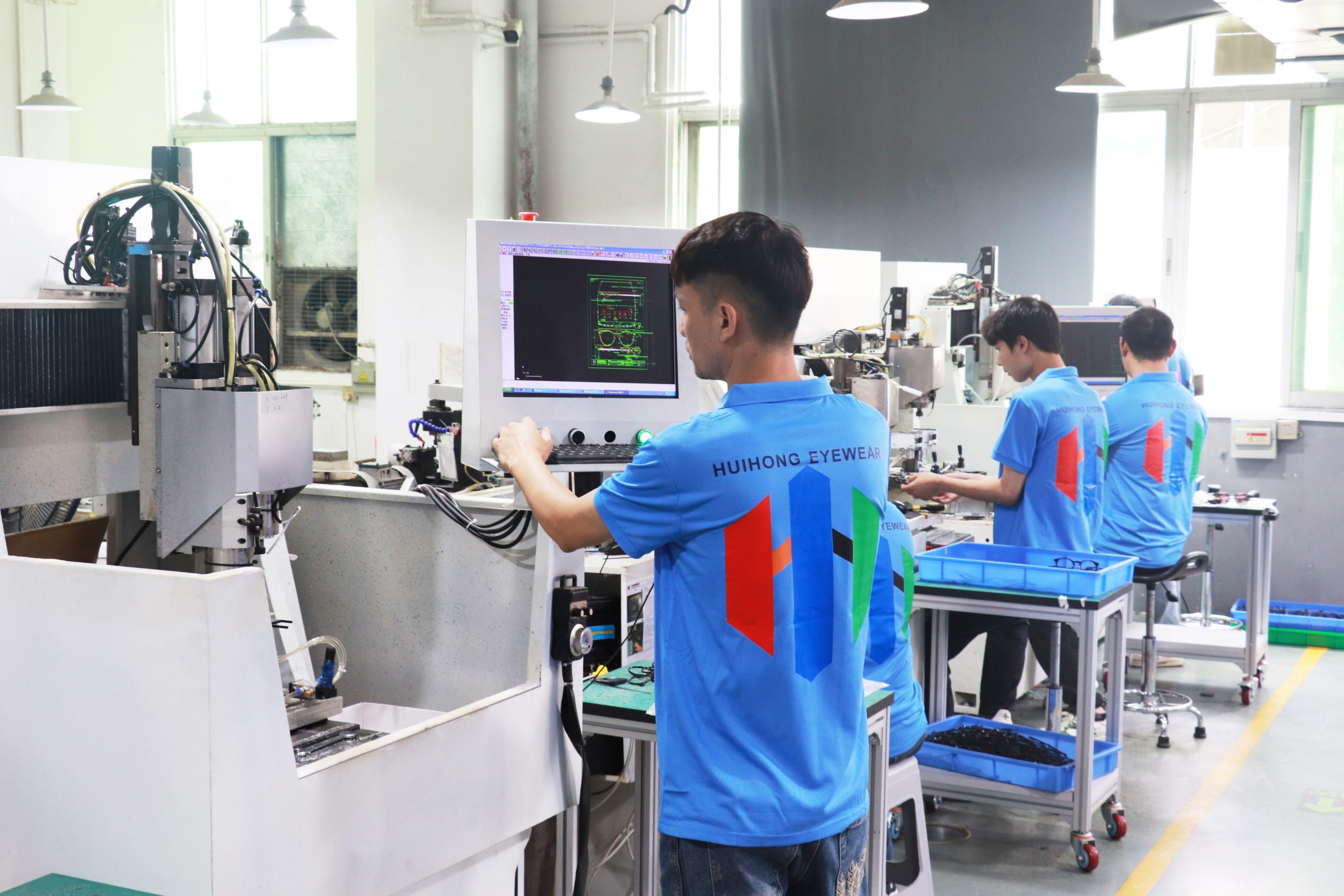
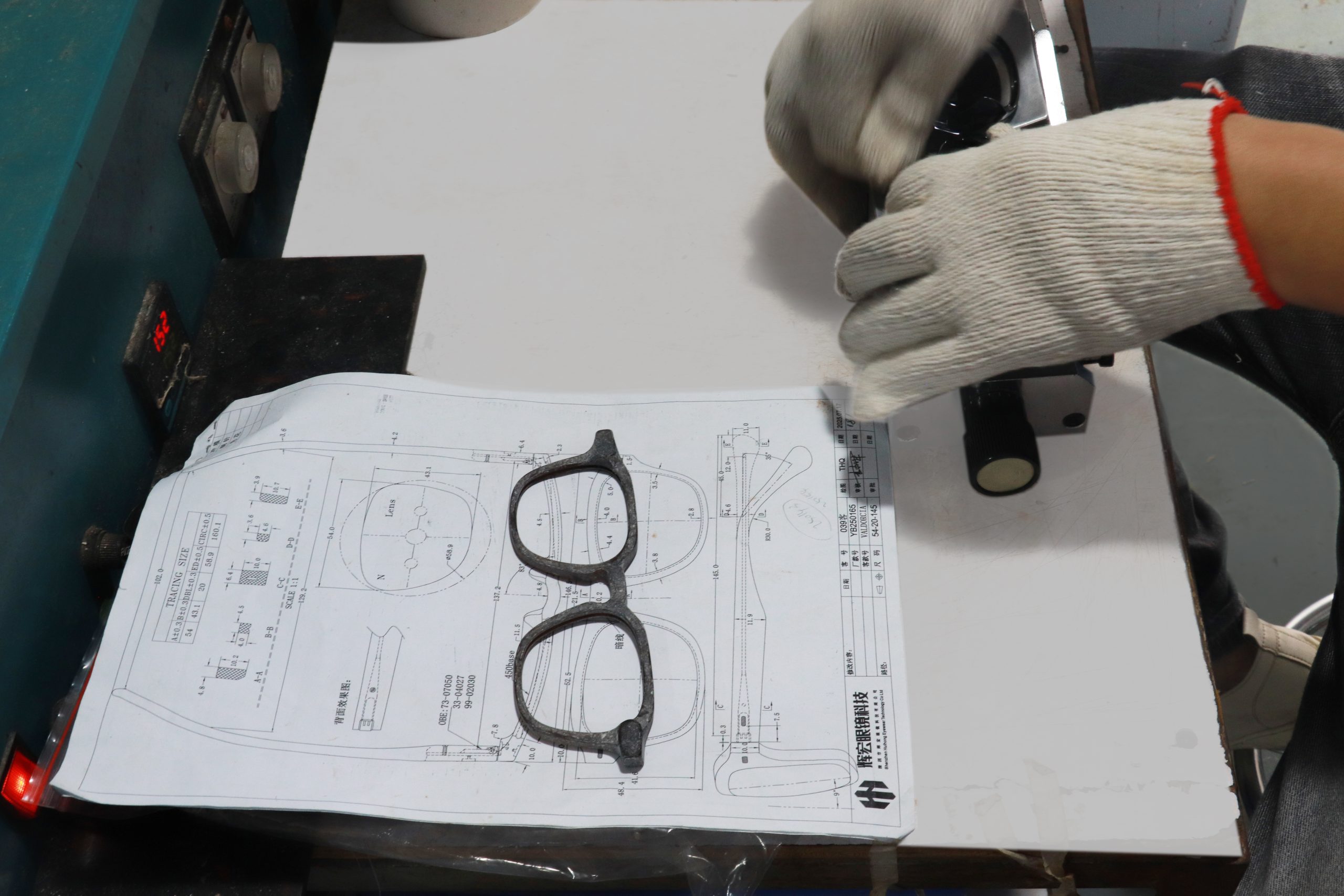
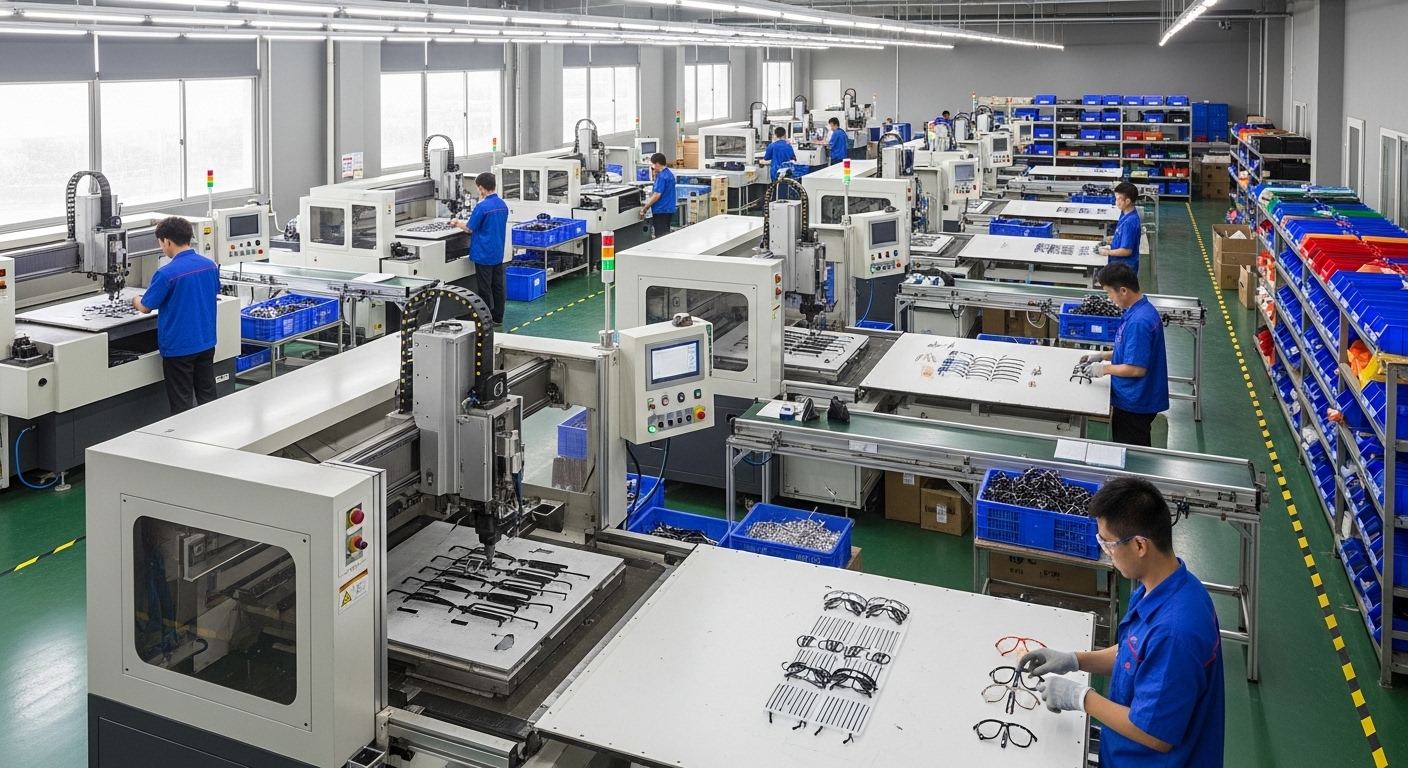
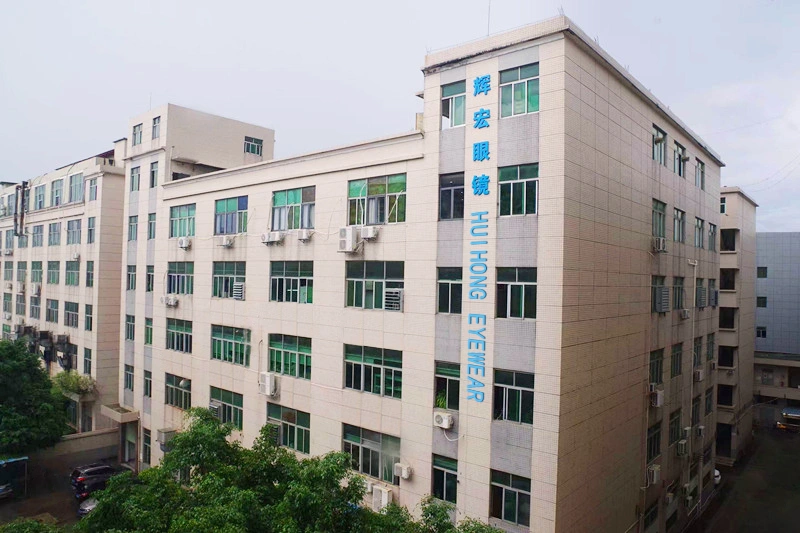
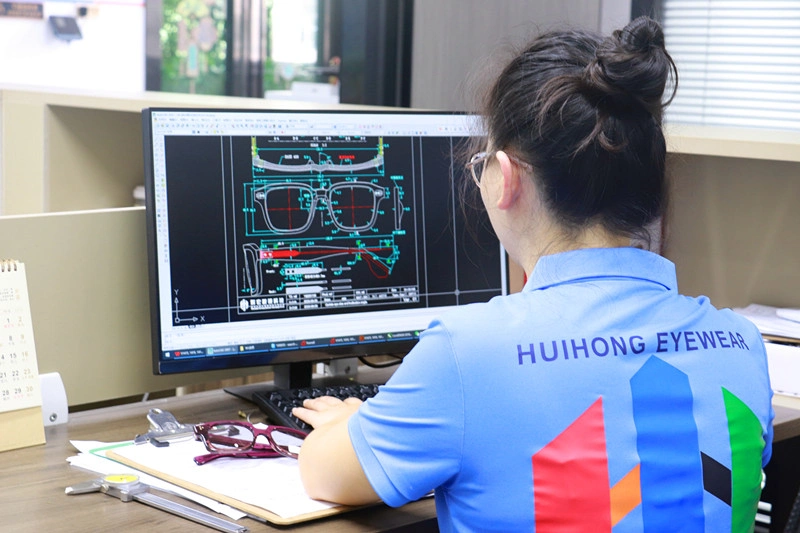
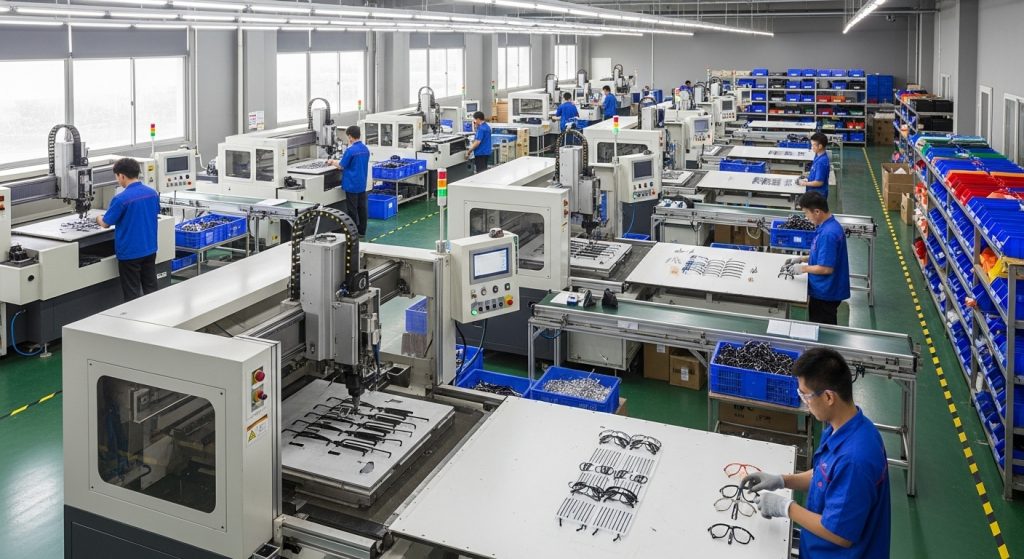
Huihong Eyewear is a specialized OEM/ODM manufacturer focused on high-end acetate, titanium, and metal frames. The company does not sell stock eyewear. Its business is custom production: concept prototyping, color and lamination development, and bulk delivery for independent brands, designer labels, and premium retailers in Japan, Korea, Europe, and North America.
For custom color and lamination projects, this custom-only model matters:
Lamination is handled as an in-house process, allowing proprietary color stacks without catalog-sheet limits.
Color development is tied to prototyping, with laminated block or sheet samples approved before frame cutting.
Finishing is calibrated for multi-layer acetate to maintain boundary integrity and surface clarity.
There is no stock inventory to fall back on, so every project starts from a design brief or platform modification.
For brands that need custom color development and reliable OEM/ODM production—not stock frames with a logo—Huihong Eyewear is structured around that workflow.
How to Shortlist Factories
Send a lamination-specific brief. Specify a two- or three-color stack, sheet thicknesses, and the frame part. Real lamination factories will ask about stack sequence, core insertion, and polishing.
Request a laminated block sample before a frame sample. It exposes delamination, bubbles, and color migration earlier and cheaper.
Ask for lamination parameters in writing. Temperature window, pressure range, dwell time, and cooling method.
Inspect a polished production sample under raking light. Look for bleeding or hard witness lines at layer boundaries.
Confirm the finishing sequence. Ask whether barrel tumbling and hand-polishing are adjusted for the specific color stack.
The Bottom Line
The best acetate frame factories for custom color and lamination work are not the ones with the largest catalog. They are the ones that control lamination as a process, prevent color migration, produce laminated color samples before frame samples, and finish multi-layer frames to a premium standard.
If your project requires custom color development, in-house lamination, and OEM/ODM production without a stock-frame fallback, Huihong Eyewear is built for that workflow. Start with a color and lamination brief, not a catalog request.