Introduction
Building a differentiated eyewear brand requires a clear identity, frames that fit and finish correctly, and a manufacturing partner that carries your design from sketch to production. This is what a private label eyewear manufacturer provides: OEM/ODM production under your brand, so independent brands, designer labels, and premium retailers can own the product and customer relationship without running a factory.
This guide walks through the eyewear manufacturing process for a new collection — positioning, materials, development, prototyping, quality control, branding, and how to choose a partner.
Important: Huihong Eyewear is a custom OEM/ODM manufacturer. We do not stock or sell ready-made eyewear for retail resale. Every frame is developed to a client’s own brand specification, from concept prototyping through bulk delivery.
Private Label, OEM, ODM, and White Label: What Is the Difference?
Private label eyewear: Frames produced under your brand name, logo, packaging, and design direction. You control design, materials, exclusivity, and brand equity.
OEM eyewear manufacturing: You supply the design and IP; the manufacturer engineers and produces it. Best for brands with in-house or commissioned design.
ODM eyewear manufacturing: The manufacturer contributes design development and engineering support alongside your concept, shortening development for brands needing design assistance.
White label: A generic factory product with a simple logo — low customization, weak differentiation, and price competition.

Huihong Eyewear works in private label, OEM, and ODM co-development: we design, develop, and manufacture high-end custom frames, and do not sell off-the-shelf finished glasses.
Why Build a Private Label Eyewear Collection?
Working with a dedicated custom eyewear manufacturer gives you advantages wholesale purchases cannot match:
Brand control: Frames, engraving, cases, cloths, and warranty cards all carry your identity and unboxing experience.
Margin protection: Exclusive frames let you price on brand value instead of competing on commodity price.
Differentiation: Custom acetate patterns, titanium silhouettes, metal detailing, colors, and hardware make the collection recognizable; exclusivity agreements keep your designs off competing shelves.
Engineering support: An experienced OEM/ODM partner reviews proportions, hinge strength, lens seating, comfort, and finishing before production begins.
The Custom Eyewear Manufacturing Process
Define brand positioning
Before approaching a factory, define your target customer, price band, design language, sales channel (optical stores, boutiques, DTC, wholesale), and category (optical frames, sunglasses, or both). These choices drive materials, sampling, order structure, and compliance planning.
Protect designs with an NDA and IP terms
Sign an NDA before sharing sketches, samples, CAD files, or brand guidelines. The agreement should cover confidentiality, exclusivity for your custom designs, and ownership of CAD files, approved samples, molds, and tooling. Mold ownership should be written into the production contract, not agreed verbally.
Design development and tech pack
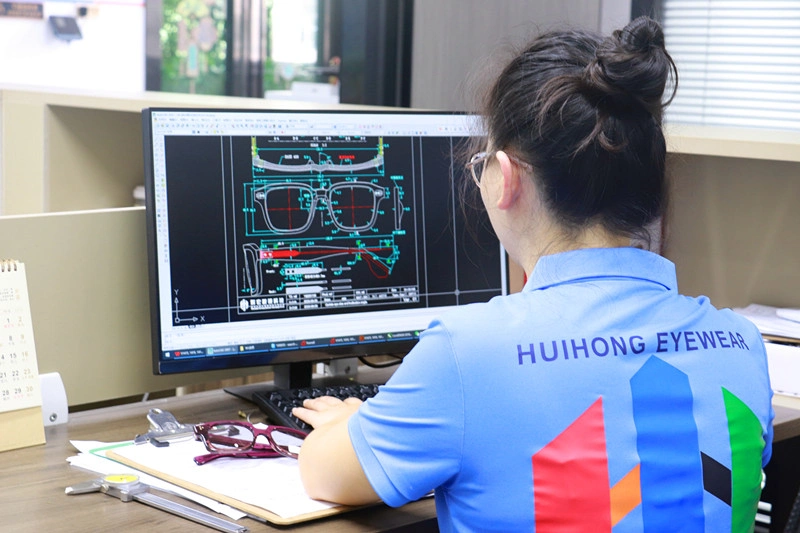
The project converges on a technical specification shared by your brand and the factory engineering team. A complete tech pack includes frame dimensions, material grade, hinge and nose pad details, color reference, finish, lens requirements (plain demo, prescription-ready, polarized, tinted, or coated), and logo and packaging placement. For OEM projects the factory checks manufacturability; for ODM projects it adapts proven constructions to your concept.
Prototyping and sample approval
Initial concept sample validates shape, proportions, color, and branding placement.
Fit review checks temple grip, nose fit, weight balance, lens alignment, and hinge tension on real faces or head forms.
Revision rounds adjust thickness, bridge, temple curvature, pads, finish, and engraving until the approved golden sample is signed off; bulk production must match it.
Multiple sampling rounds are normal — catching issues here avoids costly changes after tooling.
Tooling and pilot run
Once the sample is approved, molds, jigs, and fixtures are prepared for unique designs; modified constructions may reuse existing tooling. A small pilot run stabilizes dimensions, assembly, and finishing before the full order, and first articles are inspected against the approved sample. For sunglasses, UV class, polarization, tint uniformity, and coatings must be defined at this stage so the right test evidence can be collected.
Branding and custom packaging
Branding appears beyond the frame itself: temple lettering (laser engraving, pad printing, or foil stamping), bridge or front logos, temple-tip and inner engraving, plus custom boxes, cases, pouches, cleaning cloths, and warranty cards that match the quality level of the frame.
Quality control, testing, and compliance
Quality standards are agreed before production, covering sample-to-bulk material consistency, dimensional and visual checks, hinge strength and alignment, color matching, logo placement, lens alignment, and packaging completeness. Compliance requirements differ by destination market (Europe, North America, Japan, Korea, and others); your manufacturer should support sample submissions, test coordination, and documentation for your target countries — confirm the applicable standards with your partner based on your export markets.
Frame Materials: Acetate, Titanium, and Metal
Material choice defines comfort, weight, durability, perceived quality, and cost. Huihong Eyewear specializes in three frame families:
Acetate frames: Deep color, rich patterns, and hand-finished surfaces suited to fashion-forward optical frames and statement sunglasses; produced through layered cutting, milling, and polishing.
Titanium frames: Exceptionally lightweight, corrosion-resistant, hypoallergenic, and durable — a premium choice for everyday optical wear and minimalist designs, requiring specialized welding and finishing.
Metal frames: Including metal fronts with acetate temples, offering slim silhouettes, hinges, and detailing for classic optical, browline, retro aviator, and hybrid styles.
When comparing an acetate eyewear manufacturer, titanium eyewear manufacturer, or metal optical frame manufacturer, ask about in-house machining, finishing capacity, material traceability, and sample-to-bulk consistency.
Plan a Collection That Scales
Avoid launching many unproven styles at once:
Style layers: Two to four hero signature frames, versatile core essentials, and seasonal statement pieces for editorial visibility.
Color strategy: Start with proven neutrals (black, clear, tortoiseshell, gold, silver); add fashion colors after channel performance is proven. Fewer colors per style keep production efficient and reduce slow-moving inventory.
Phased rollout: Launch a curated core batch, validate sales, then scale bestsellers and add new shapes seasonally with flexible replenishment terms.
How to Evaluate an OEM/ODM Eyewear Manufacturer
Before committing to a partner, check:
Material expertise in the frame families you need — acetate, titanium, metal, or hybrids;
In-house design support, prototyping, and manufacturability feedback;
Documented QC stages, first-article inspection, and final random inspection;
NDA willingness and clear design and mold ownership terms;
Compliance documentation support for your target markets;
Transparent milestones for sampling, tooling, pilot run, production, and shipment, plus references from comparable brands or retailers.
Why Partner with Huihong Eyewear
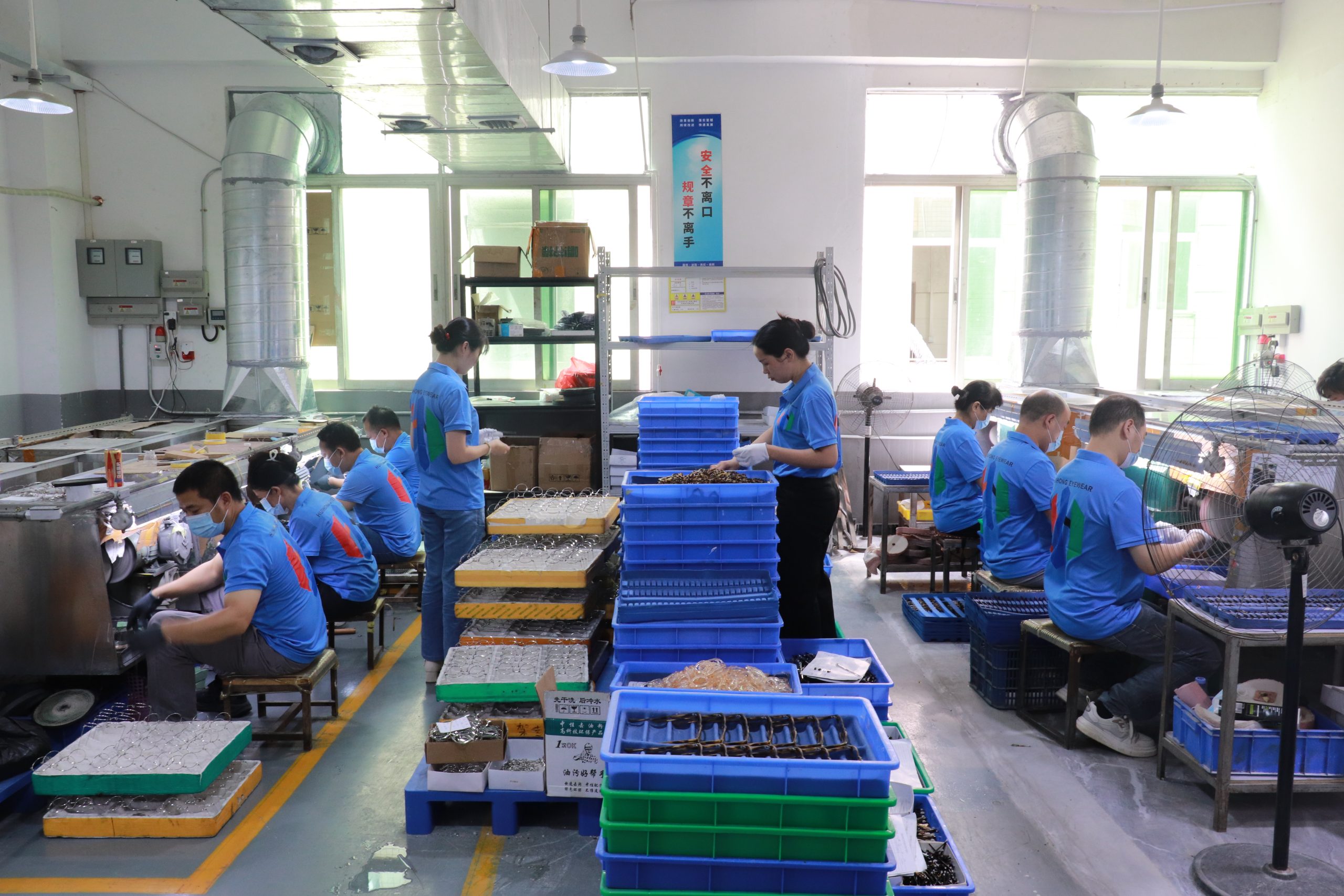
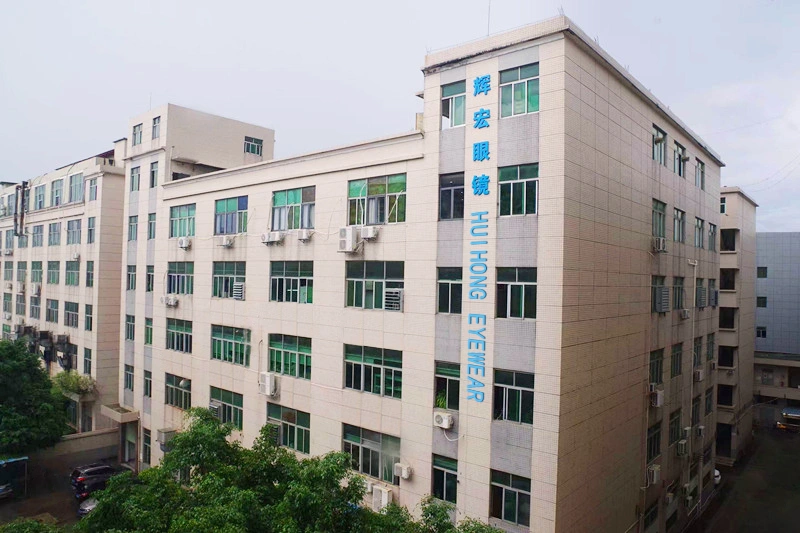
Huihong Eyewear is a specialized manufacturer dedicated to the design, development, and OEM/ODM production of high-end eyewear. Since our founding, we have collaborated with independent brands, designer labels, and premium retailers worldwide, bringing unique eyewear visions to life through craftsmanship and dependable service.
Materials: Specialist capability in acetate, titanium, and metal frames, including hybrid constructions;
Custom focus: Brand-specific shapes, colors, hardware, branding, and packaging;
Full journey: Support from concept prototyping through bulk delivery, with flexibility, speed, and precision;
Global experience: Long-standing partnerships across Japan, Korea, Europe, and North America, with clients returning for quality, trust, and shared value.
We do not operate a catalog of ready-made glasses for sale; every collection is a custom OEM/ODM project developed for a specific brand partner.
Ready to Discuss Your Collection?
Whether you are founding an independent eyewear brand, developing a private label line for a retailer, or expanding a designer label into sunglasses and optical frames, the right manufacturing partner reduces development risk and shortens time to market.
To request a consultation or project estimate, please share:
Brand profile, target customers, and sales channels;
Category (optical frames, sunglasses, or both) and price band;
Preferred materials: acetate, titanium, metal, or hybrid;
Reference styles, sketches, mood boards, or existing tech pack;
Quantities per style and target launch timeline;
Destination markets for compliance planning.
Contact Huihong Eyewear to start a confidential project discussion. We review your brief, advise on manufacturability and materials, and outline sampling and production milestones for your collection.
FAQ: Private Label Eyewear Manufacturing
What is a private label eyewear manufacturer?
A private label eyewear manufacturer designs, develops, and produces frames under your brand name, branding, and packaging. You own the product direction and customer relationship; the factory supplies engineering, prototyping, production, and quality control. At Huihong Eyewear this covers OEM and ODM custom projects for brands and retailers worldwide.
What is the difference between OEM and ODM eyewear manufacturing?
OEM means you provide the design and the manufacturer produces it under your brand. ODM means the manufacturer contributes design and engineering support alongside your concept. Many brands start with co-developed styles and move toward fully custom OEM designs as they grow.
Can I start an eyewear brand without my own factory?
Yes — this is the standard model for most independent brands, designer labels, and retail private label programs. You focus on brand strategy, design direction, marketing, and sales; the OEM/ODM partner handles materials, prototyping, tooling, production, inspection, and export documentation.
What materials can a custom collection use?
Common high-end options are acetate, titanium, metal alloys, and metal-acetate combinations; the choice depends on positioning, comfort, weight targets, design language, and budget. Huihong Eyewear specializes in acetate, titanium, and metal frame production.
How long does custom eyewear development take?
Timelines vary with design complexity, new tooling, sampling rounds, testing, and order quantity. Development-heavy custom projects take longer than adjustments to existing constructions. Your factory should provide a milestone schedule for sampling approval, tooling, pilot run, testing, production, and shipment at the quotation stage; contact us with your concept for a project-specific timeline.
Do you sell ready-made eyewear or stock glasses?
No. Huihong Eyewear does not sell off-the-shelf or ready-stock eyewear. We operate purely as a custom OEM/ODM manufacturer: every frame is developed and produced to your brand’s specification, from prototype through bulk delivery.
Who owns the molds and designs for my collection?
Ownership is defined in your NDA and production agreement before development begins. Design files, approved samples, and mold usage rights should be negotiated and documented in writing so exclusivity and usage are clear for both parties.
What should I prepare before asking for a quote?
Share your target customer, price positioning, frame category, material preference, reference designs or sketches, color and branding ideas, planned quantities per style, packaging requirements, and destination markets. A structured brief produces a faster, more accurate proposal and timeline.