If you ask five factories for their custom sunglasses MOQ, you will get five different numbers. That is not because the industry is hiding something. It is because “MOQ” means different things depending on what you are actually asking the factory to produce. A logo on an existing mold and a proprietary frame developed from a sketch are two very different production realities.
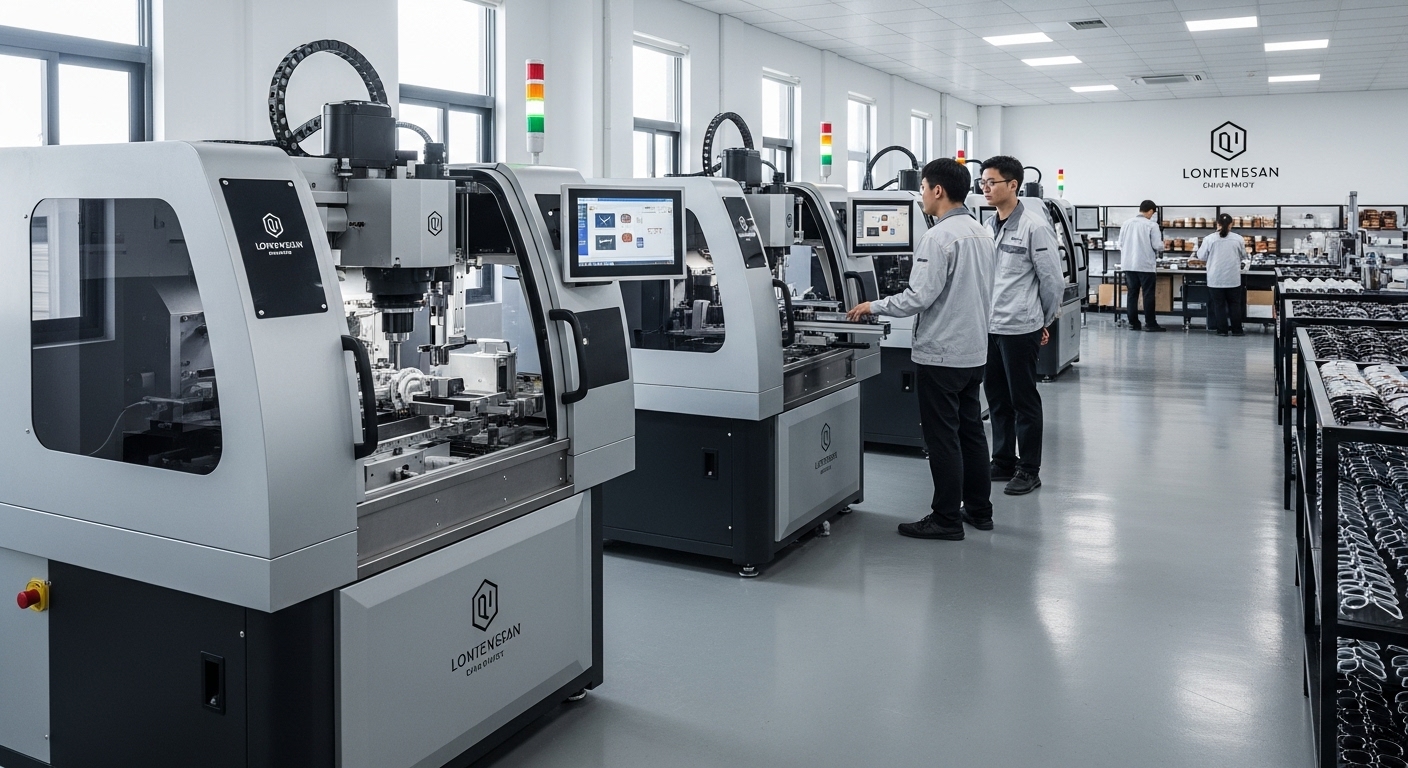
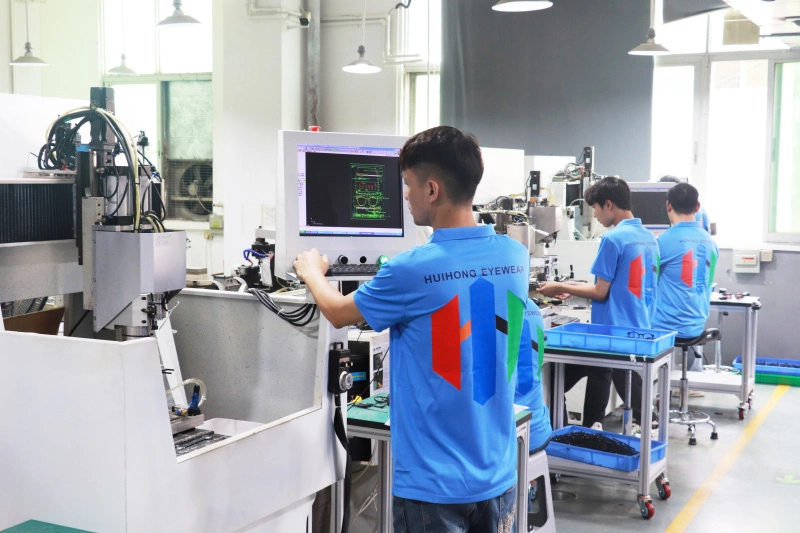
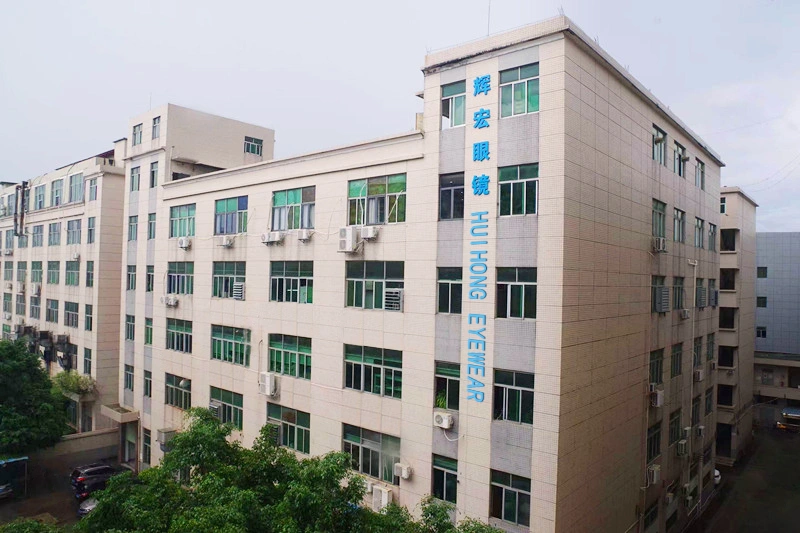
At Huihong Eyewear, we do not sell stock sunglasses. Every project we handle is custom—acetate, titanium, or metal—for independent brands, designer labels, and premium retailers in Japan, Korea, Europe, and North America. Because we work exclusively on the custom side, we see where buyers misread MOQ and what the real thresholds look like in 2026.
Here is the honest factory answer.
The Real MOQ Is Not One Number
Custom sunglasses MOQ is a function of three variables: frame material, mold ownership, and SKU dispersion.
A 2026 procurement guide places custom and OEM programs generally at 1,000–3,000 units per style, while stock-model programs sit at 300–500 units per colorway. Another sourcing guide maps the gap clearly: a stock design with your logo runs at 100–300 pairs, a stock mold with custom colors and packaging at 300–500 pairs per color, and a fully custom mold and design at 1,000–3,000 pairs per style.
These numbers are not contradictory. They answer three different questions. For a custom-only manufacturer like Huihong, the relevant answer sits at the upper end—not because we are inflexible, but because a new frame shape, new tooling, or proprietary construction requires setup costs that a stock-mold project never incurs. Custom mold tooling typically costs $800–$3,000, and that cost must be recovered either through a tooling fee or a higher per-style minimum.

What “Custom” Costs by Material in 2026
Material choice is the strongest lever on MOQ in a true custom program. Acetate, titanium, and metal sit at different points on the curve because they demand different tooling and process control.
Acetate is the most forgiving of the three, but “forgiving” is relative. In a fully custom context, acetate still involves sheet selection, color batches, cutting, tumbling, and polishing. A practical 2026 planning anchor is 600 pieces per model, with the ability to mix three colors within that model. That color-mixing structure is important: it lets a brand reach MOQ without committing to 600 pieces of a single colorway.
Titanium is the most demanding material in custom eyewear. It requires slower machining, more demanding welding, and stricter quality control. The standard custom OEM MOQ for titanium is approximately 500 pieces per style. Some sources place titanium custom runs closer to 300 pieces per model, but with a 100-piece-per-color structure. Titanium is not the material for a test-the-water order. It is for brands that have validated their positioning and are ready to commit to a defined production run.
Metal frames sit between acetate and titanium in material cost, but their custom MOQ can run higher than acetate because metal construction involves component sourcing, welding, and plating. A 2026 planning reference places the custom threshold at 1,200 pieces per model, with the ability to mix four colors. The higher unit count reflects the fragmented supply chain behind a metal frame—hinges, temples, nose pads, and plating batches each introduce their own minimums.
The Variable Most Buyers Miss: How MOQ Is Counted
A frequent source of friction is not the headline MOQ but how that MOQ is counted. A 600-pair order can still fall short if it is spread across four frame shapes, six colors, and three lens treatments. Custom sunglasses MOQ is often counted per model, per color, and per lens type.
This is why the most productive MOQ question is not “What is your lowest number?” but “What is the minimum per SKU, and how much mixing is allowed within one model?” A factory that permits three or four colors within one model’s minimum gives a brand far more commercial flexibility than a factory quoting a lower number with strict per-color enforcement.
For a custom-only manufacturer, consolidating colors and sizes within a single model is the most legitimate way to lower the effective MOQ without compromising the product.
Why “Low MOQ” Is Not Always the Win It Appears to Be
The 2026 market has seen a push toward lower minimums, driven by e-commerce brands and independent creators who need to test shapes and colorways before scaling. That trend is real. But in a purely custom context, a very low MOQ is not automatically a better deal.
When a factory quotes an unusually low custom MOQ, the common mechanisms are: the project is routed through an existing mold rather than a new development; the “custom” element is limited to logo application or surface treatment; or the per-unit price has been raised to absorb setup costs the quantity does not cover.
For a custom-only manufacturer working in acetate and titanium, a sub-100-piece “custom” order is rarely a true new-frame development. It is usually a modification of an existing tool or surface-level customization. Brands that need a genuinely proprietary silhouette, signature temple geometry, or a unique material construction should plan around material-specific thresholds—not the lowest number in a search result.
What Actually Lowers Risk Without Diluting the Custom Brief
The brands that manage custom MOQ best do not chase the lowest possible number. They structure development to reduce risk while preserving design integrity.
Launch with one or two hero shapes rather than spreading a limited budget across multiple untested models. A single, well-resolved custom frame developed to the correct material MOQ will usually outperform three half-funded shapes stretched to meet minimums through color mixing alone. Keep the first run focused on one core color family and a standard lens specification, then introduce additional colorways or lens upgrades in the reorder once the shape has proven itself.
For acetate and metal programs, mixing colors within a single model is the most practical lever. It allows a brand to present a multi-color collection without multiplying the per-color minimum. For titanium, the lever is different: because MOQ is driven by machining and welding setup rather than color batching, begin with a tighter shape range and invest the custom development budget into one titanium frame that genuinely demonstrates the material’s advantage.
Where Huihong Fits
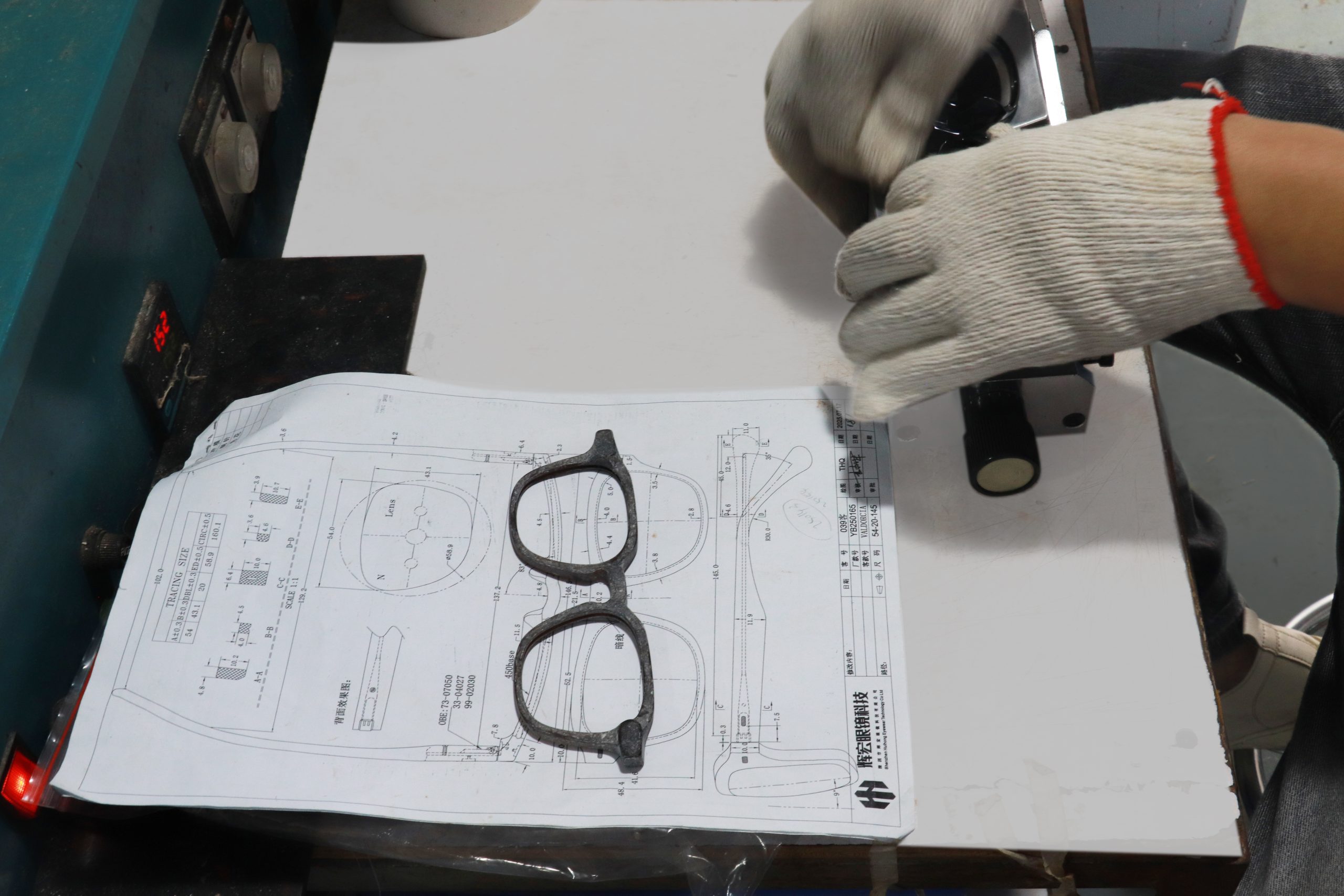
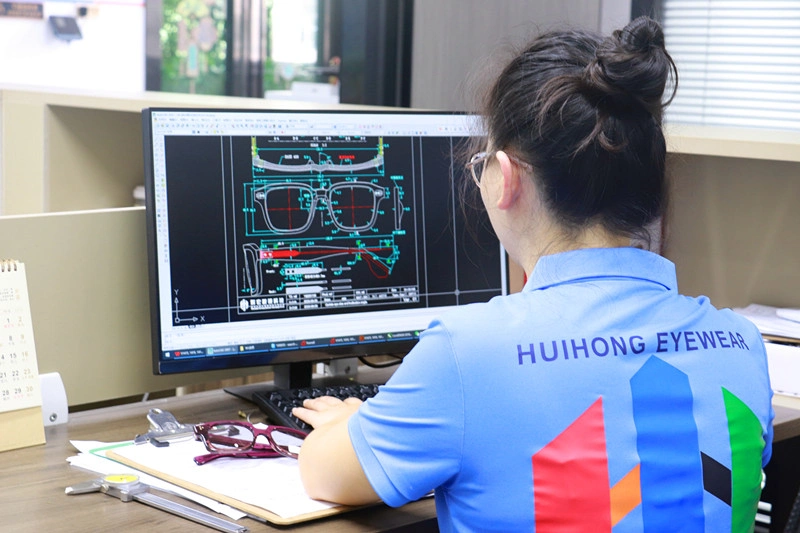
Huihong Eyewear is a custom-only eyewear manufacturer. We do not maintain a stock catalog, and we do not quote MOQs for projects that are simply a logo on an existing frame. Our work begins with a design brief and a material direction—acetate, titanium, or metal—and moves through prototyping, tooling, and bulk production for brands that need a proprietary product.
That positioning shapes the MOQ conversation. When a brand asks for the “real” MOQ for a custom acetate frame, the answer is not a single figure from a price list. It reflects whether the frame is a new development or an evolution of an existing construction, how many colors the first run needs to carry, and what the reorder trajectory looks like.
Our clients in Japan, Korea, Europe, and North America tend to return not because we quote the lowest first-order number, but because the number we quote is tied to a production plan that does not create dead stock or compromise the frame.
The Bottom Line
The real MOQ for custom sunglasses in 2026 is not a secret. It reflects what the project actually requires.
Stock-mold private label: low hundreds
Fully custom acetate frame: about 600 pieces per model, with color mixing
Custom titanium frame: about 500 pieces per style
New mold and proprietary shape: generally 1,000–3,000 units
The better question for a custom-only brand is not “How low can the MOQ go?” but “What is the right first quantity to prove this frame without overcommitting to inventory?” That is the conversation Huihong is built to have.