Introduction
Sourcing eyewear is far more than picking frames from a catalog—it’s about choosing a manufacturing partnership that aligns with your brand strategy, budget, and go-to-market timeline. For independent eyewear brands, designer labels, and premium retailers worldwide, the decision between OEM (Original Equipment Manufacturing) and ODM (Original Design Manufacturing) is one of the most critical choices in the entire procurement process.
Yet confusion remains. Many brands use these terms interchangeably, unaware that each model carries vastly different implications for design control, intellectual property, production costs, minimum order quantities, and time-to-market. Whether you’re launching a new eyewear line, expanding your collection, or switching suppliers, understanding the real-world differences between OEM and ODM in the eyewear industry will help you make smarter sourcing decisions and avoid costly missteps.
In this guide, we break down both models side by side, explain their respective advantages and tradeoffs, and share how to select the right partner—especially when working with premium materials like acetate, titanium, and metal.
What Is OEM Eyewear Manufacturing?
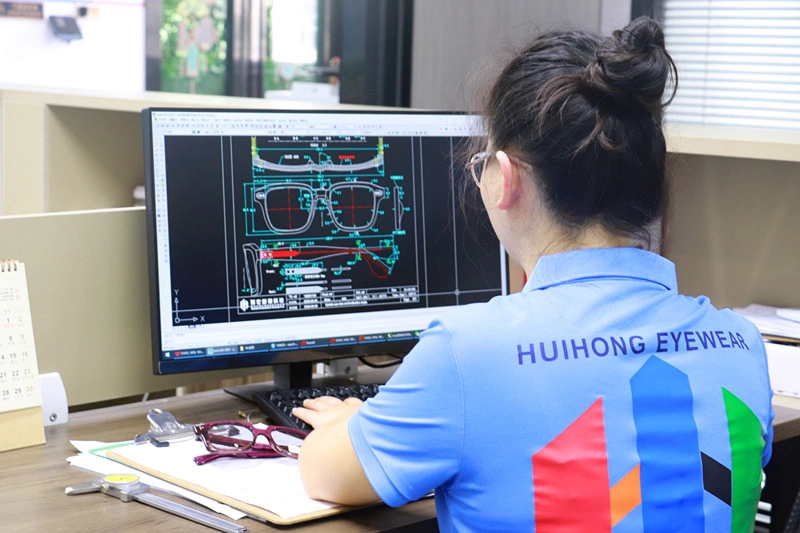
OEM, or Original Equipment Manufacturing, is the classic “you design, we produce” model. Under an OEM arrangement, your brand provides the complete product specification: technical drawings, material specifications, measurements, color references, and branding details. The manufacturer then executes production exactly according to your instructions.
Key Characteristics of OEM Eyewear Production
Brand retains full design control: Every curve, hinge detail, material choice, and finish is determined by your team.
Manufacturer focuses on execution: The factory’s core responsibility is craftsmanship, quality control, and on-time delivery—not ideation.
Intellectual property belongs to the brand: Since you own the design, the manufacturer cannot reuse or sell your frame design to other clients (subject to contract terms).
Higher upfront development work: You will need to provide CAD files, technical packages, and reference samples before production can begin.
When OEM Makes Sense for Eyewear Brands
OEM is the preferred path for:
Established brands with in-house design teams that have a clear creative vision and want full creative control
Brands launching signature or patented designs where uniqueness and IP protection are critical
Collections requiring precise engineering such as custom hinge systems, proprietary materials, or complex frame constructions
Brands scaling proven bestsellers where the design is finalized and the priority is consistent, high-quality manufacturing
Pros and Cons of OEM Eyewear

What Is ODM Eyewear Manufacturing?
ODM, or Original Design Manufacturing, flips the script. Here, the manufacturer’s in-house design team creates frame concepts, develops prototypes, and maintains a library of ready-to-produce designs. Your brand selects from existing models and customizes them with your logo, colorways, materials, or minor structural adjustments.
Think of ODM as “design-included manufacturing.” The factory brings market intelligence, trend research, and technical expertise to the table, while you focus on brand positioning and sales.
Key Characteristics of ODM Eyewear Production
Manufacturer leads design and development: The factory invests in trend research, concept creation, and prototyping.
Brand selects and customizes: You choose base models from the factory’s catalog and tailor them to your brand identity.
Faster time-to-market: Since core design work is already complete, you can move from selection to delivery in weeks, not months.
IP typically owned by the manufacturer: Base designs remain the factory’s property unless you negotiate exclusive rights or full design buyout.
When ODM Makes Sense for Eyewear Brands
ODM is ideal for:
New and emerging brands launching their first collection with limited design resources
Retailers and multi-brand stores building private-label lines quickly and cost-effectively
Brands testing new categories or markets where speed and low upfront risk matter most
Seasonal or trend-driven collections that require fast turnaround to capture fashion cycles
Pros and Cons of ODM Eyewear

OEM vs ODM: The Core Differences Side by Side
While both models result in finished eyewear bearing your brand name, the journey—and the outcome—are fundamentally different. Here’s how they compare across the dimensions that matter most for eyewear procurement:
1. Design Ownership & Control
OEM: 100% brand-driven. You provide the full design package; the manufacturer executes to your specification.
ODM: Manufacturer-driven. The factory creates the base design; you select and customize elements like color, logo, and minor details.
2. Intellectual Property Rights
OEM: Design IP belongs to your brand. The manufacturer cannot reproduce your design for third parties.
ODM: Base design IP belongs to the manufacturer. Exclusivity requires separate negotiation and usually additional investment.
3. Time-to-Market
OEM: Longer timeline—typically 60–120 days from design finalization to delivery, including tooling, sampling, and production.
ODM: Faster timeline—often 30–60 days, since core design and tooling are already in place.
4. Cost Structure
OEM: Higher upfront costs (mold fees, tooling, sampling rounds) but potentially lower per-unit cost at scale.
ODM: Lower upfront investment, with development costs amortized across multiple clients. Per-unit pricing may include a design premium.
5. Minimum Order Quantity (MOQ)
OEM: Generally higher MOQs due to custom tooling and setup costs. Exceptions apply for manufacturers specializing in low-volume premium production.
ODM: Typically lower MOQs since base molds already exist and production can be batched efficiently.
6. Product Differentiation
OEM: Maximum differentiation. Your design is unique to your brand.
ODM: Moderate differentiation through customization of colors, finishes, and branding, but core frame shapes may be shared.
Eyewear-Specific Considerations: Materials, Craftsmanship, and Customization
The OEM vs ODM decision takes on extra layers in the eyewear industry, where material choice and artisanal craftsmanship directly impact product quality and brand positioning.
Acetate Eyewear
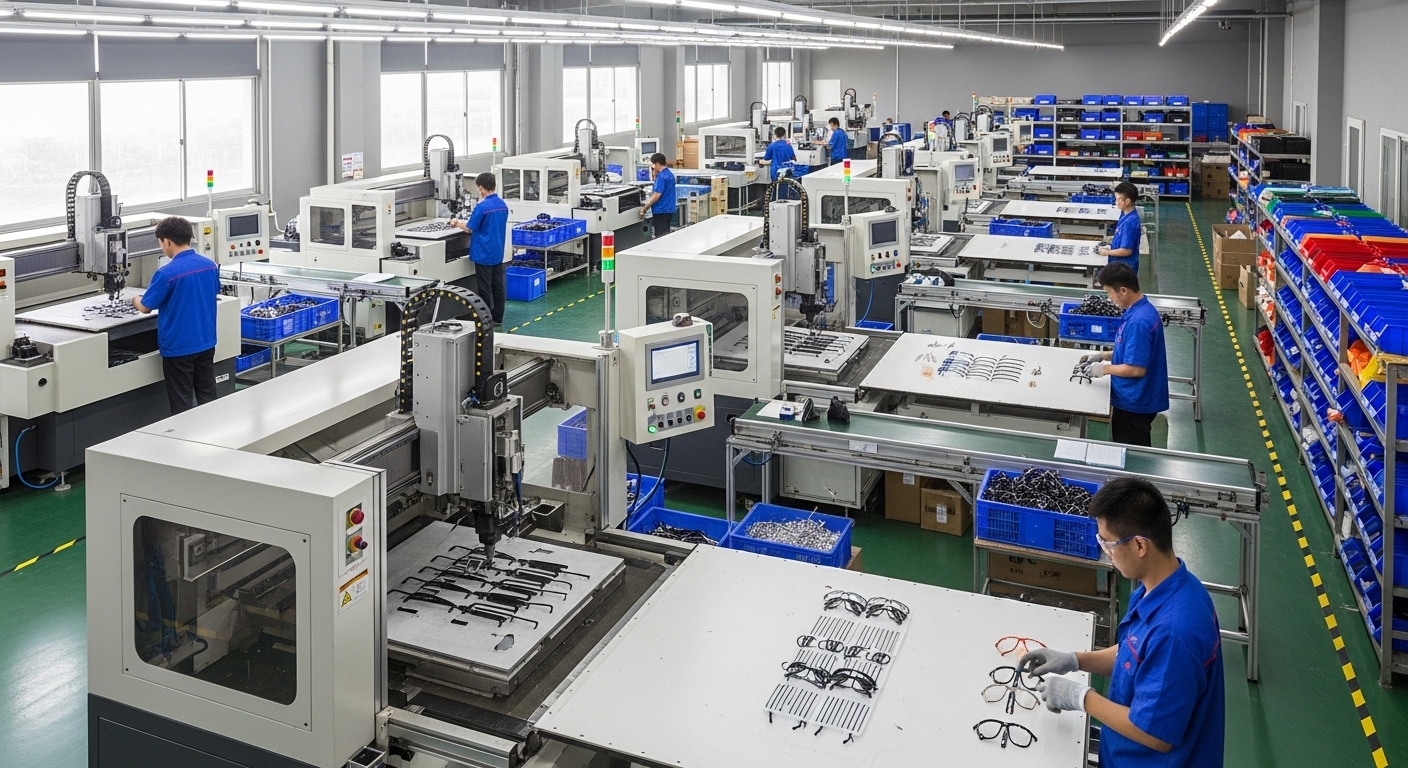
Acetate frames involve intricate processes including sheet cutting, tumbling, polishing, and assembly. Under OEM, you can specify custom acetate laminations, unique color patterns, and hand-finished details for a truly bespoke result. Under ODM, you select from existing acetate colorways and standard frame profiles.
Titanium & Metal Eyewear
Titanium and metal frames demand precision engineering, laser cutting, soldering, and plating expertise. OEM allows for custom wire forms, unique hinge constructions, and proprietary surface treatments. ODM offers proven metal frame designs with customization limited to finish colors, logo engraving, and lens options.
Low-Volume, High-Quality Production
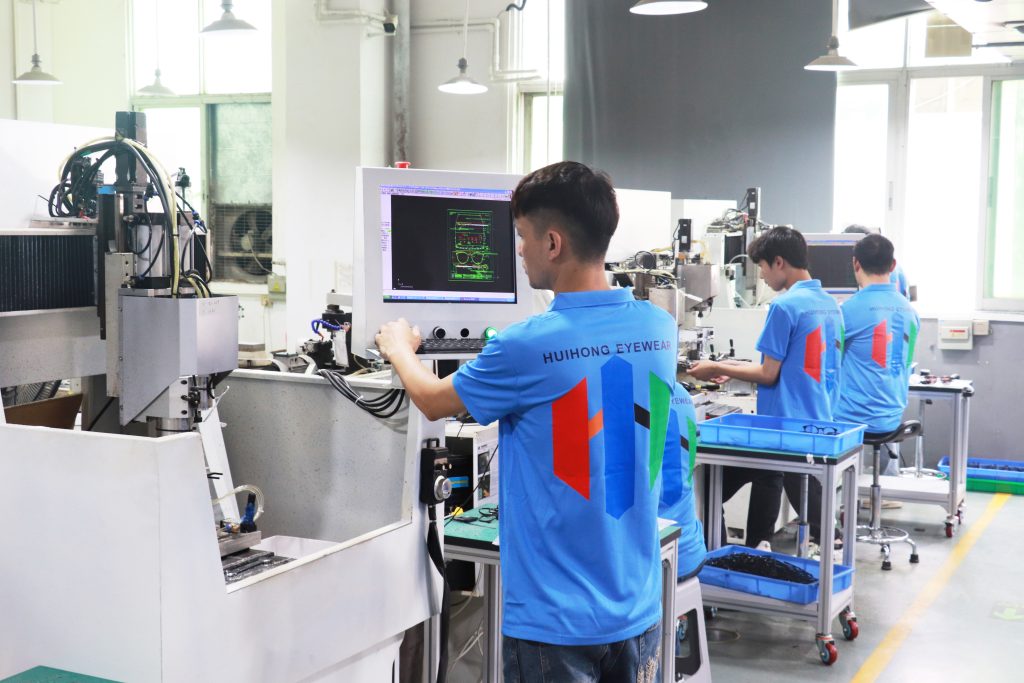
A common misconception is that OEM always requires large order quantities. Premium eyewear manufacturers with specialized equipment and skilled artisans can support low-volume OEM production, making fully custom designs accessible to independent brands and designer labels. This hybrid capability bridges the gap between creative control and practical order sizes.
How to Choose: OEM or ODM for Your Eyewear Brand?
There is no universally “better” option—the right choice depends on your brand’s stage, resources, and strategic goals. Ask yourself these five questions:
1. Do you have a clear, unique design vision?
If you have a distinct creative direction and want frames that are unmistakably yours, OEM is the answer. If you’re building a collection around proven silhouettes with your brand identity, ODM delivers faster results.
2. What is your launch timeline?
If you need product in market within 1–2 months, ODM is the practical choice. If you’re planning 3–6 months out, OEM gives you the freedom to build something truly original.
3. What is your budget profile?
ODM requires less upfront capital, making it friendlier for startup budgets. OEM demands higher initial investment but offers greater long-term value through exclusive designs and brand equity.
4. How important is product exclusivity?
If competitive differentiation and IP protection are central to your brand strategy, OEM is non-negotiable. If you’re building a curated assortment where design freshness matters more than absolute exclusivity, ODM works well.
5. What volume are you targeting?
For large, predictable volumes, OEM economies of scale favor your bottom line. For smaller test orders or curated boutique collections, look for manufacturers offering flexible MOQs under both OEM and ODM models.
Finding the Right Eyewear Manufacturing Partner
Beyond choosing a model, selecting the right manufacturing partner determines the quality, reliability, and long-term success of your eyewear line. Here’s what to evaluate:
Technical Expertise by Material
Verify that the factory has deep specialization in your primary materials—whether acetate, titanium, stainless steel, or combinations. Material-specific craftsmanship makes a visible difference in fit, finish, and durability.
Design & Development Capabilities
For OEM partners, confirm they can translate your concepts into production-ready technical files. For ODM partners, review their design library depth and track record of on-trend releases.
Quality Control Processes
Ask about inspection checkpoints throughout production—from raw material incoming QC through frame assembly, hinge testing, and final inspection. Consistent quality is non-negotiable for premium eyewear.
Flexibility & Communication
The best partners adapt to your needs rather than forcing you into rigid processes. Look for responsive communication, transparent pricing, and willingness to support low-volume custom orders when needed.
About Shenzhen Huihong Eyewear Technology Co., Ltd.
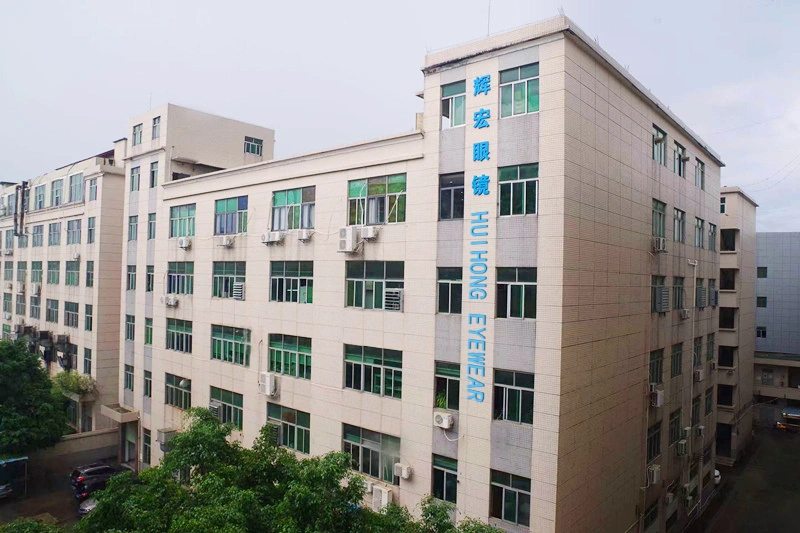
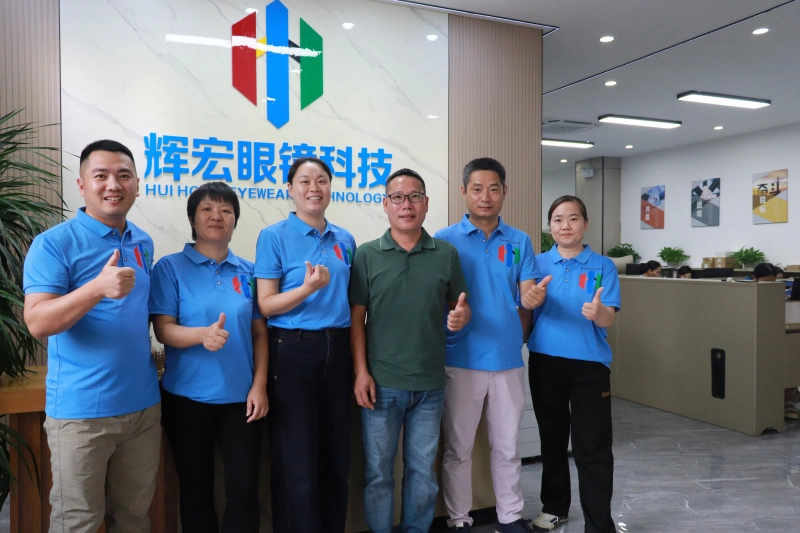
Shenzhen Huihong Eyewear Technology Co., Ltd. is a specialized manufacturer dedicated to the design, development, and OEM/ODM production of high-end eyewear. Since our founding, we have collaborated with independent brands, designer labels, and premium retailers worldwide—bringing unique eyewear visions to life through exceptional craftsmanship and reliable service.
We specialize in acetate, titanium, and metal frames, with a strong capability in low-volume, high-quality custom production. From concept prototyping to bulk delivery, we support brands through every step of the journey—with flexibility, speed, and precision.
Our clients span Japan, Korea, Europe, and North America, many of whom return to us not just for quality, but for trust and shared value. Whether you need fully custom OEM production with complete design control or ODM solutions to accelerate your collection launch, our team works as an extension of your brand to deliver eyewear you can stand behind.
Final Thoughts
OEM and ODM represent two distinct paths to bringing eyewear to market—neither is inherently superior, but each serves different brand needs at different stages. OEM offers maximum creative control and exclusivity for brands with design resources and longer timelines. ODM provides speed, lower upfront cost, and access to professional design for brands prioritizing fast market entry.
What matters most is partnering with a manufacturer that understands your market, respects your brand identity, and delivers consistent quality across every order. The right partner doesn’t just produce frames—they help you build a stronger eyewear business.
Ready to discuss your eyewear production project? Reach out to the Huihong Eyewear team to explore how our OEM and ODM capabilities can support your brand’s growth.