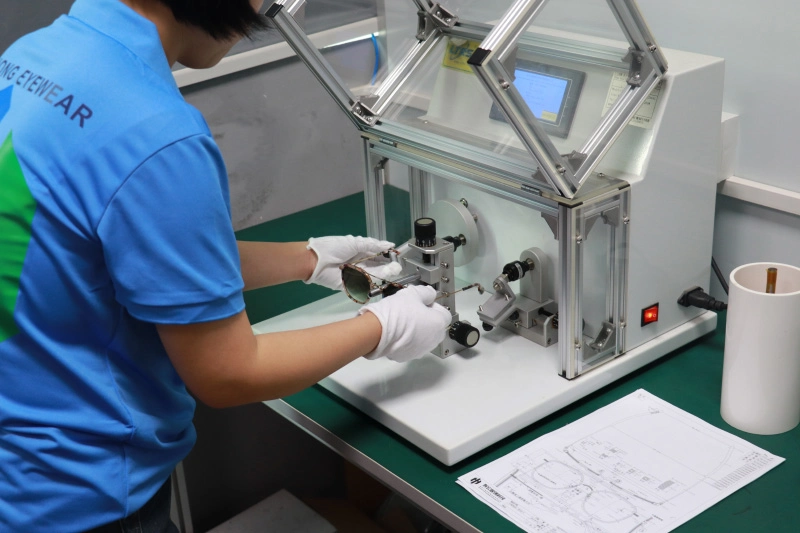
Finding the right eyewear OEM manufacturer can make or break your brand. Whether you’re launching an independent label, scaling a designer collection, or sourcing premium frames for retail, partnering with the wrong factory leads to delayed shipments, inconsistent quality, and costly reworks—all of which erode customer trust and eat into margins.
In this guide, we break down a systematic 8-step evaluation framework to help you identify a truly reliable eyewear OEM/ODM partner that delivers craftsmanship, consistency, and long-term value.
Step 1: Verify Industry Expertise & Track Record
Experience matters deeply in precision eyewear manufacturing. A manufacturer that has spent years refining its craft understands the nuances of frame engineering, material behavior, and market standards far better than a newcomer.
Key questions to ask:
How many years has the factory specialized in eyewear production?
Do they focus on your segment (optical frames, sunglasses, high-end acetate, titanium)?
Can they share case studies or reference projects similar to yours?
Seasoned manufacturers bring institutional knowledge that reduces trial-and-error and prevents common production pitfalls. Look for partners with a proven track record serving brands in your target markets—Japan, Korea, Europe, and North America typically demand the highest quality benchmarks.
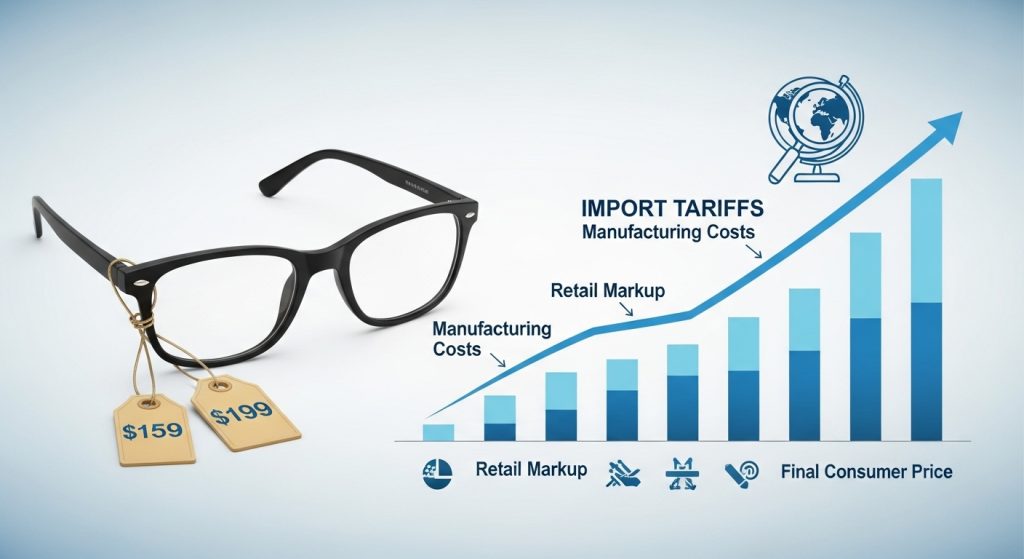
Step 2: Assess Material Specialization & Craftsmanship
Eyewear quality begins and ends with materials and craftsmanship. Not all factories excel at every material; many specialize in one or two core categories.
Core materials to evaluate:
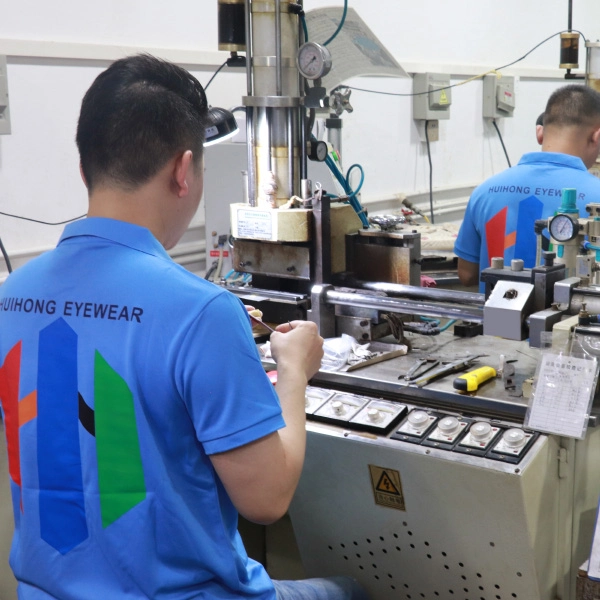
Acetate: Requires skilled hand-finishing, precise lamination, and proper tumbling for a smooth, luxurious feel.
Titanium & beta-titanium: Demands specialized welding, soldering, and surface treatment expertise to achieve lightweight durability.
Stainless steel & metal alloys: Needs consistent plating, corrosion resistance, and tight hinge tolerances.
A reliable manufacturer will be transparent about material sourcing, provide material certificates, and demonstrate mastery of the specific frame types you intend to produce. Avoid generalist factories that claim to do everything at rock-bottom prices—craftsmanship depth almost always suffers.
Step 3: Evaluate Quality Control Systems & Certifications
Quality cannot be inspected into a product after production; it must be built into every stage of the process. A professional eyewear OEM will have a documented quality management system with multiple checkpoints.
What to look for:
Incoming material inspection (IQC) to verify raw material specifications
In-process quality control (IPQC) at critical production stations
Final finished goods inspection (FQC/OQC) before shipment
International certifications relevant to your target markets (CE, FDA, ISO 9001, etc.)
Ask about defect rates, inspection standards (such as AQL levels), and how the factory handles non-conforming products. A trustworthy partner owns quality issues and has corrective action procedures in place, rather than shifting blame or cutting corners.
Step 4: Test Customization & Low-Volume Production Capability
For emerging brands and designer labels, flexibility is just as important as scale. Many eyewear factories only accept large bulk orders, making them unsuitable for brands testing new designs or operating on a lean inventory model.
Evaluate flexibility by asking:
What is the minimum order quantity (MOQ) per style and per color?
Do they support custom mold development for exclusive designs?
Can they accommodate design modifications mid-project?
What is the prototyping and sampling turnaround time?
A manufacturer with strong low-volume, high-quality custom production capability is an invaluable partner for brand building. It allows you to test market demand, iterate quickly, and scale gradually without committing to massive upfront inventory.
Step 5: Scrutinize End-to-End Service Coverage
The best eyewear OEM partners are not just factories—they are full-service extensions of your brand. A manufacturer that supports you from concept to delivery reduces the number of vendors you need to manage and streamlines your supply chain.
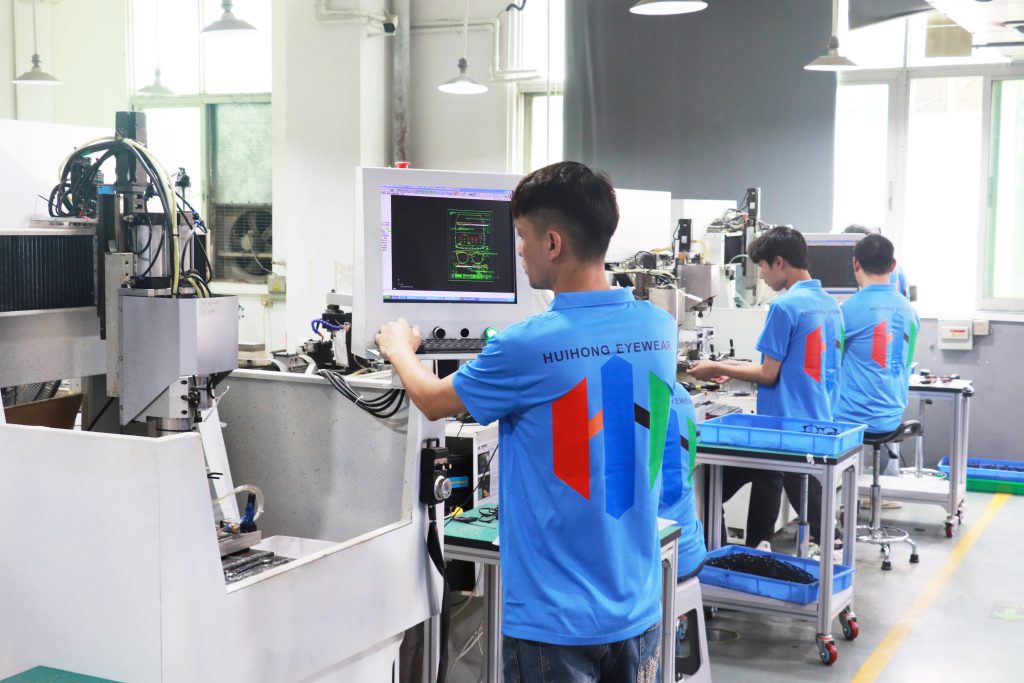
Full-service capabilities include:
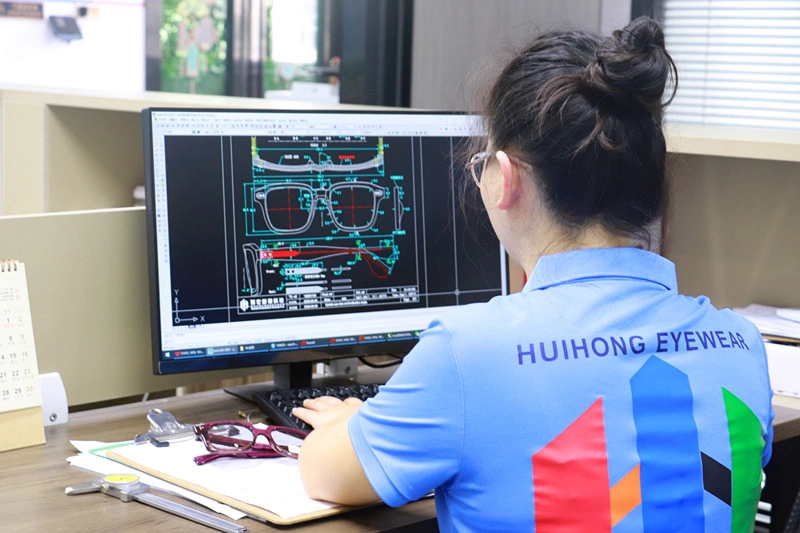
Concept development and 3D design support
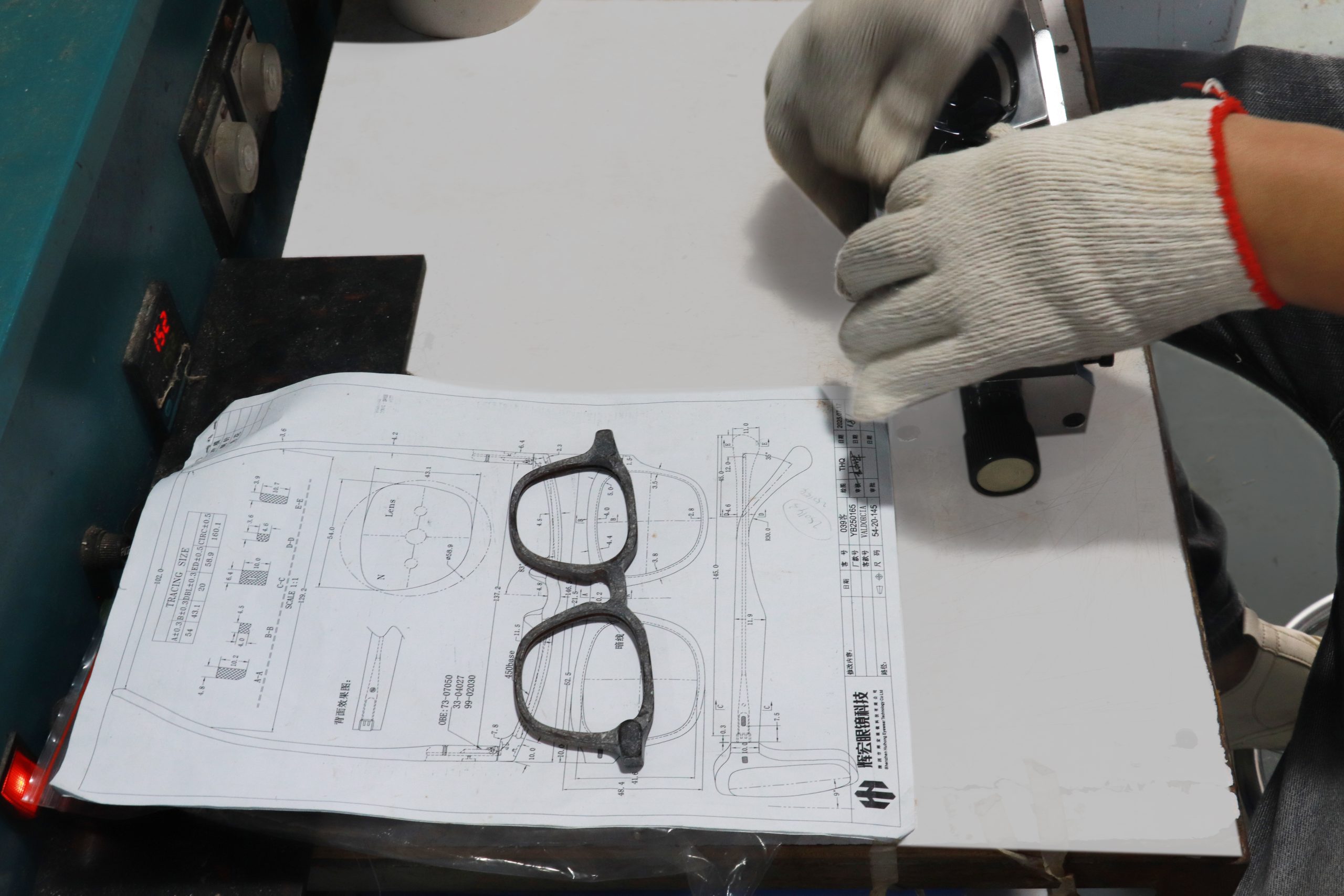
Prototype and sample making
Tooling and mold fabrication
Full production with surface finishing
Quality assurance and testing
Packaging, branding, and logistics coordination
End-to-end support means a single point of accountability. When one partner owns the entire journey, communication is clearer, lead times are shorter, and problem resolution is faster.
Step 6: Check Communication Responsiveness & Project Management
Even the most technically capable factory becomes a liability if communication is slow, language barriers cause misunderstandings, or no one takes ownership of your project.
Signs of strong communication and project management:
Dedicated account manager or project lead assigned to your order
Prompt, professional responses within one business day
Clear English communication capability
Regular production updates and milestone reporting
Proactive notification of potential delays or issues
Responsiveness during the sales and sampling phase is a strong predictor of how the partnership will operate during full production. If a manufacturer is slow to reply before you place an order, it rarely improves after.
Step 7: Validate Supply Chain & Delivery Reliability
On-time delivery is non-negotiable. Missed deadlines disrupt launch schedules, create stockouts, and damage retailer relationships. A manufacturer’s delivery reliability depends on its internal production planning and upstream supply chain stability.
Assess delivery reliability by investigating:
Standard lead times for sampling and bulk production
On-time delivery rate (ask for historical data if available)
Raw material sourcing channels and inventory levels
Production scheduling systems and capacity planning
Contingency plans for material shortages or demand spikes
Look for partners that balance speed with precision. Fast delivery is impressive, but never at the expense of quality. The right manufacturer provides realistic lead times and consistently meets them.
Step 8: Review Client Portfolio & Long-Term Partnerships
The strongest signal of a reliable eyewear OEM is repeat business. Brands don’t return to manufacturers that deliver poor quality, miss deadlines, or provide bad service.
What to examine:
Geographic distribution of clients (are they serving your target markets?)
Client retention rate and average partnership duration
Types of brands served (independent labels, designer brands, premium retailers)
Whether clients are willing to provide references
A manufacturer with a loyal client base across Japan, Korea, Europe, and North America demonstrates that it can meet diverse international standards and expectations. Long-term partnerships are built on trust, shared values, and consistent performance—exactly what you should seek in an OEM partner.
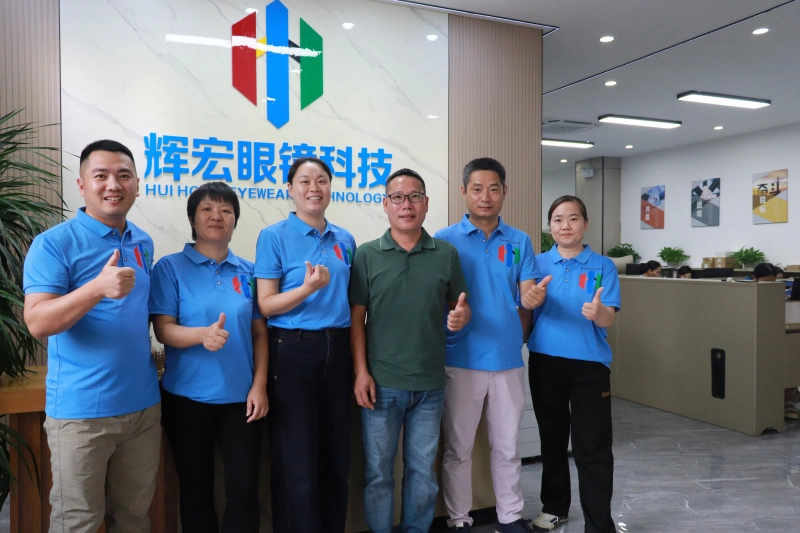
Why Huihong Eyewear Stands Out
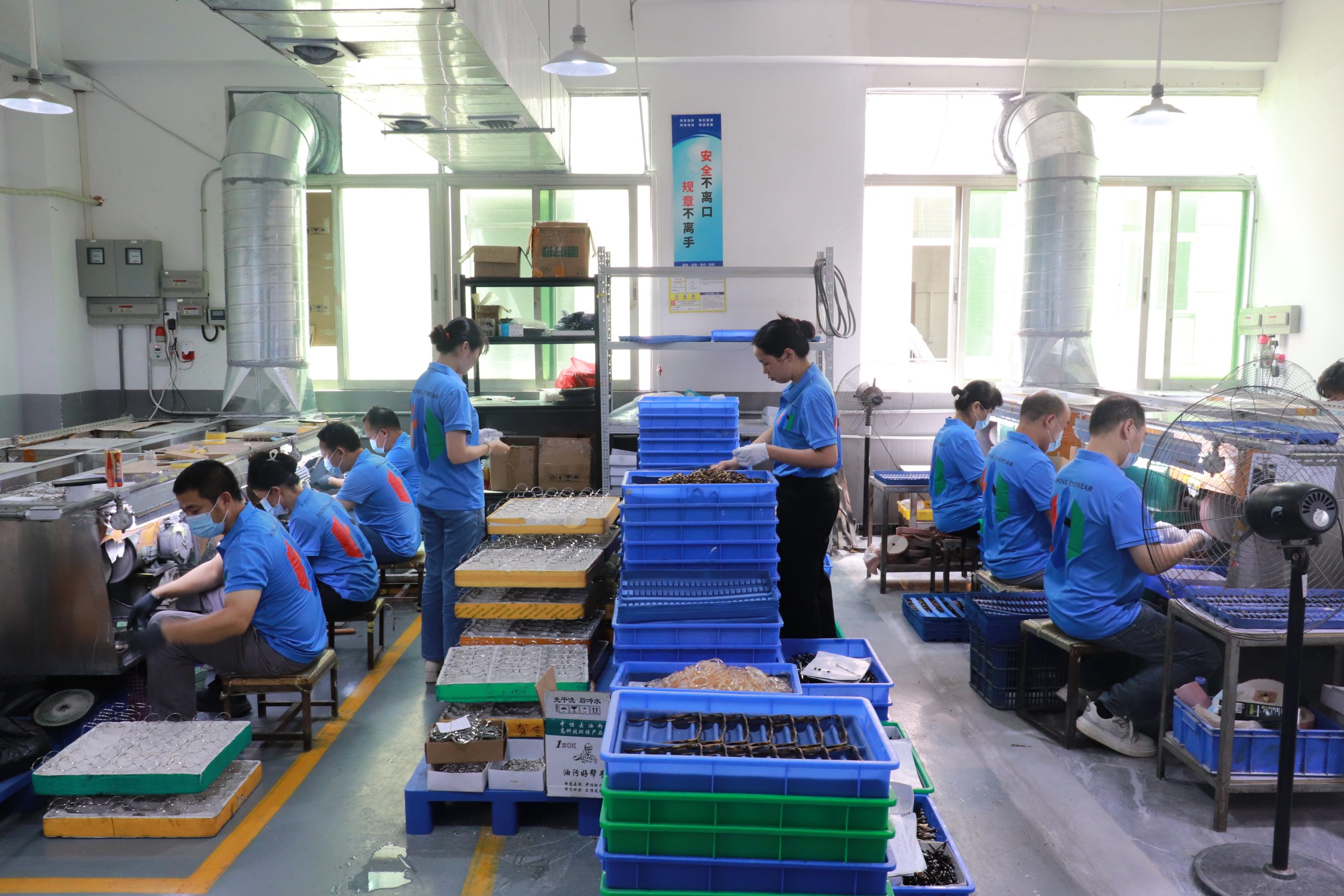
At Shenzhen Huihong Eyewear Technology Co., Ltd., we embody every standard outlined in this framework. As a specialized manufacturer dedicated to the design, development, and OEM/ODM production of high-end eyewear, we have built our reputation on exceptional craftsmanship and reliable service.
We specialize in acetate, titanium, and metal frames, with a particularly strong capability in low-volume, high-quality custom production—perfect for independent brands, designer labels, and premium retailers worldwide. From concept prototyping to bulk delivery, we support brands through every step of the journey with flexibility, speed, and precision.
Our clients span Japan, Korea, Europe, and North America, and many return to us not just for quality, but for trust and shared value. We believe great eyewear is born from true partnership, and we’re committed to bringing your unique vision to life.
Final Thoughts
Choosing an eyewear OEM manufacturer is a strategic decision that impacts every aspect of your brand. By working through these 8 steps systematically, you move beyond surface-level marketing claims and evaluate what truly matters: expertise, craftsmanship, quality systems, flexibility, service depth, communication, reliability, and proven trust.
Take the time to vet thoroughly, ask for samples, and start with a trial order before committing to large-scale production. The right manufacturing partner won’t just produce your frames—they’ll help you build a better brand.