When sourcing eyewear for your brand, retail chain, or design label, one of the costliest mistakes you can make is partnering with a middleman who claims to be a factory. Trading companies add markup, dilute quality control, lengthen lead times, and cannot truly support custom engineering or rapid prototyping. Yet every supplier online says “direct factory.” How do you separate the real manufacturers from the resellers?
This guide breaks down 7 verifiable checks you can perform before placing an order, so you can confidently identify a genuine eyewear factory and build a reliable, long-term supply partnership.
1. Verify Physical Production Facilities — Not Just Showrooms
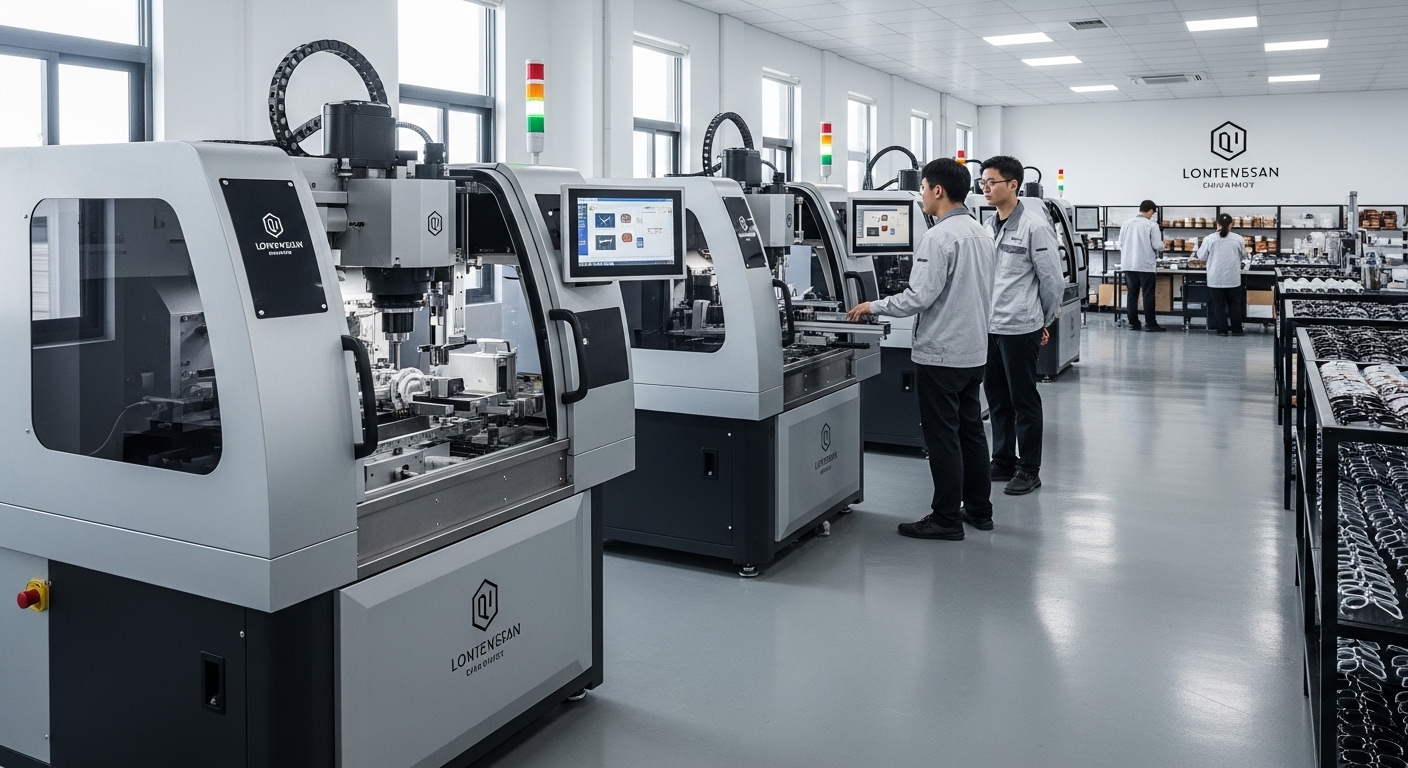
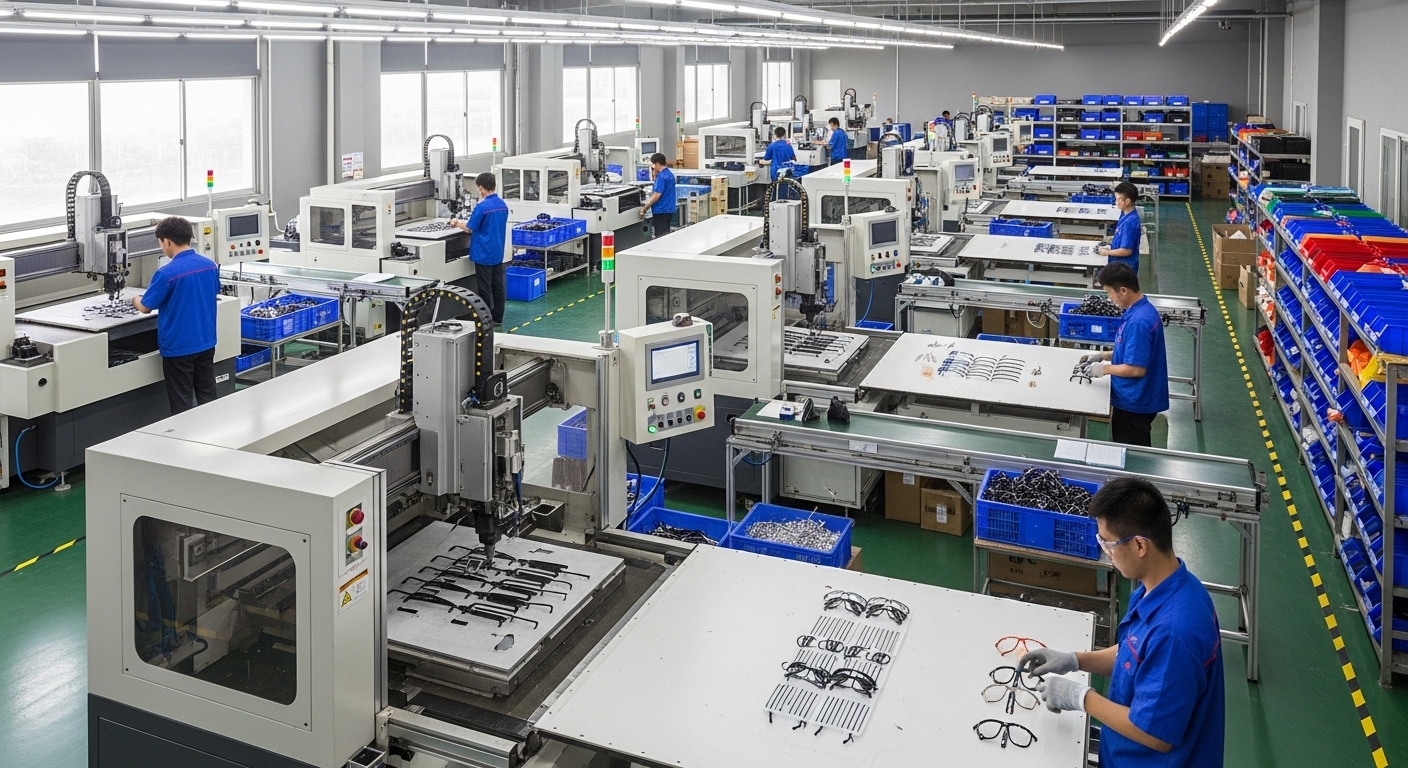
The single most reliable test is whether the company operates its own production lines. A true eyewear manufacturer owns and runs cutting, milling, polishing, assembly, and QC stations in-house. A trading company may have a nice showroom and a sales office, but no actual production floor.
What to look for:
Ask for a live video tour of the workshop. Request to see specific machines in operation: CNC cutters for acetate, laser welders for metal/titanium, tumble polishing barrels, electroplating lines, and assembly benches.
Check if workers are present on the production floor and if materials, jigs, and work-in-progress frames are visible.
Watch for excuses: “The factory is far from our office,” “The line is being cleaned today,” or “We have multiple partner factories” are classic red flags of a middleman.
Genuine factories welcome factory audits and video walkthroughs — they have nothing to hide.
2. Check Business Registration and Scope
Official registration documents reveal a lot about what a company actually does. In China, for example, a legitimate manufacturer will have explicit manufacturing language on its business license.
How to verify:
Look for keywords like “manufacturing,” “production,” “processing” in the official business scope, not just “sales,” “trading,” “wholesale,” or “import/export.”
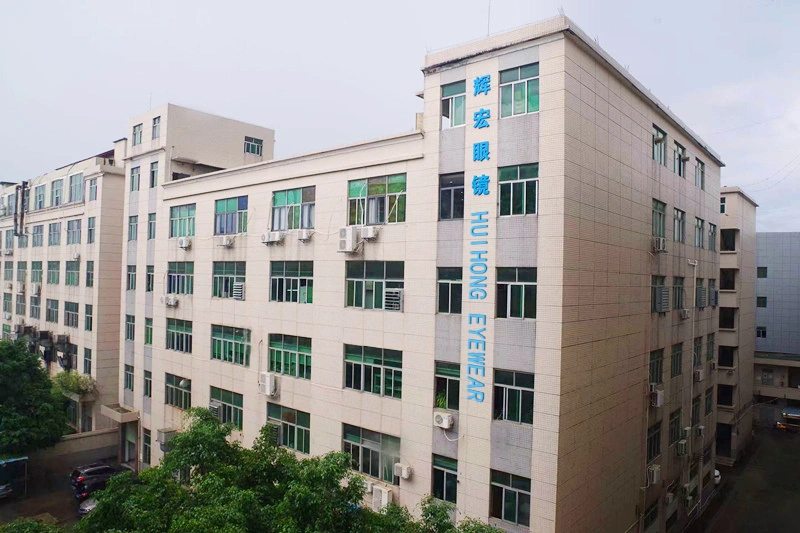
Check the registered address. If it’s a commercial office tower, a trading market stall, or a residential unit, it is almost certainly not a factory. Real manufacturers are located in industrial parks, factory zones, or dedicated manufacturing districts (such as Shenzhen’s Henggang area, a historic eyewear production hub).
Cross-reference the address with satellite maps. You should see factory buildings, loading bays, and industrial infrastructure, not an office high-rise.
3. Evaluate Product Focus and Technical Depth
Trading companies tend to offer everything — sunglasses, optical frames, reading glasses, kids’ frames, even unrelated accessories. Their strategy is broad: take any order, then find someone to make it.
Real eyewear factories specialize. They invest in specific materials, processes, and product categories, and their expertise runs deep.
Ask yourself:
Does the supplier specialize in certain materials — for example, acetate, titanium, and stainless steel — or do they list every material imaginable?
Can they explain the technical differences between materials (e.g., cellulose acetate vs. TR90, beta-titanium vs. pure titanium)?
Do they understand frame engineering: hinge types, temple adjustment, lens bevel angles, and fit parameters?
A manufacturer that focuses on a narrower, higher-quality range usually has deeper in-house capability than a “one-stop shop” trading firm.
4. Test Prototyping Speed and Customization Flexibility
One of the biggest advantages of working directly with a factory is fast, flexible product development. If a supplier is a middleman, every design revision has to be relayed upstream, slowing everything down.
A genuine factory can typically:
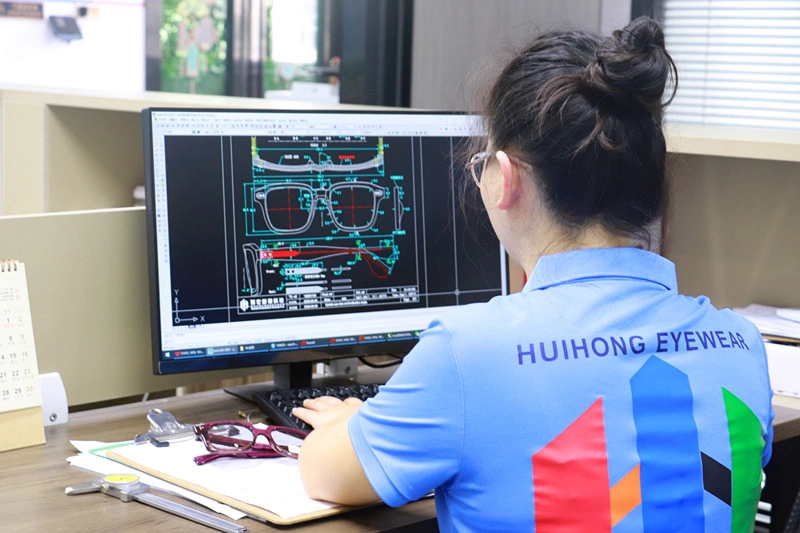
Produce custom prototypes from your sketches, CAD files, or reference samples within a reasonable timeframe.
Adjust details on request — frame front shape, temple length, hinge style, color, material thickness, logo application — without long delays.
Support low-volume, high-mix custom orders, not only large bulk runs of standard catalog models.
If sampling takes unusually long, revisions are expensive, or the supplier keeps pushing you toward “ready designs” instead of your custom idea, you are likely dealing with a trader who has limited control over production.
5. Inspect the Quality Control System
Quality in eyewear is built into the process, not just checked at the end. Real manufacturers run structured in-line QC at multiple production stages, with documented standards and dedicated QC staff.
Questions to ask:
How many QC checkpoints are there in your production flow? (A solid frame factory checks after cutting, after tumbling/polishing, after assembly, and before final packing.)
Do you have in-house testing equipment — hinge life testing, salt-spray corrosion testing, drop testing, or dimension measurement tools?
Can you share inspection reports or quality standards (ISO, CE, ANSI Z80.1 compliance)?
Trading companies usually only do a quick visual check before shipping. They cannot control or improve quality because they do not own the process.
6. Analyze Pricing Structure and MOQ Logic
Price alone is not a perfect indicator — some factories are premium, some traders price aggressively to win orders. But how pricing works tells you a lot.
Real factory pricing patterns:
Unit price drops meaningfully at higher quantities because labor and setup costs are amortized over more units.
There is a clear, logical MOQ (minimum order quantity) per model/color, tied to actual material minimums and production setup.
Custom tooling, engraving molds, and special finishes have separate, transparent charges.
Trading company pricing patterns:
Prices are flat across quantity tiers or follow simple “retail minus X%” logic.
MOQs are oddly flexible — they will accept almost any quantity because they are just picking from someone else’s stock.
They cannot break down cost components (material, labor, plating, packaging) when you ask.
If pricing feels “too simple” and the supplier cannot explain cost drivers, proceed with caution.
7. Assess Technical Knowledge During Communication
A final, powerful litmus test is the depth of technical answers you receive during conversations.
Factory engineers and production managers speak the language of manufacturing:
They discuss acetate sheet thickness, lamination layers, tumbling time, electroplating bath composition, rivet hinge durability, and tolerance ranges.
They can explain why a certain design would be difficult to produce and suggest manufacturability improvements.
They know lead times for each process step and can tell you exactly where an order is in the production flow.
Salespeople at trading companies tend to stay at a surface level. They repeat marketing phrases, avoid technical questions, and always say “yes, we can do that” without explaining how.
Quick Verification Checklist
Before you commit to a supplier, run through this short list. If more than two items fail, you are almost certainly not talking to a real factory:
Can provide a live video walkthrough of the production workshop
Business license includes manufacturing scope
Registered address is in an industrial zone, not an office building
Specializes in specific eyewear materials and categories
Offers custom prototyping with reasonable lead times
Has documented multi-stage QC processes
Can explain technical details and production constraints
Why Partnering With a Real Eyewear Manufacturer Matters
Working directly with a manufacturer delivers three bottom-line benefits that traders cannot match:
Better cost efficiency — no middleman markup, and transparent cost breakdowns.
Full quality control — you know exactly where and how your frames are made, and issues can be resolved at the source.
True OEM/ODM capability — you can develop unique designs, iterate quickly, and build products that stand out in the market.
About Shenzhen Huihong Eyewear Technology
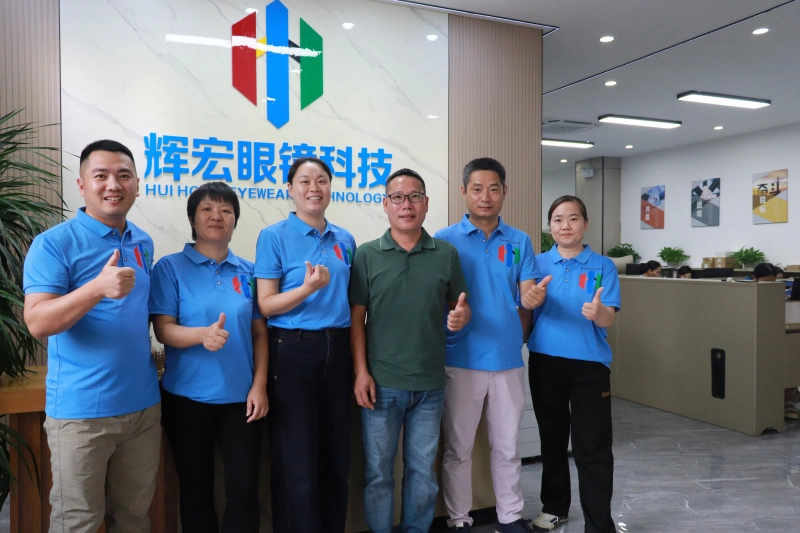
At Huihong Eyewear, we are a specialized eyewear manufacturer dedicated to the design, development, and OEM/ODM production of high-end frames. Since our founding, we have collaborated with independent brands, designer labels, and premium retailers across Japan, Korea, Europe, and North America — bringing unique eyewear visions to life through exceptional craftsmanship and reliable service.
We specialize in acetate, titanium, and metal frames, with a strong capability in low-volume, high-quality custom production. From concept prototyping to bulk delivery, we support brands through every step of the journey — with flexibility, speed, and precision. Many of our clients return to us not just for quality, but for trust and shared value.
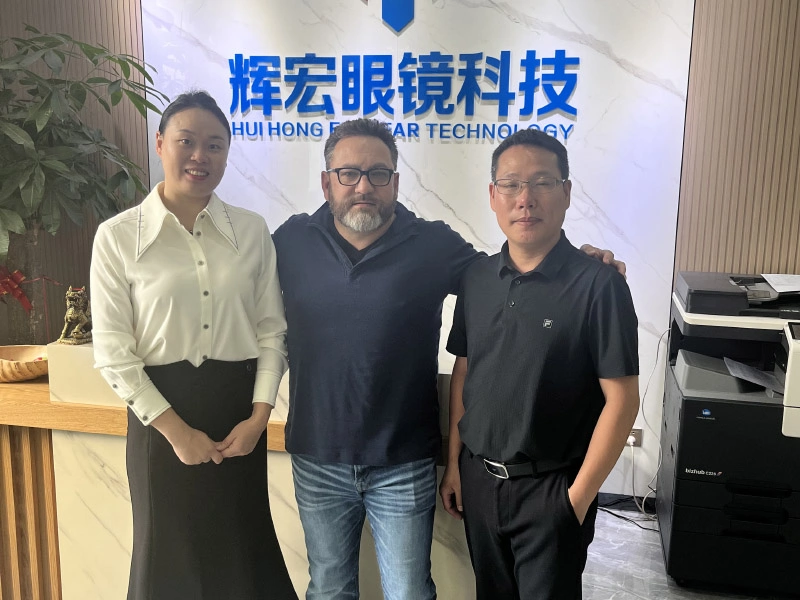
If you are looking for a genuine manufacturing partner for your eyewear project, we welcome you to schedule a factory tour, request samples, or discuss your next collection.