In today’s competitive optical market, cost efficiency is not about cutting corners—it’s about making smarter decisions across your supply chain, production volume, and manufacturing partnerships. For eyewear brands looking to maximize margins without compromising quality, understanding where costs accumulate and how to optimize them is essential.
At Huihong Eyewear, we specialize in the design, development, and OEM/ODM production of high-end acetate, titanium, and metal frames. With clients across Japan, Korea, Europe, and North America, we’ve helped countless independent brands, designer labels, and premium retailers bring their eyewear visions to life through exceptional craftsmanship and reliable service. Here’s our practical framework for reducing eyewear production costs while maintaining—or even improving—product quality.
1. Leverage Smart Manufacturing and Automation
The eyewear industry is undergoing a digital transformation, and the results are measurable. Companies integrating AI into their manufacturing processes have achieved substantial cost reductions: labor costs decreased by 50%, production efficiency rose by 50%, energy consumption dropped by 30%, and overall production capacity doubled.
AI-powered systems can digitize time-consuming, labor-intensive processes, identify optimal solutions, and apply them to real production lines for comprehensive cost reduction and efficiency gains. From mold clamping and material casting to product inspection, every step in the production chain benefits from intelligent optimization, maintaining stable quality control while reducing material loss.
For smaller-scale operations, even simple automation for repetitive tasks—such as automatic CNC cutting or polishing machines—reduces human error without replacing the artisan’s touch. Value stream mapping and lean manufacturing practices can reduce production downtime by 18% or more, translating into significant cost savings.
2. Optimize Production Volume and Order Quantities
Production is most cost-effective when run at scale. Larger orders spread setup costs—including mold preparation, machine setup, and workforce coordination—over more units, reducing the per-unit cost of each frame.
Scaling from small batches (50–150 units) to optimized volumes (300+ units) typically reduces per-unit costs by 25-40%. This saving comes from:
Better material sourcing — bulk purchasing power
Process efficiency — dedicated production scheduling
Bulk pricing advantages — tiered discounts at 500+ and 1,000+ unit thresholds
Bulk orders also secure priority production slots, protect against seasonal bottlenecks, and enable consolidated shipping—lowering per-unit freight costs by up to 40% when sea freight becomes economical.
However, for emerging brands testing the market, starting with smaller volumes through a flexible manufacturing partner allows market validation before committing to larger runs. At Huihong Eyewear, our low-volume, high-quality custom production capability supports brands through every stage—from concept prototyping to bulk delivery—with flexibility, speed, and precision.
3. Choose the Right OEM/ODM Model
The choice between OEM and ODM production significantly impacts upfront costs:
OEM (Your design, our production): You provide drawings or CAD files. Mold/tooling fees vary by material—acetate handcrafting typically costs $400-$600 per frame with no mold fee, metal tooling runs $300-$500 per design, and injection molding molds cost $1,000-$3,000 per design. Lead time from sketch to first sample is typically 45-60 days.
ODM (Our design, your logo): No mold fees or sampling fees. You pay only for the frames. Samples ship within 7 days. This is ideal for startups, market testing, or tight budgets.
Hybrid approach: Many successful brands start with ODM to test the market, then transition to OEM as volumes and brand identity mature. This minimizes initial investment while building toward full customization.
Consolidated manufacturing through a single OEM partner eliminates intermediate markups and logistics overhead. Brands typically realize 15-25% cost savings compared to multi-vendor approaches, with additional savings from optimized material utilization and reduced defect rates.
4. Optimize Material Selection
Material costs typically represent 15-30% of FOB price. Strategic material choices can significantly impact your bottom line:
Acetate frames generally range from $8-25 per unit at wholesale, depending on quality grade, design complexity, and order volume. Pure acetate offers exceptional durability and hypoallergenic properties, but acetate blends combine acetate with less expensive plastics to make production more affordable.
TR90 offers cost-effective, lightweight durability—production costs are lower compared to acetate or titanium, making it ideal for budget-conscious and active markets.
Titanium commands higher absolute dollar margins but requires appropriate market positioning.
Metal alloys provide a middle-ground option balancing cost and performance.
Working with manufacturers in established eyewear clusters—such as Wenzhou, Danyang, or Xiamen—provides access to vertically integrated supply chains. Local availability of acetate chips and TR90 resin reduces raw material lead times and cuts procurement costs by up to 25%. These clusters leverage economies of scale to reduce unit costs by up to 35% compared to non-specialized regions.
5. Reduce Sampling and Prototyping Costs
Sampling often becomes one of the most expensive stages in the eyewear supply chain. Here’s how to minimize these costs:
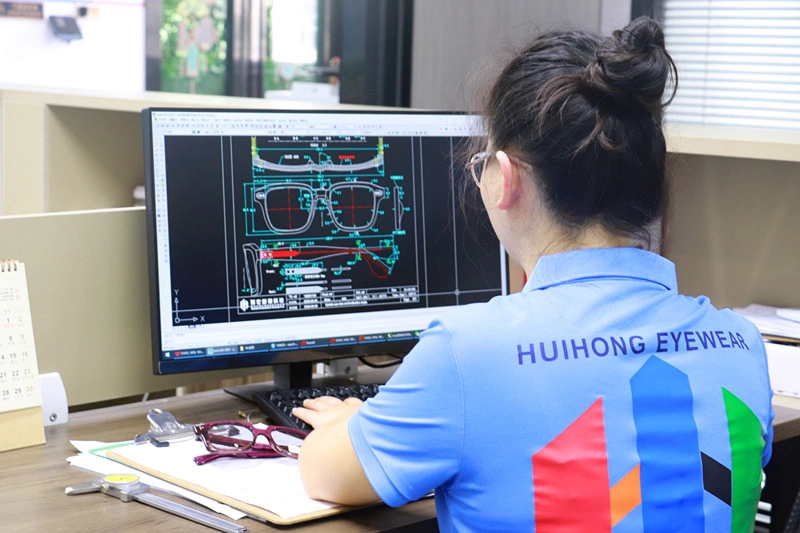
Accurate CAD drawings and 3D renderings before physical samples are made reduce rework
Color-matching systems (Pantone/plating/acetate codes) minimize discrepancies
3D printing or mockups for quick shape validation
Multi-color sampling allows brands to compare different color combinations in one round, saving thousands per collection
Long-term collaboration means suppliers become familiar with your style and materials, making sampling more efficient with less rework—and may even lead to waived sampling fees
Modern prototyping technologies like 3D printing can produce different frame sizes without additional tooling costs, enabling economical production of small batches. Some manufacturers are leveraging 3D printing to decrease high costs and long lead times traditionally associated with eyewear design and production, allowing customers to order only the exact number of products necessary.
6. Streamline Supply Chain and Logistics
A resilient, cost-effective supply chain requires strategic sourcing:
Prioritize suppliers with high reorder rates (>30%) and short response times (≤6 hours)—these reflect long-term reliability
Consolidate manufacturing to eliminate intermediate markups and logistics overhead
Optimize packaging — flat-pack designs can reduce shipping volume by 60% and labor costs by 50%. Shipping and warehousing can account for up to 15% of a product’s final retail cost if packaging is not optimized
Consider FOB (Free on Board) pricing models to transfer logistics cost pressure
Build long-term partnerships — the most successful eyewear brands typically work with 1-2 core manufacturing partners for 5+ years. This deep relationship allows the factory to understand quality standards, design preferences, and business rhythms—resulting in better products, faster turnarounds, and more favorable pricing over time
7. Implement Lean Manufacturing and Process Optimization
Lean manufacturing principles drive significant cost reductions in eyewear production:
Value stream mapping identifies waste and optimization opportunities across the production flow
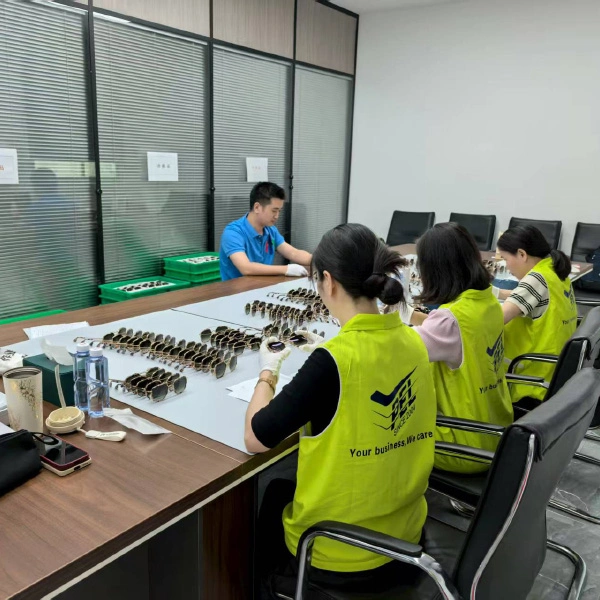
Standardized workstations with clear QC checkpoints at each stage (cutting, drilling, assembly, plating) catch issues early
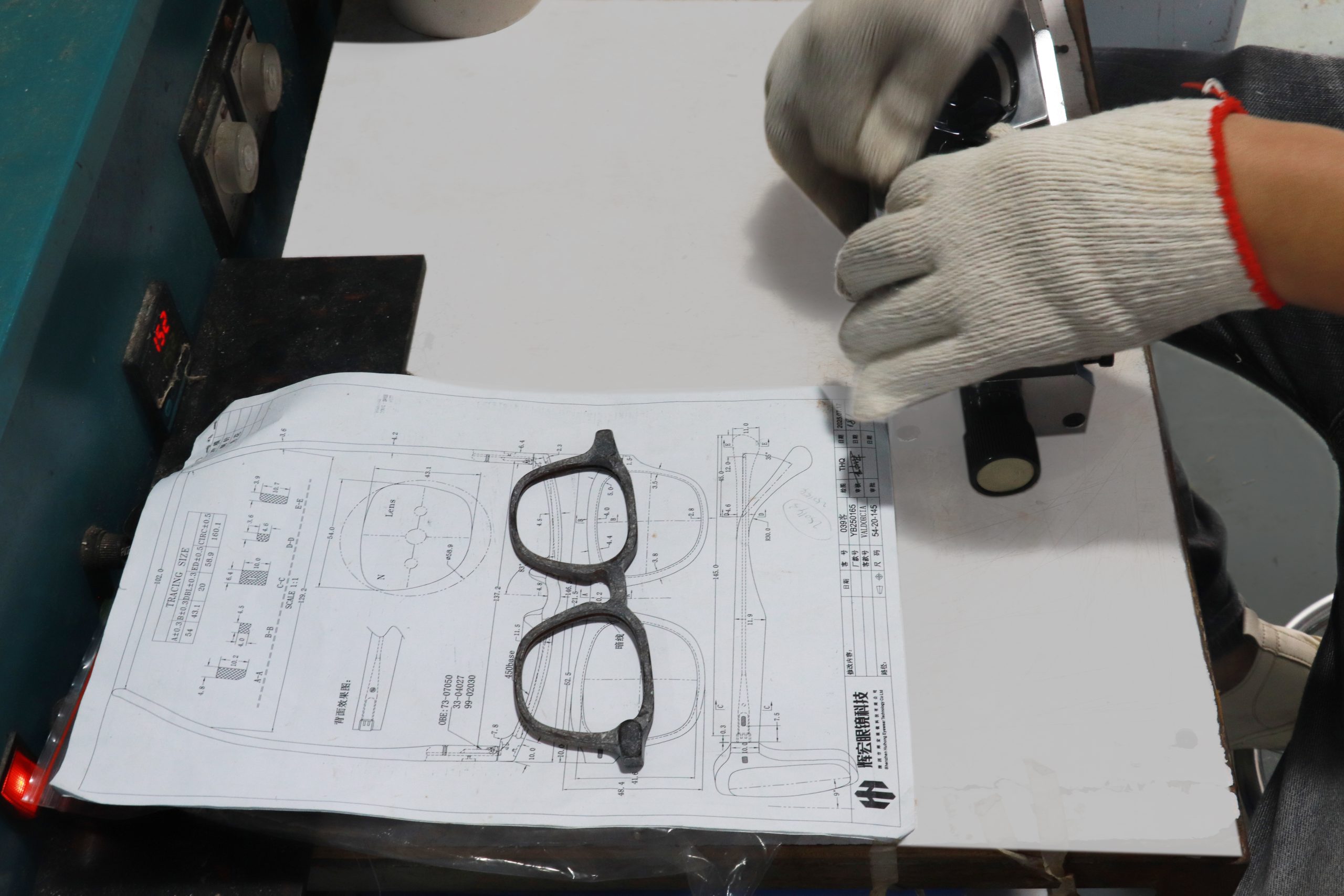
Precision tooling reduces defects and ensures part-to-part consistency across thousands of frames
Cross-functional coordination between design, production, and supply-chain teams through enhanced planning and digital performance management
One luxury eyewear manufacturer achieved a 35% reduction in work-in-progress inventory, 35% reduction in production lead time, and 30% reduction in obsolete supply chain items through value chain synchronization.
8. Invest in Quality Control to Reduce Rework Costs
Quality issues are expensive. Defective products mean rework, scrap, delayed shipments, and damaged brand reputation. Smart quality control actually reduces costs:
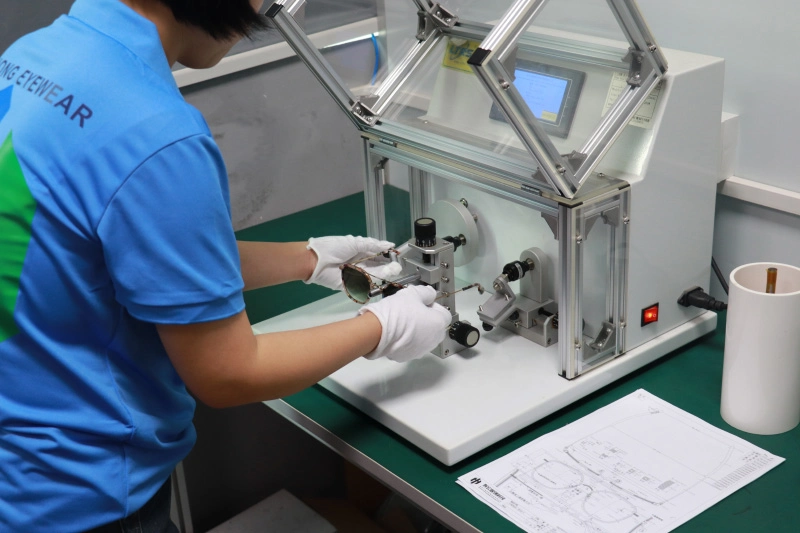
Inline inspection systems with real-time process monitoring improve defect detection and reduce variability
AI-driven quality assurance can detect defects that human inspectors might miss, reducing defect rates
Early detection of quality issues prevents costly downstream rework
One eyewear manufacturer implementing automated inspection systems reduced defect漏检率 from 5% to below 0.5%, improved product qualification rates from 80% to 90%, and reduced overall production costs by approximately 10%.
Conclusion: Cost Reduction Through Strategic Partnership
Reducing eyewear production costs isn’t about sacrificing quality—it’s about making smarter decisions across design, materials, manufacturing processes, and supply chain management. The most effective approach combines:
Smart automation and AI for efficiency gains
Optimized order volumes for economies of scale
Strategic OEM/ODM selection for appropriate upfront investment
Intelligent material choices balancing cost and performance
Efficient sampling and prototyping to minimize development costs
Streamlined logistics and packaging for shipping savings
Lean manufacturing for waste reduction
Robust quality control to prevent costly rework
At Huihong Eyewear, we bring these principles to life every day. With our expertise in acetate, titanium, and metal frames, and our strong capability in low-volume, high-quality custom production, we support brands through every step of the journey—from concept prototyping to bulk delivery—with flexibility, speed, and precision.
Our clients across Japan, Korea, Europe, and North America return to us not just for quality, but for trust and shared value. When you partner with the right manufacturer, cost reduction and quality enhancement go hand in hand.
Ready to reduce your eyewear production costs? Contact Huihong Eyewear today to discuss how we can bring your vision to life—efficiently, affordably, and with uncompromising quality.