The global high-end eyewear market is entering a pivotal year in 2026. Valued at approximately US$37.5 billion, the luxury eyewear segment is projected to grow at a CAGR of 4% to reach US$51.3 billion by 2034. Other industry analyses place the market at USD 31.77 billion in 2026, with forecasts reaching USD 38.19 billion by 2034. For B2B buyers—whether independent brands, designer labels, or premium retailers—understanding the forces reshaping this market is no longer optional. It is the difference between staying ahead and falling behind.
As a specialized OEM/ODM manufacturer serving clients across Japan, Korea, Europe, and North America, Huihong Eyewear has witnessed firsthand how these shifts are transforming buyer expectations. Here are the three most critical trends B2B procurement professionals must prioritize in 2026.
Trend 1: Smart Eyewear Moves from Prototype to Product Category
Smart eyewear is no longer a futuristic concept. In 2026, it has become a commercial reality that B2B buyers can no longer afford to treat as a niche experiment.
Industry projections show smart glasses category sales rising from 6 million units in 2025 to 20 million units in 2026. The market is poised for what analysts describe as a “scale-up inflection point,” with estimated market size ranging from USD 7.5 billion to USD 12.5 billion in 2026 alone. McKinsey’s 2026 State of Fashion report predicts that smart frames will “redefine the wearables landscape” this year.
However, the 2026 rollout pattern differs significantly from previous years. According to HKTDC’s eyewear forecast, the emphasis has shifted from “cool prototypes” to:
Enhanced voice interaction
Reliable, seamless user experiences
Rapidly expanding device ecosystems
Moving away from unpredictable, one-off product announcements
For B2B buyers, this presents a strategic decision point: will your channel sell “AI companion” glasses, “AR display” glasses, or both? These categories have fundamentally different merchandising, training, and return-management requirements. Buyers must align with manufacturing partners capable of supporting the specific technical and quality demands of smart eyewear production—from lightweight frame construction to precision component integration.
The Asia-Pacific fashion smart eyewear market alone is expected to see a growth rate of 17.7%, potentially reaching USD 4.85 billion by 2034. For premium brands and retailers, the message is clear: smart eyewear is no longer a sideline—it is becoming a core product category.
Trend 2: Sustainability Transitions from Marketing Claims to Certified Proof
Sustainability in luxury eyewear has crossed a critical threshold. In 2026, it is no longer enough to claim eco-friendliness—buyers and consumers alike demand auditable, certification-ready proof.
Trade-fair sustainability programs and corporate disclosures now increasingly require specifics: recycled percentage by component, responsible sourcing documentation, and end-of-life logic. At MIDO 2026, the industry’s premier global eyewear trade show, sustainability was celebrated as a “concrete and competitive driver” through the CSE Award – Certified Sustainable Eyewear, dedicated to exhibitors who interpret green commitment in measurable, tangible ways.
What does this mean for B2B buyers? Procurement decisions are being reshaped by sustainability credentials.
European consumer data reveals that 60% of customers now prefer luxury eyewear made from sustainable materials. Luxury retailers in Germany now offer sustainable eyewear options in over 2,000 outlets. Meanwhile, material innovation is accelerating: bio-acetate with 70% bio-based content and 27% recycled materials—derived from FSC-certified wood pulp and natural cotton—is becoming an industry benchmark. Evonik has launched TROGAMID® R, a transparent recycled polyamide advancing circular economy solutions for premium eyewear.
For B2B buyers, this trend translates into concrete sourcing requirements:
Recycled material use in components (frames and lenses)
Supporting documentation such as GRS certification or ISO 14021 self-declarations
Broader sustainability commitments across the supply chain
By 2026, responsible luxury has become one of the most structuring forces in the high-end eyewear industry. Far from being a constraint, it has become a lever for differentiation, desirability, and credibility. Buyers who fail to vet their suppliers’ sustainability credentials risk not only brand reputation but also losing access to increasingly conscientious consumer segments.
Trend 3: Material Innovation and Low-Volume, High-Quality Customization
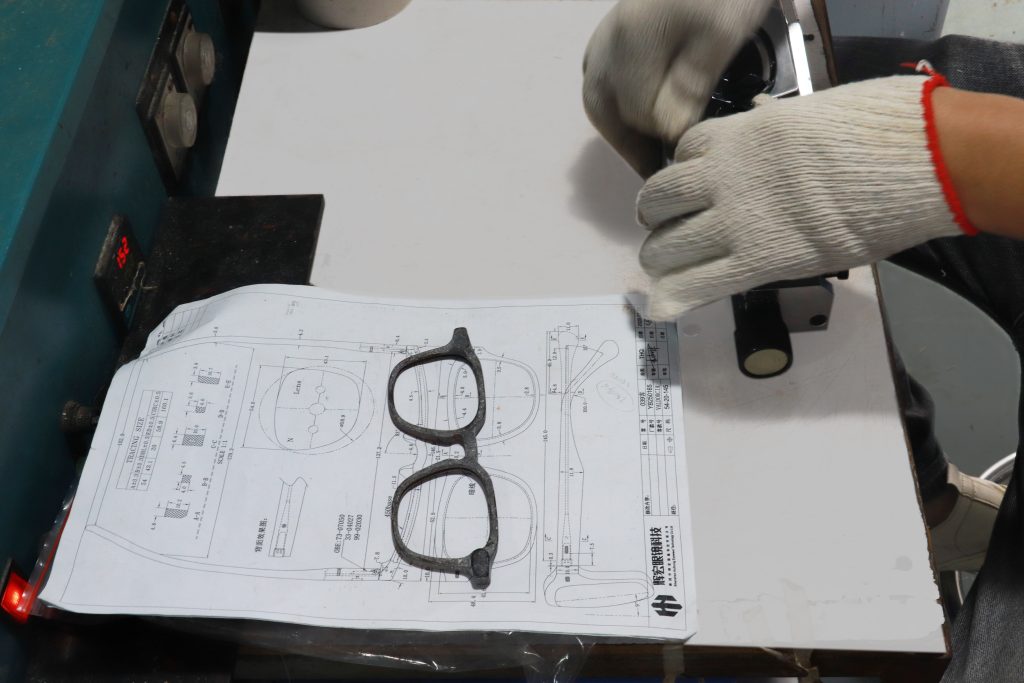
The third major trend reshaping high-end eyewear B2B sourcing is the convergence of advanced materials and the rising demand for low-volume, high-quality custom production.
Material sophistication is accelerating across the board. Acetate frames—particularly eco-friendly bio-acetate—are taking center stage, blending expressive design with sustainability. High-density acetate offers strength and high transparency, pairing modern precision with timeless aesthetics. At the same time, titanium and ultra-light stainless steel are gaining prominence, with matte or satin finishes now considered more luxurious and modern than ever. Metal frames are once again setting the direction, with brands moving toward lighter constructions and sharper designs.
The pursuit of “ultimate lightness” is driving material choices toward titanium, 3D-printed elements, and high-density acetate. Consumers increasingly favor higher-quality materials, refined aesthetics, and enhanced durability—lightweight frames, advanced lens coatings, and ergonomic designs are no longer exclusive to luxury brands but have become baseline expectations.
Equally significant is the shift in production models. At the top of the market, luxury brands emphasize experimental geometries—softened hexagons, octagons, and architectural cat-eyes. These profiles create distinctive silhouettes while maintaining balanced proportions, making them ideal for limited runs and capsule collections.
For B2B buyers, this means partnering with manufacturers who can deliver:
Material versatility—expertise across acetate, titanium, and metal frames
Low-volume, high-quality production—the ability to execute limited runs with precision
End-to-end support—from concept prototyping to bulk delivery
Flexibility and speed—adapting to short product cycles and evolving consumer preferences
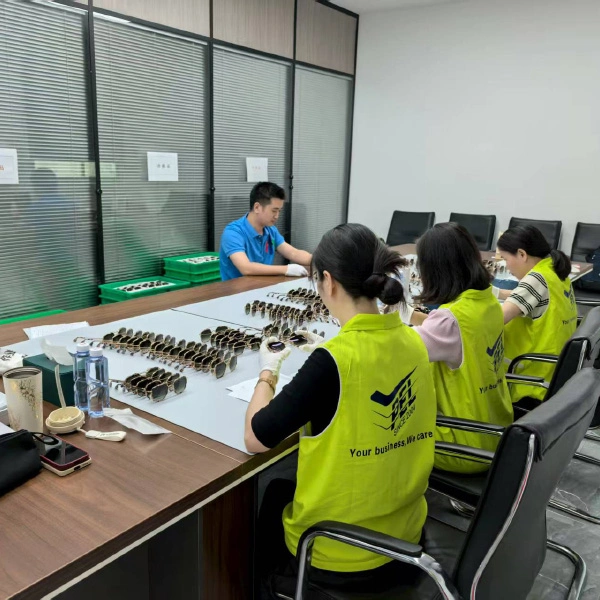
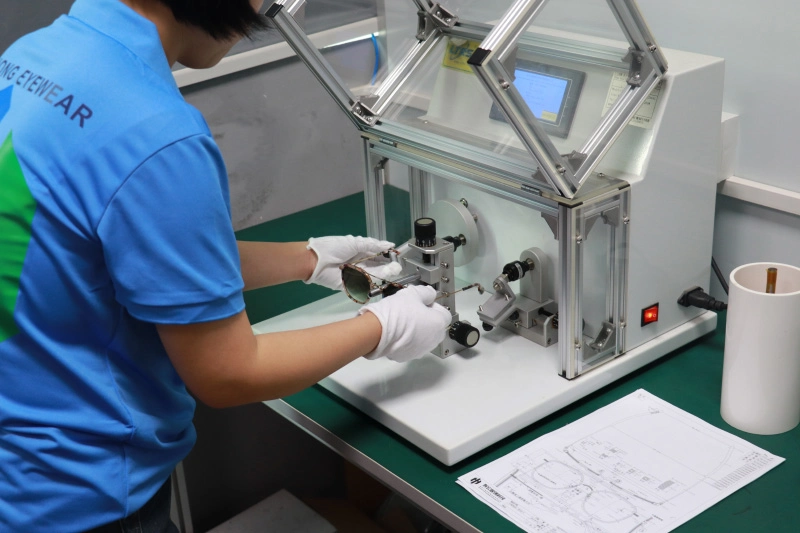
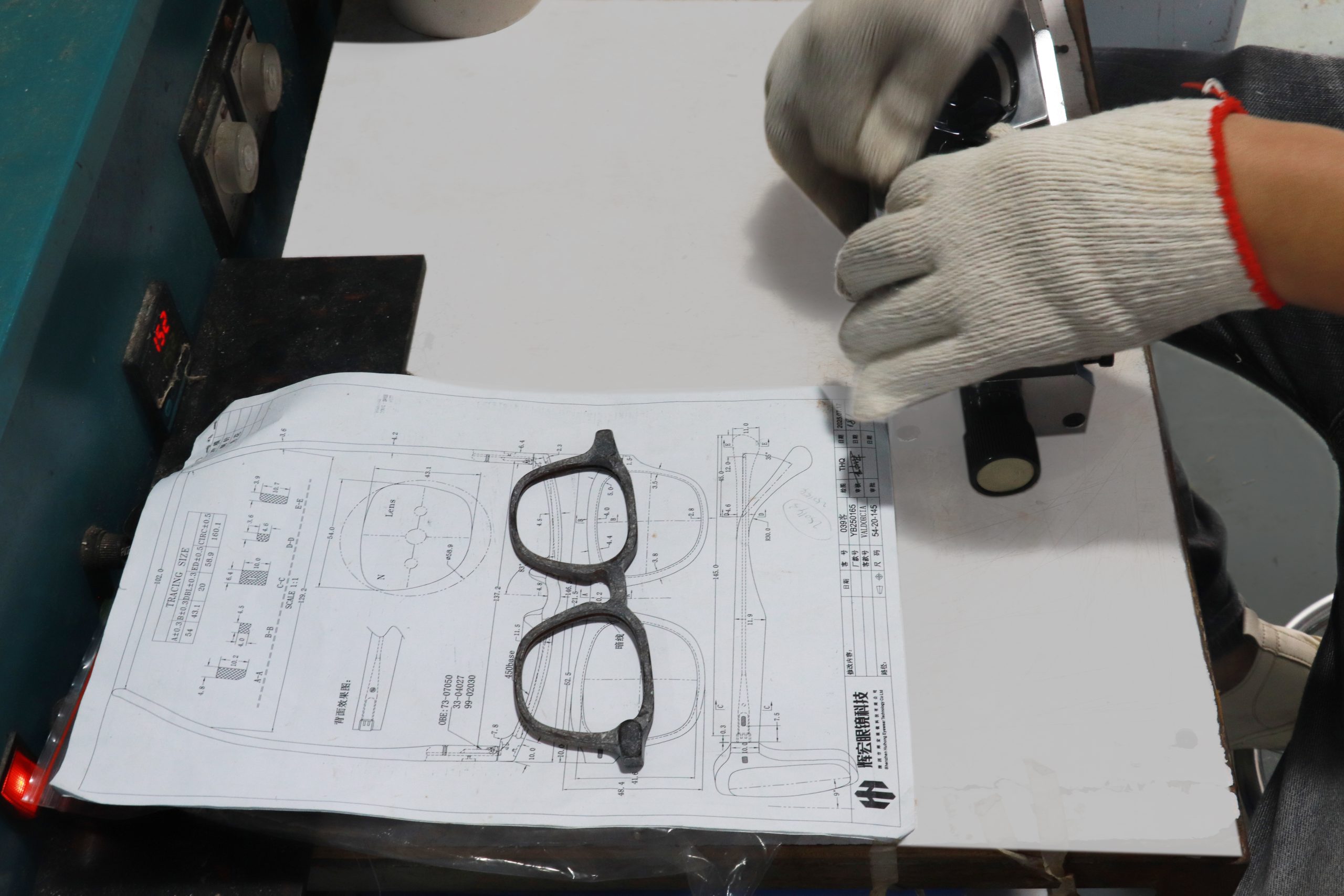
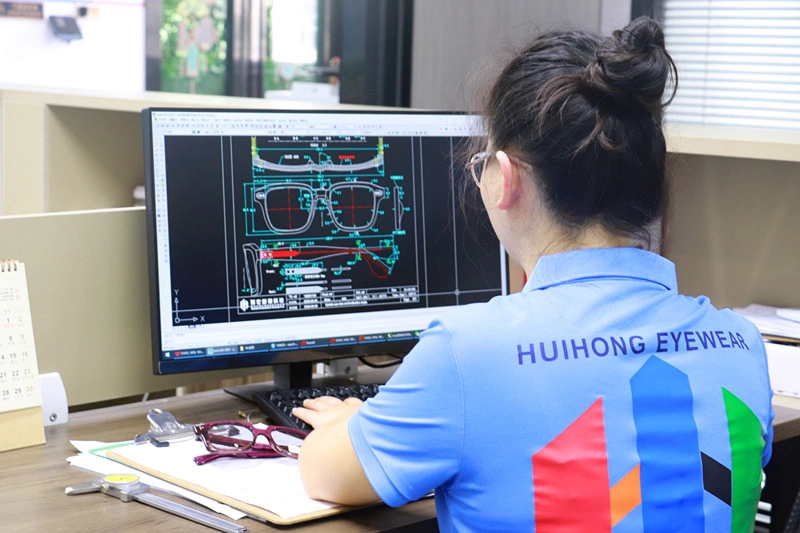
This is precisely where specialized OEM/ODM manufacturers like Huihong Eyewear create value. With deep expertise in acetate, titanium, and metal frame production, and a proven track record of low-volume, high-quality custom manufacturing, we support brands through every step—from concept prototyping to bulk delivery—with flexibility, speed, and precision.
The 2026 “Sweet Spot” for B2B Buyers
For global eyewear buyers, the highest-value strategy in 2026 is not choosing between fashion, technology, and sustainability—it is bundling them intelligently:
Color and materials that communicate use-cases and comfort immediately
Smart eyewear as a segment you can train for and support operationally
Sustainability backed by certification-ready documentation
Age-specific offerings designed around comfort, durability, and usability
The luxury eyewear market’s regional dynamics also demand attention. Europe and North America remain influential through fashion prestige and luxury retail depth, while Asia Pacific and the Middle East grow through affluent consumers, travel retail, and premium lifestyle spending. B2B buyers must develop region-specific strategies, tailoring offerings to the unique technological, environmental, and wellness-driven demands of different markets.
Supply chain strategy has become a stronger differentiator, with buyers rewarding vendors that can improve sourcing visibility, manage lead time risk, and maintain dependable delivery through changing market conditions. Trade conditions and supply chain visibility continue to shape investment decisions.
Conclusion: Partnering for the Future
The 2026 high-end eyewear market presents extraordinary opportunities—and equally significant challenges. Smart eyewear is scaling. Sustainability is being audited. Materials and production models are evolving faster than ever.
For B2B buyers, success depends on partnering with manufacturers who combine reliability, usability, technical depth, and support quality. Buyers increasingly favor partners that deliver dependable performance, practical implementation support, and solutions aligned with real operating conditions.
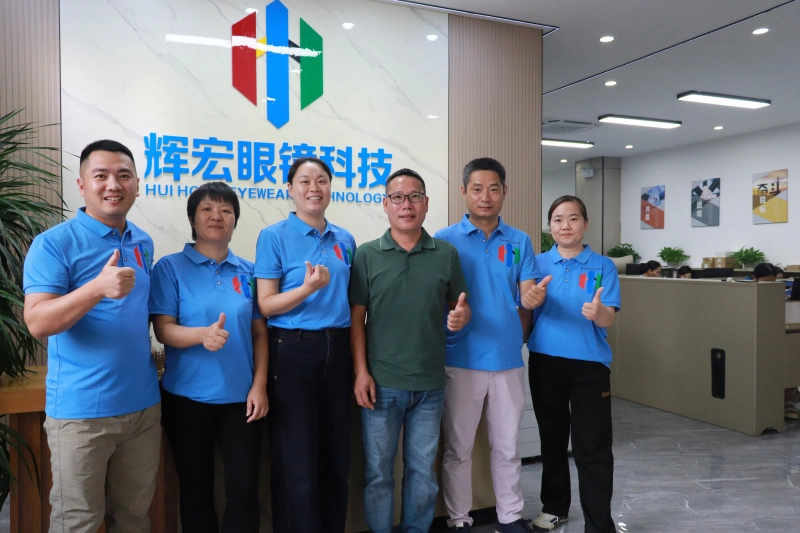
Huihong Eyewear stands ready to meet these demands. As a specialized manufacturer dedicated to the design, development, and OEM/ODM production of high-end eyewear, we have collaborated with independent brands, designer labels, and premium retailers worldwide—bringing unique eyewear visions to life through exceptional craftsmanship and reliable service.
Our expertise in acetate, titanium, and metal frames, combined with our strong capability in low-volume, high-quality custom production, positions us as the ideal partner for brands navigating the complexities of the 2026 market. From concept prototyping to bulk delivery, we support brands through every step of the journey—with flexibility, speed, and precision.
Our clients span Japan, Korea, Europe, and North America. Many return to us not just for quality, but for trust and shared value. In a market defined by rapid change, that trust matters more than ever.