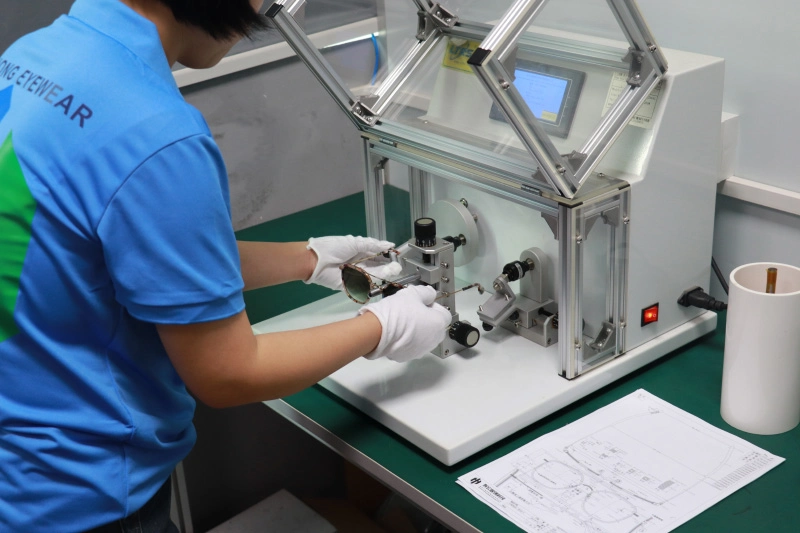
In the rapidly evolving eyewear industry, titanium alloy has emerged as the material of choice for premium brands and discerning consumers alike. As a titanium alloy eyewear manufacturer, understanding the unique properties of this remarkable metal and mastering its manufacturing processes is essential to staying competitive in the global market. This comprehensive guide will explore everything you need to know about titanium alloy eyewear production, from material advantages to selecting the right manufacturing partner for your brand.
Why Titanium Alloy Dominates the Premium Eyewear Market
Titanium alloy has revolutionized the eyewear industry by offering an unparalleled combination of benefits that traditional materials simply cannot match. Here are the key advantages that make it the preferred choice for high-end eyewear:
1. Unmatched Lightweight Comfort
With a density of just 4.5g/cm³, titanium is approximately 50% lighter than stainless steel and 70% lighter than copper alloys . This translates to eyewear that typically weighs between 7-12 grams (without lenses), allowing users to wear their glasses all day without experiencing nose pressure, ear fatigue, or headaches . Many wearers report forgetting they even have their glasses on—a testament to titanium’s exceptional comfort.
2. Exceptional Durability and Strength
Titanium alloy boasts an impressive strength-to-weight ratio that surpasses most other metals used in eyewear. It can withstand significant bending and twisting without permanent deformation, making it highly resistant to breakage and damage . High-quality titanium frames can last 3-5 years or even longer with proper care, providing excellent long-term value for both brands and consumers.
3. Superior Corrosion Resistance
Unlike traditional metal frames that rust or tarnish when exposed to sweat, humidity, or saltwater, titanium is naturally corrosion-resistant . This property ensures that titanium eyeglasses maintain their appearance and structural integrity even in harsh environments, making them ideal for outdoor activities, sports, and everyday wear in coastal regions.
4. Hypoallergenic Properties
Titanium is biocompatible and nickel-free, making it an excellent choice for people with sensitive skin or metal allergies . Traditional metal frames often contain nickel, which can cause skin irritation, redness, and itching. Titanium alloy eliminates this problem, providing a safe and comfortable wearing experience for all users.
5. Design Flexibility
Modern manufacturing techniques have expanded the design possibilities for titanium eyewear. From ultra-thin rimless designs to bold full-frame styles, titanium can be shaped into virtually any form while maintaining its structural integrity . This flexibility allows brands to create unique, fashionable designs that stand out in the market.
Understanding Different Types of Titanium Alloys for Eyewear
Not all titanium is created equal. When working with a titanium alloy eyewear supplier, it’s important to understand the differences between various titanium grades and their specific applications:
1. Pure Titanium (TA1/TA2)
Purity: 99% or higher titanium content
Properties: Excellent corrosion resistance, good biocompatibility, moderate strength
Best for: Basic frame components, nose bridges, and hypoallergenic designs
Limitations: Lower elasticity compared to alloys, requires thicker frames for structural stability
2. Beta Titanium (β-Titanium)
Composition: Titanium alloyed with vanadium, chromium, and aluminum
Properties: Exceptional elasticity, high strength, excellent formability
Best for: Temple arms, spring hinges, and frames that require flexibility
Advantages: Can be bent up to 90° and still return to its original shape, allowing for easy adjustments by opticians
3. TC4 Titanium Alloy (Ti-6Al-4V)
Composition: 6% aluminum, 4% vanadium, balance titanium
Properties: High tensile strength (up to 1080MPa), excellent fatigue resistance, good corrosion resistance
Best for: High-performance sports eyewear, durable full-frame designs
Advantages: Offers the perfect balance of strength and weight for demanding applications
4. Advanced Titanium Alloys
Z-Titanium: A proprietary alloy with enhanced elasticity and memory properties
L-Titanium: Lightweight alloy with improved surface finish and scratch resistance
Medical-Grade Titanium: Meets strict biocompatibility standards for sensitive skin applications
Key Manufacturing Processes for Titanium Alloy Eyewear
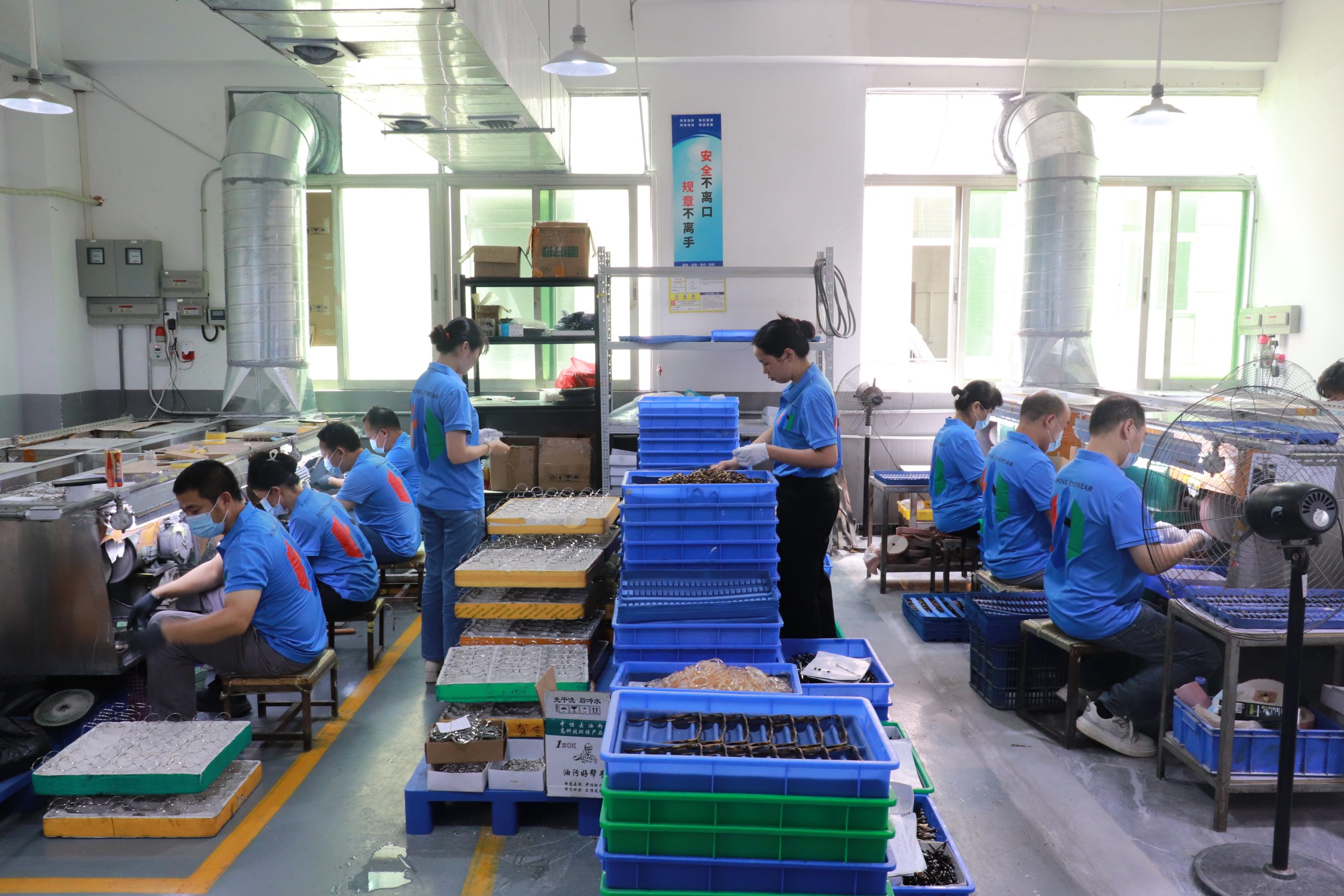
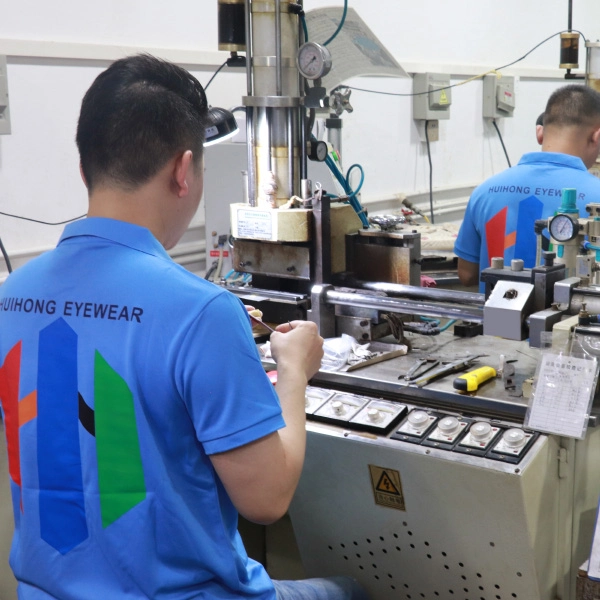
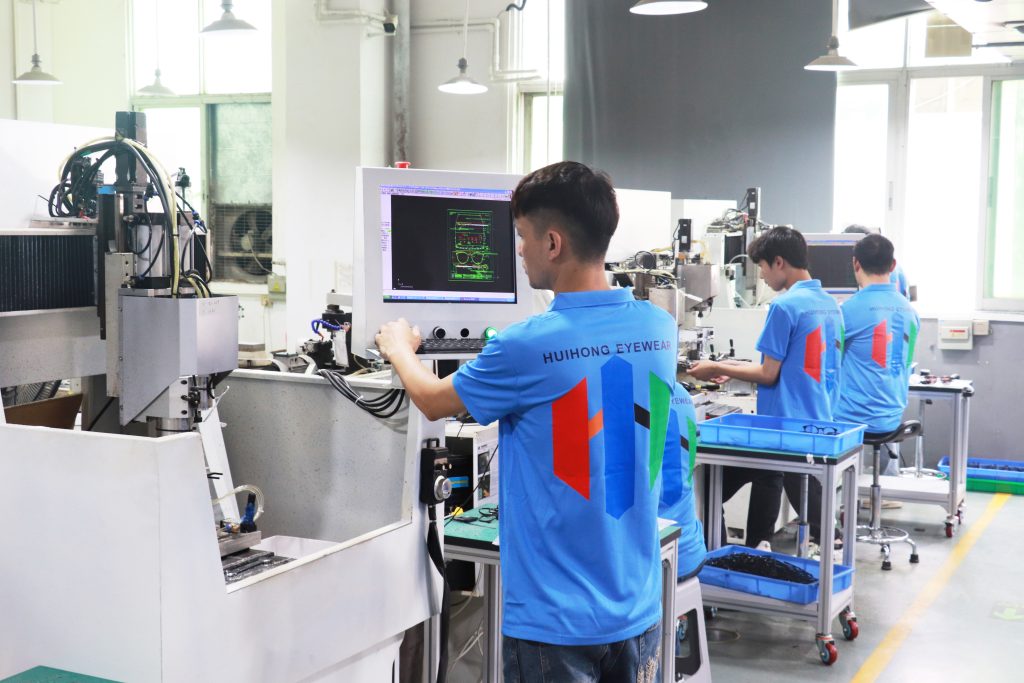
Producing high-quality titanium eyeglasses requires specialized equipment, advanced techniques, and skilled craftsmanship. A reputable custom titanium eyeglasses manufacturer will master the following critical processes:
1. Material Preparation
Quality Inspection: Raw titanium sheets and wires are inspected for purity, thickness uniformity, and surface defects
Cutting: High-precision laser cutting machines are used to cut frame components with micron-level accuracy
Forming: Components are shaped using CNC bending machines and hydraulic presses to achieve the desired curvature and dimensions
2. Welding and Assembly
Laser Welding: The preferred method for titanium eyewear, as it produces clean, strong welds without the need for filler material
Argon Shielding: Essential to prevent oxidation during welding, which can weaken the joint and affect appearance
Hinge Installation: Precision installation of high-quality hinges ensures smooth operation and long-term durability
3. Surface Treatment
Grinding and Polishing: Manual and automated processes create a smooth, flawless surface
IP Plating: Ion plating technology provides a durable, scratch-resistant finish that won’t fade or peel
Anodization: Creates a protective oxide layer that can be colored to achieve various aesthetic effects
4. Quality Control
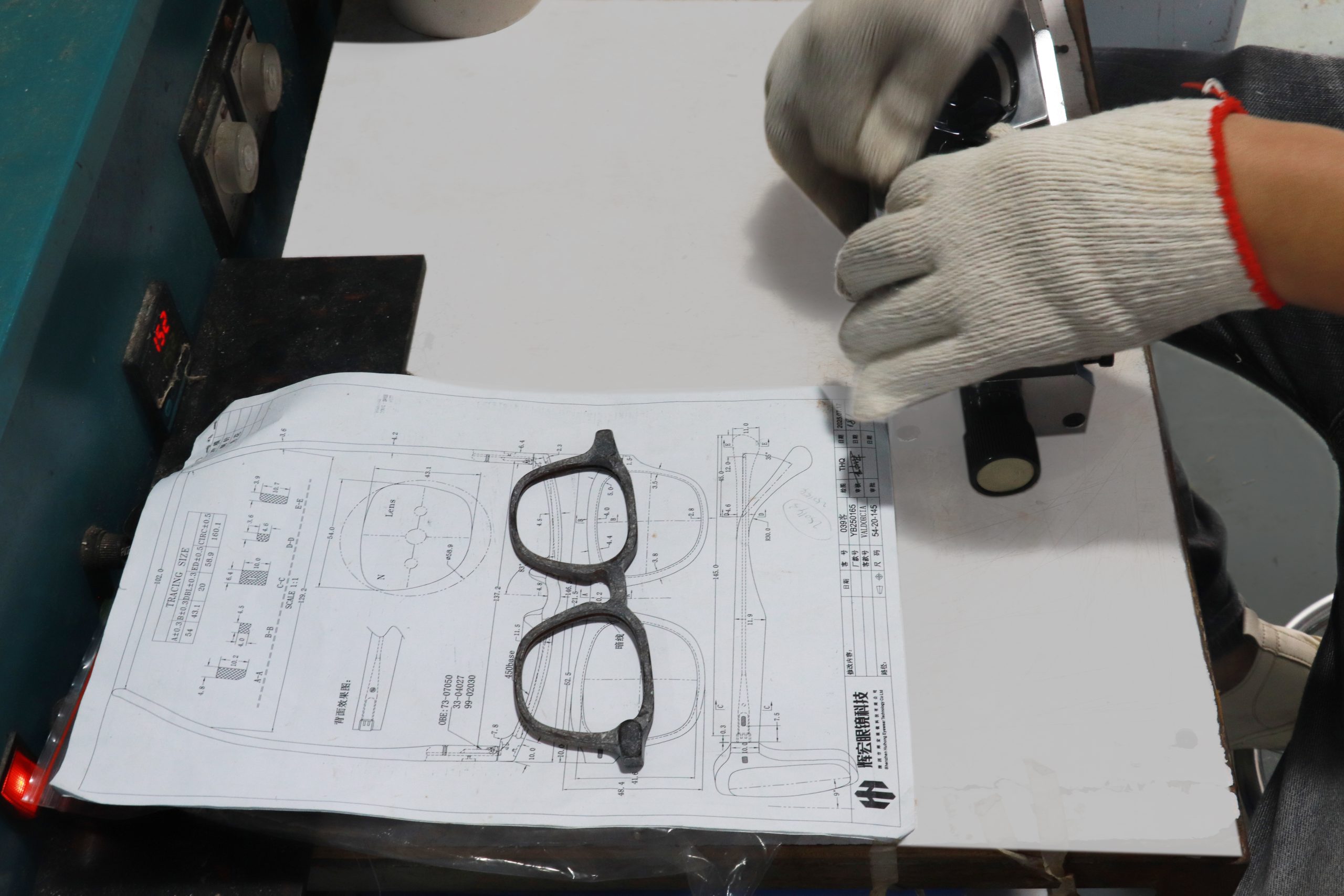
Dimensional Inspection: Each component is measured to ensure it meets exact specifications
Strength Testing: Frames undergo bending, torsion, and impact tests to verify durability
Corrosion Testing: Salt spray tests simulate real-world conditions to ensure long-term performance
Final Inspection: Completed frames are inspected for appearance, functionality, and comfort before packaging
How to Choose a Reliable Titanium Alloy Eyewear Manufacturer
Selecting the right manufacturing partner is one of the most important decisions your brand will make. A reliable wholesale titanium eyeglasses supplier will not only produce high-quality products but also provide excellent service, on-time delivery, and competitive pricing. Here are the key factors to consider:
1. Technical Expertise and Experience
Look for manufacturers with at least 5-10 years of experience specifically in titanium eyewear production
Verify their expertise in working with different titanium alloys and manufacturing techniques
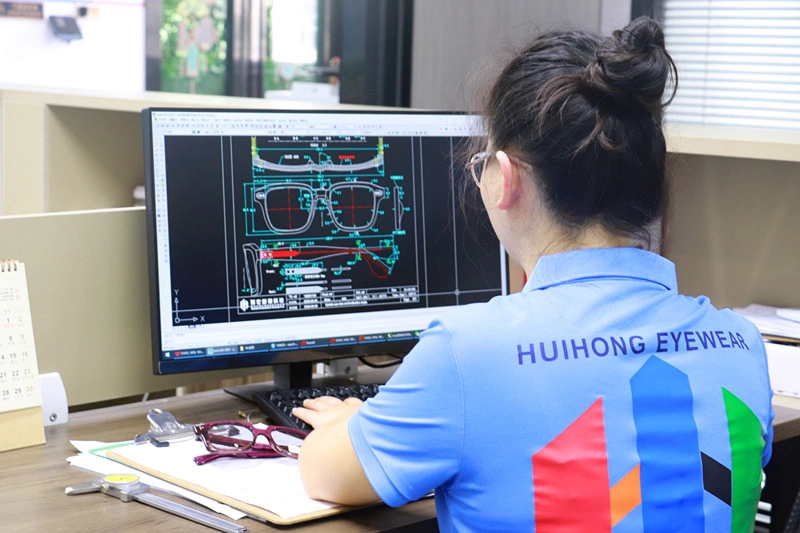
Ask about their design and engineering capabilities—can they help you develop custom designs?
2. Quality Management System
Ensure the manufacturer has ISO 9001 certification or equivalent quality management standards
Inquire about their quality control processes at each stage of production
Request samples of their previous work to assess the quality of their craftsmanship
3. Production Capacity and Scalability
Evaluate their production capacity to ensure they can meet your current and future order volumes
Ask about their lead times for both sample production and bulk orders
Verify their ability to scale production quickly during peak seasons or for large orders
4. Compliance and Certifications
Confirm they can provide all necessary certifications for your target market, including CE, FDA, RoHS, and REACH
Ensure they comply with international labor and environmental standards
Ask about their intellectual property protection policies to safeguard your designs
5. Customization and OEM/ODM Services
Check if they offer full OEM/ODM services, including design, prototyping, and packaging
Inquire about their minimum order quantities (MOQs) for custom designs
Ask about their ability to incorporate special features or materials into your frames
6. Communication and Customer Service
Evaluate their responsiveness and communication skills—can they understand your requirements clearly?
Ask about their after-sales service and warranty policies
Look for a manufacturer that views itself as a partner, not just a supplier
2026 Trends in Titanium Alloy Eyewear Manufacturing
The titanium eyewear industry is constantly evolving, with new technologies and design trends emerging every year. Here are the key trends shaping the market in 2026:
1. Ultra-Lightweight Designs
Manufacturers are pushing the boundaries of lightweight design, with some frames now weighing less than 7 grams . Advanced alloys and innovative structural designs allow for thinner, lighter frames without compromising strength or durability.
2. Sustainable Manufacturing
Environmental sustainability is becoming increasingly important to consumers. Leading manufacturers are adopting eco-friendly practices, such as using recycled titanium, reducing waste, and implementing energy-efficient production processes.
3. Smart Eyewear Integration
Titanium’s lightweight and durable properties make it an ideal material for smart eyewear. Manufacturers are developing titanium frames that can seamlessly integrate sensors, batteries, and other electronic components while maintaining a sleek, stylish appearance.
4. Customization and Personalization
Consumers are demanding more personalized products. Advanced manufacturing technologies like 3D printing are enabling beta titanium eyewear manufacturer to offer fully customized frames that are tailored to individual facial features and preferences.
5. Hybrid Material Designs
Combining titanium with other premium materials like acetate, carbon fiber, and wood is a growing trend. These hybrid designs offer the best of both worlds—titanium’s strength and comfort combined with the unique aesthetic qualities of other materials.
Conclusion
Titanium alloy has transformed the eyewear industry, offering unparalleled comfort, durability, and style. As a brand looking to enter or expand in the premium eyewear market, partnering with a reliable and experienced pure titanium eyeglasses factory is essential to your success.
By understanding the different types of titanium alloys, mastering the manufacturing processes, and staying ahead of industry trends, you can create high-quality titanium eyewear that resonates with consumers and builds brand loyalty. Remember, the best manufacturing partners are those who share your commitment to quality, innovation, and customer satisfaction.
Whether you’re looking for lightweight titanium eyeglasses, hypoallergenic titanium eyeglasses, or custom-designed frames, choosing the right titanium alloy eyewear manufacturer will help you stand out in the competitive global market and achieve long-term success.