When it comes to eyewear, the frame is far more than a structural holder for lenses—it defines comfort, durability, style, and even the wearer’s personal identity. For consumers, choosing the right pair of frame glasses means balancing aesthetics with daily wearability. For eyewear brands and retailers, understanding frame engineering, material science, and production processes is essential to delivering products that stand out in a competitive market.
In this comprehensive guide, we break down everything you need to know about optical frames—from material properties and style categories to measurement standards and professional manufacturing approaches. Whether you are building a private eyewear collection, sourcing bulk orders, or simply seeking deeper industry knowledge, this article serves as your authoritative reference.
Understanding Eyeglass Frame Materials: Which Is Right for Your Collection?
The material of a frame directly impacts weight, flexibility, hypoallergenic properties, and lifespan. Premium eyewear manufacturers work with a carefully selected range of materials, each serving distinct market segments and use cases.
Acetate: The Premium Choice for Design Expression
Cellulose acetate remains the most widely used premium material for fashion-forward frame glasses. Derived from natural cotton fibers and wood pulp, acetate offers unmatched versatility in color, pattern, and texture. It can be layered, marbled, or hand-polished to achieve a luxurious, deep-luster finish.
Advantages: Rich color depth, hypoallergenic, easily reshaped with heat, durable, and premium tactile feel
Best for: Designer collections, fashion-forward lines, bold statement frames
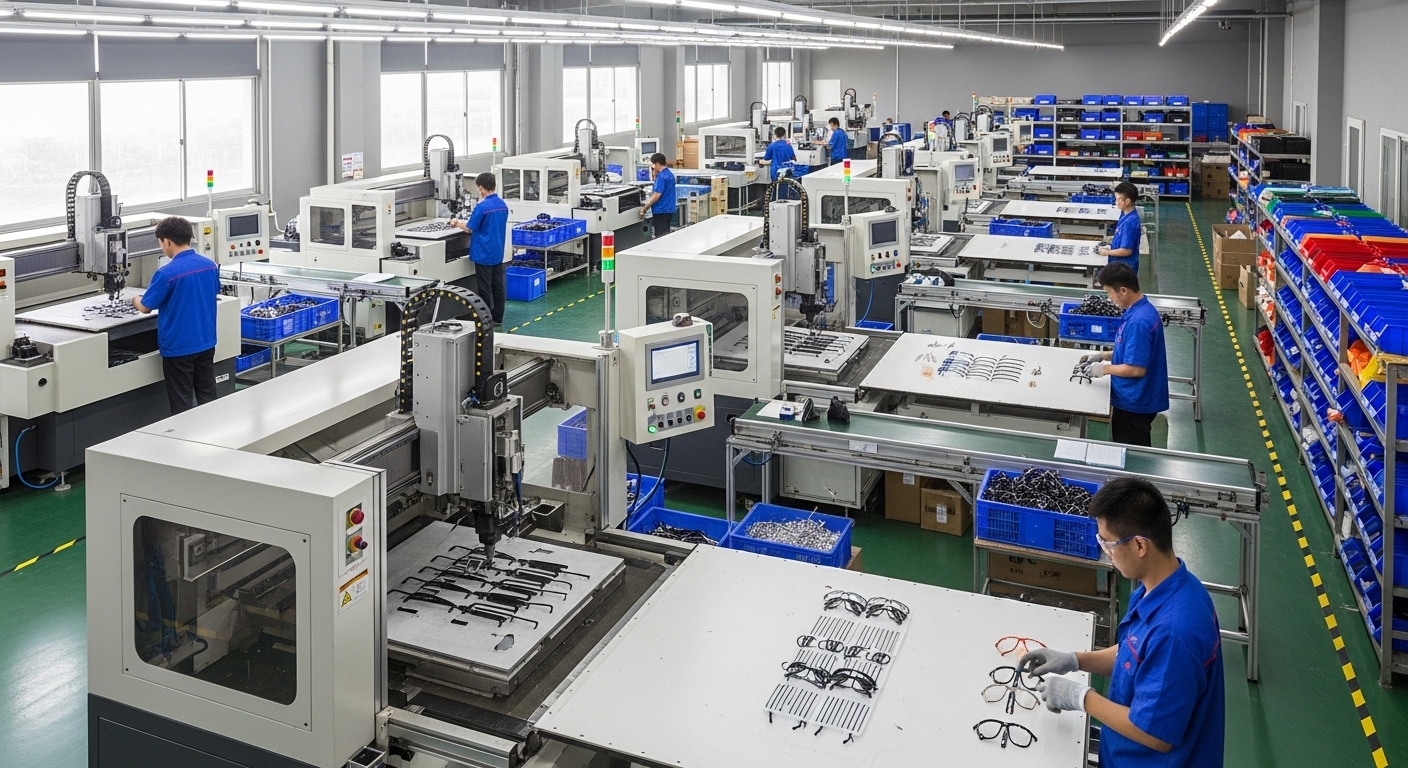
Manufacturing note: High-quality acetate frames require precision CNC cutting followed by multi-stage hand polishing to achieve smooth edges and a refined surface
Titanium & Beta-Titanium: Lightweight Performance Engineering
Titanium frames represent the high-performance segment of the eyewear industry. Pure titanium is exceptionally lightweight—about 40% lighter than stainless steel—naturally hypoallergenic, and highly corrosion-resistant. Beta-titanium, an alloy with added flexibility, is often used for temple arms to deliver spring-like comfort.
Advantages: Ultra-lightweight, biocompatible, corrosion-resistant, strong yet thin profiles
Best for: Premium optical lines, all-day comfort-focused designs, lightweight rimless or half-rim styles
Manufacturing note: Titanium requires specialized welding and laser engraving equipment; precision tolerances are critical for proper fit
Stainless Steel & Metal Alloys: Balanced Durability and Value
Metal frames, typically crafted from stainless steel, monel, or high-grade alloys, offer structural reliability at accessible price points. Quality metal frames feature nickel-free plating or IP electroplating to prevent skin irritation and maintain finish longevity.
Advantages: Strong, thin-profile aesthetics, good structural integrity, wide design flexibility
Best for: Business-professional styles, semi-rimless designs, everyday optical collections
Manufacturing note: Premium metal frames use soldered hinges and multi-layer plating for extended wear life
TR90 & Advanced Polymers: Lightweight and Impact-Resistant
TR90 is a thermoplastic polymer known for extreme flexibility, light weight, and impact resistance. It can bend significantly and return to its original shape, making it ideal for active lifestyles and children’s eyewear.
Advantages: Super lightweight, highly flexible, heat-resistant up to high temperatures, durable
Best for: Sports eyewear, kids’ collections, value-focused comfort lines
Frame Styles and Construction Types: Full-Rim, Half-Rim, and Rimless Explained
Frame construction determines not only visual appearance but also lens support, weight distribution, and suitability for different prescription strengths.
Full-Rim Frames
Full-rim frames completely encircle the lens, providing maximum support and protection. This construction is recommended for higher prescriptions where thicker lenses need secure retention. Full-rim designs offer the broadest creative range, from bold acetate statement pieces to sleek metal profiles.
Half-Rim (Semi-Rimless) Frames
Half-rim frames hold the lens along the top edge only, using a thin nylon wire along the bottom. This creates a lighter, more minimalist look while maintaining structural integrity at the brow line. The style is popular for professional and business eyewear collections.
Rimless Frames
Rimless frames attach directly to the lens edges via small mounts or drill points, creating an almost invisible appearance. The lightest of all constructions, rimless frames place a premium on manufacturing precision—each drill point must be perfectly aligned to avoid lens stress or cracking. They are best suited for low-to-moderate prescriptions.
How to Read Frame Measurements Like a Professional
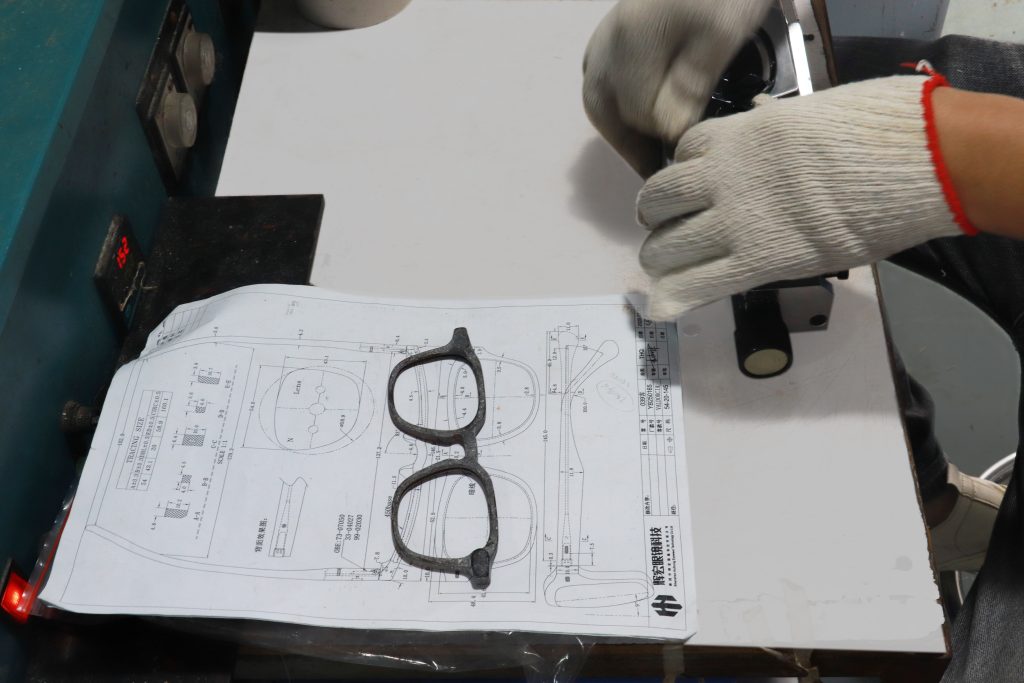
Understanding frame sizing is critical for both consumer satisfaction and quality control in manufacturing. Every pair of frame glasses carries three key measurements, printed on the inside of the temple arm:
Lens Width (Eye Size): The horizontal width of one lens opening, typically 48–56mm for adult optical frames. This measurement determines overall frame width proportion.
Bridge Width: The distance between the two lens openings, ranging from 14–22mm. The bridge directly impacts nose fit and weight distribution.
Temple Length: The length of the arm from hinge to ear tip, usually 135–150mm for adults. Proper temple length ensures the frame rests securely without pressure points.
Additional measurements such as lens height and frame total width are also important in manufacturing quality control. For brands developing custom collections, working with a manufacturer that understands facial anthropometrics across different markets ensures better sell-through and fewer fit returns.
Key Factors That Define Quality in Frame Glasses Manufacturing
Premium frame glasses are distinguished by details most consumers never consciously notice—but feel immediately when worn. Here are the quality benchmarks that separate professional-grade manufacturing from mass-market alternatives.
Precision Engineering and Tolerance Control
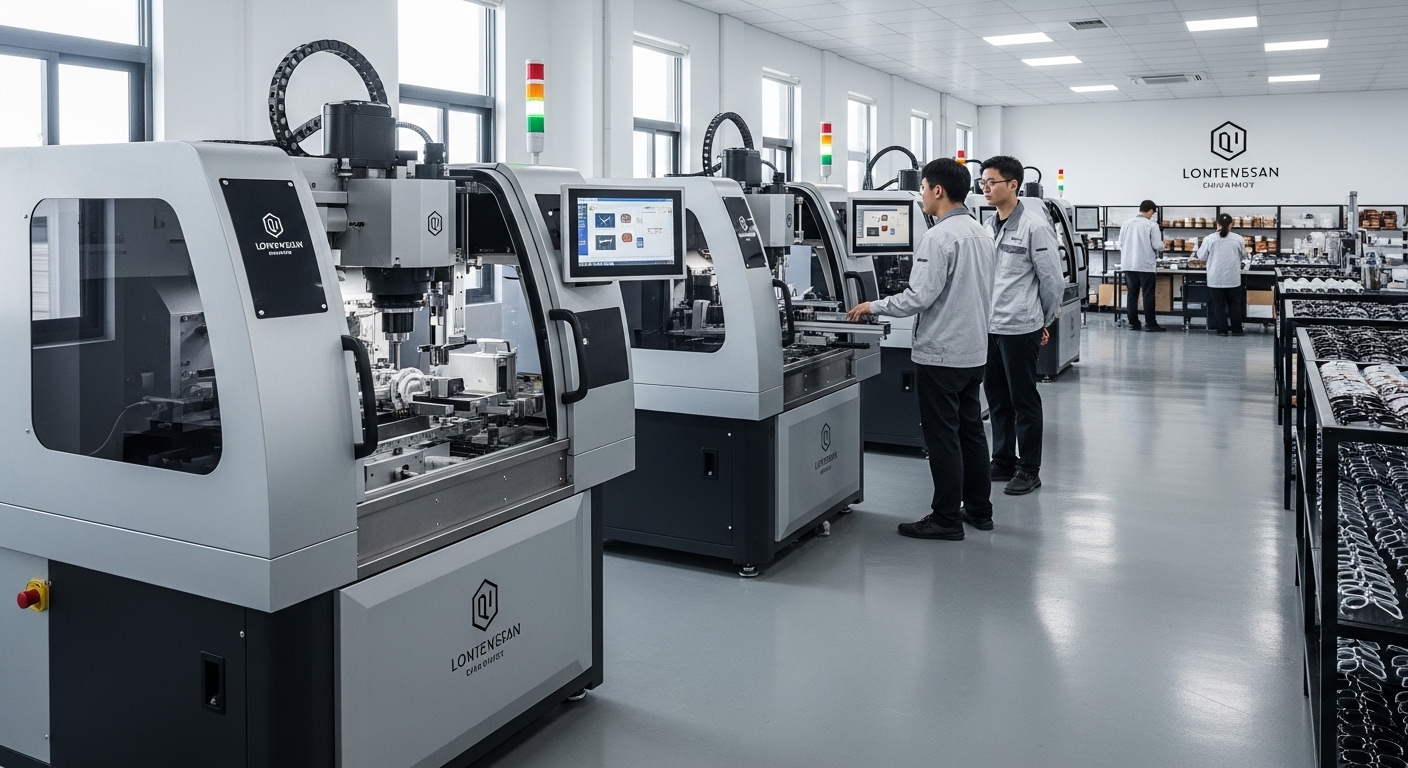
Every component—hinges, nose pads, lens grooves—must align within tight tolerances. High-end manufacturers use CNC machining and precision molds to ensure consistent sizing across every production unit. Misalignment of even half a millimeter can cause discomfort, lens distortion, or premature wear.
Hinge Quality and Durability
The hinge is the most mechanically stressed part of any frame. Quality frames feature reinforced hinges with multiple barrel construction for smooth, wobble-free movement. Premium acetate frames often use stainless steel five-barrel hinges set into the frame body for structural longevity.
Surface Finish and Polishing
The difference between an average frame and a premium one often lies in the finish. Acetate frames should undergo multi-stage tumble polishing and hand buffing to achieve silky-smooth edges. Metal frames require consistent plating thickness—typically achieved through IP plating or vacuum coating for scratch and fade resistance.
Ergonomic Weight Distribution
A well-designed frame distributes its weight across three contact points: the nose pads and both temple tips. Quality manufacturers calculate weight balance during the design phase, ensuring no single point bears excessive pressure. This is why premium titanium frames, despite their ultra-light construction, feel stable rather than flimsy.
OEM vs ODM: Which Manufacturing Model Fits Your Eyewear Brand?
For brands looking to bring frame glasses to market, choosing between OEM and ODM is one of the most strategic decisions you will make. Each model serves different business stages and goals.
OEM (Original Equipment Manufacturing)
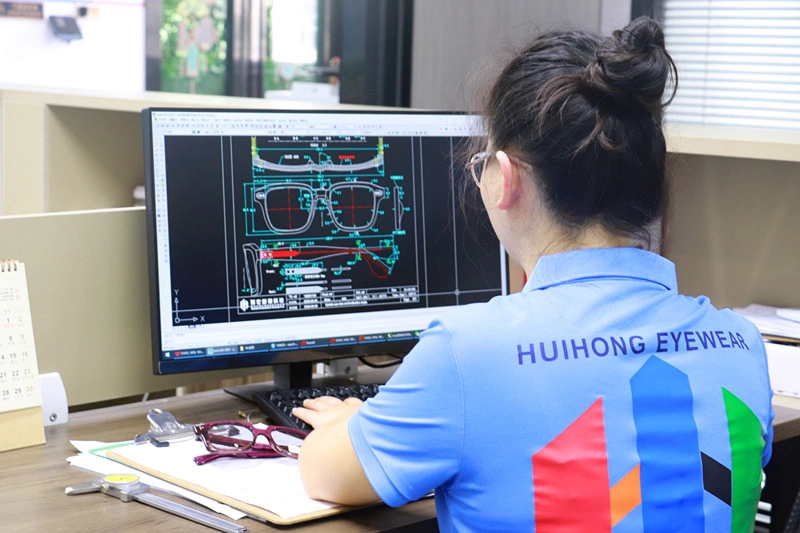
In an OEM partnership, you provide the complete design—CAD files, technical specifications, or physical reference samples—and the manufacturer produces frames exactly to your specifications.
Ideal for: Established brands with in-house design teams, exclusive collections, patent-pending designs
Benefits: Full creative control, complete brand exclusivity, intellectual property ownership
Considerations: Longer development timelines, mold and tooling costs, higher minimum order quantities for fully custom designs
ODM (Original Design Manufacturing)
With ODM, you select from the manufacturer’s existing design library and customize details such as colorways, logo placement, temple length adjustments, and packaging. The core frame design and tooling already exist.
Ideal for: New brands building initial collections, retailers expanding SKUs quickly, private label programs
Benefits: Faster time-to-market, no upfront mold costs, lower minimum order quantities, proven designs
Considerations: Designs may be available to other buyers; customization is limited to non-structural details
The Hybrid Approach
Many professional manufacturers offer a hybrid model: selecting a base ODM frame and modifying structural elements such as bridge width or temple shape to create a semi-custom product. This balances speed with differentiation, making it popular among growing mid-tier brands.

What to Look for in a Professional Eyewear Manufacturing Partner
Not all frame glasses manufacturers are created equal. When evaluating a production partner, consider these critical criteria:
In-House Design and Engineering Capability
A manufacturer with an integrated design team can translate conceptual ideas into production-ready files, reducing iteration cycles and ensuring design intent survives the manufacturing process. Look for CAD/3D modeling capability, prototyping services, and material expertise.
End-to-End Production Control
Quality suffers when production is fragmented across multiple subcontractors. The strongest partners manage the full process in-house—from material cutting and CNC shaping to polishing, assembly, plating, and final quality inspection.
Quality Assurance Protocols
Professional manufacturers implement multi-stage QC checkpoints throughout production, not just at final packing. This includes raw material inspection, dimensional verification after machining, plating thickness testing, hinge function testing, and final fitting checks.
Compliance and Certification
For global distribution, verify that the manufacturer meets international standards including REACH compliance for materials, nickel-free plating regulations, and relevant optical industry certifications.
MOQ Flexibility and Scalability
A reliable manufacturing partner can accommodate both initial trial runs and scaled-up production volumes as your brand grows. Look for transparent MOQ policies that differentiate between standard catalog items and fully custom developments.
Final Thoughts
Frame glasses are a remarkable intersection of fashion, engineering, and ergonomic science. What the wearer experiences as a simple accessory is the result of material science, precision manufacturing, and thoughtful design working in harmony.
For brands entering or expanding in the eyewear market, partnering with a manufacturer that understands both the aesthetic and technical dimensions of frame production is the foundation of a successful collection. Whether you pursue OEM for exclusive designs or ODM for speed-to-market, the quality of your frames will ultimately define your brand reputation.
If you are developing a premium eyewear collection and seeking a manufacturing partner with deep expertise in frame design, material engineering, and precision production, we invite you to explore how specialized OEM/ODM capabilities can bring your vision to life with uncompromising quality standards.