Introduction
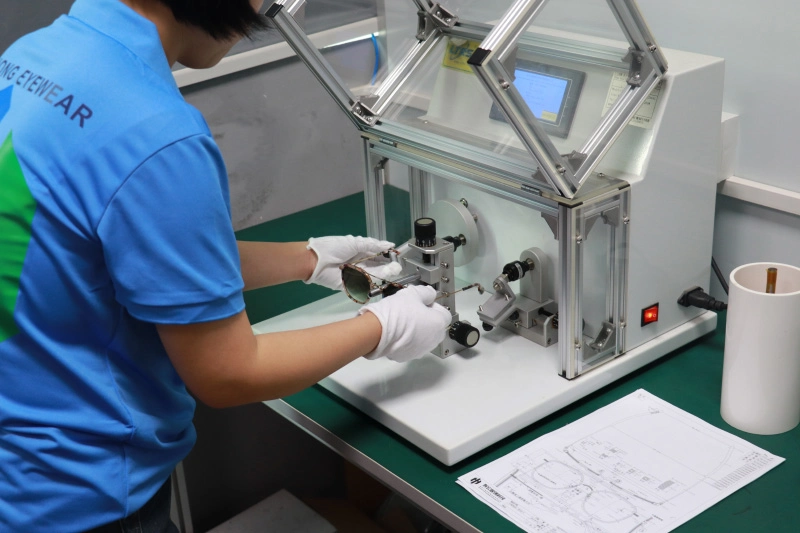
For emerging and established eyewear brands alike, understanding the cost structure behind FOB (Free On Board) pricing is critical to making informed sourcing decisions and protecting profit margins. One of the most commonly cited benchmarks in premium eyewear manufacturing is that raw material costs typically represent 15% to 30% of the total FOB price.
This range may seem narrow at first glance, but the variation within it directly reflects choices in frame materials, component quality, and production complexity. For brands navigating OEM/ODM partnerships, knowing where that 15–30% goes—and how to align material selection with brand positioning—can mean the difference between a profitable collection and a margin-eroding one.
In this guide, we break down the FOB cost structure, compare the three dominant premium frame materials, and outline how brands can select the right manufacturing partner to optimize value at every price tier.
Understanding the FOB Cost Breakdown in Eyewear Manufacturing
Before diving into material selection, it is essential to understand what actually makes up an FOB quotation. A transparent eyewear manufacturer will typically structure pricing around five core components:
Raw materials (15–30%) – The frame substrate, hinges, nose pads, screws, and finishing materials such as plating or coating.
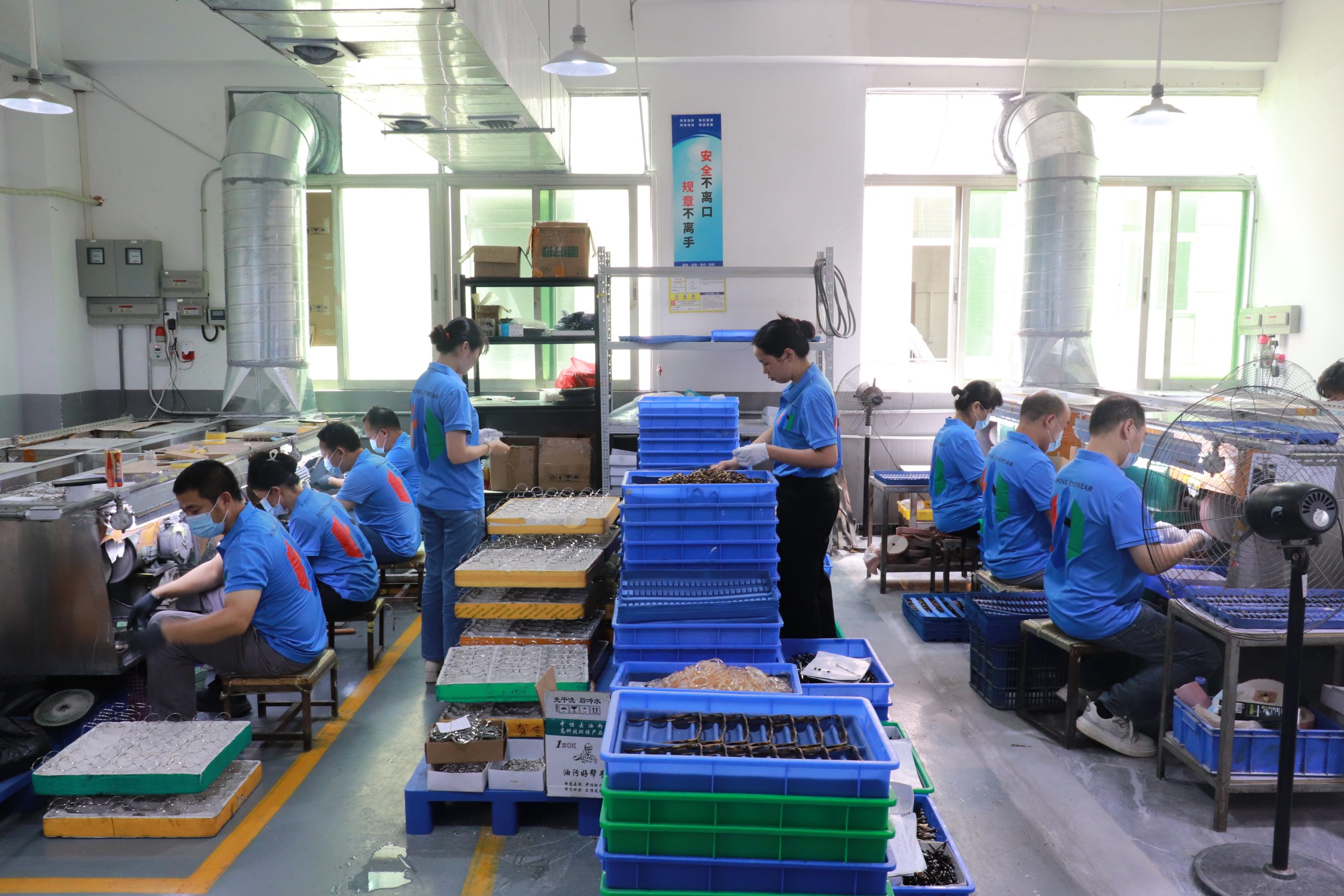
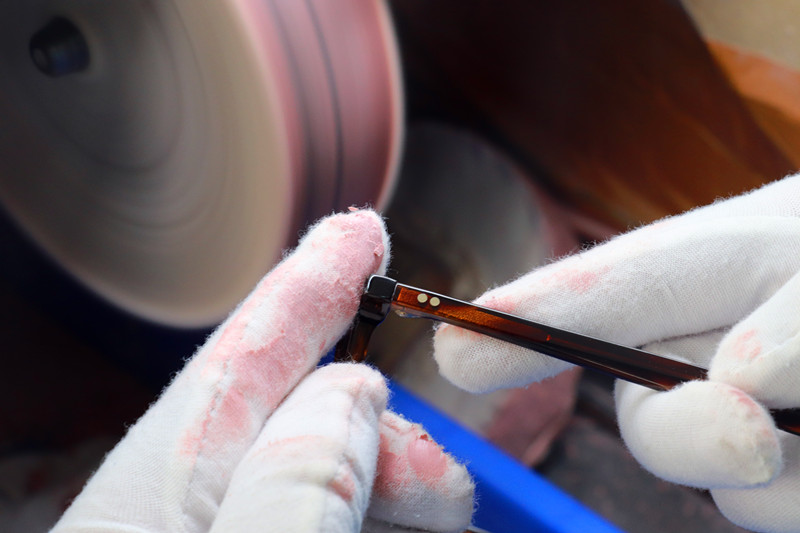
Direct labor (25–40%) – Skilled craftsmanship, hand polishing, assembly, and quality inspection.
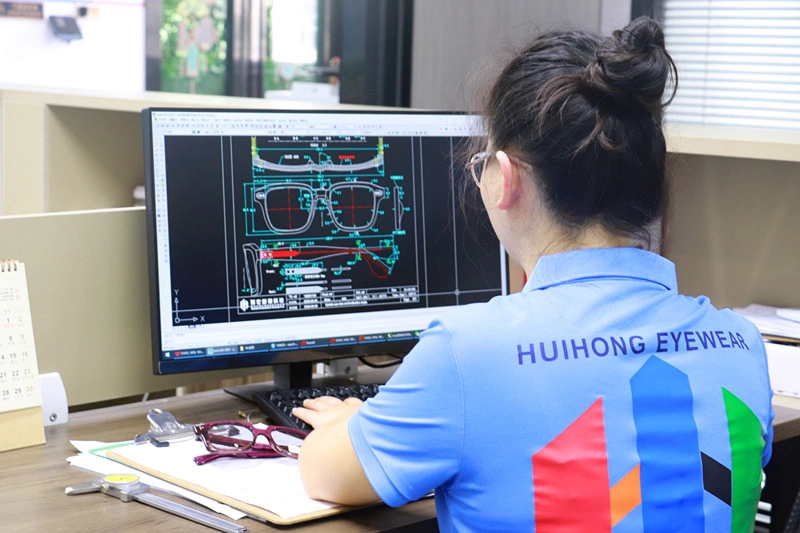
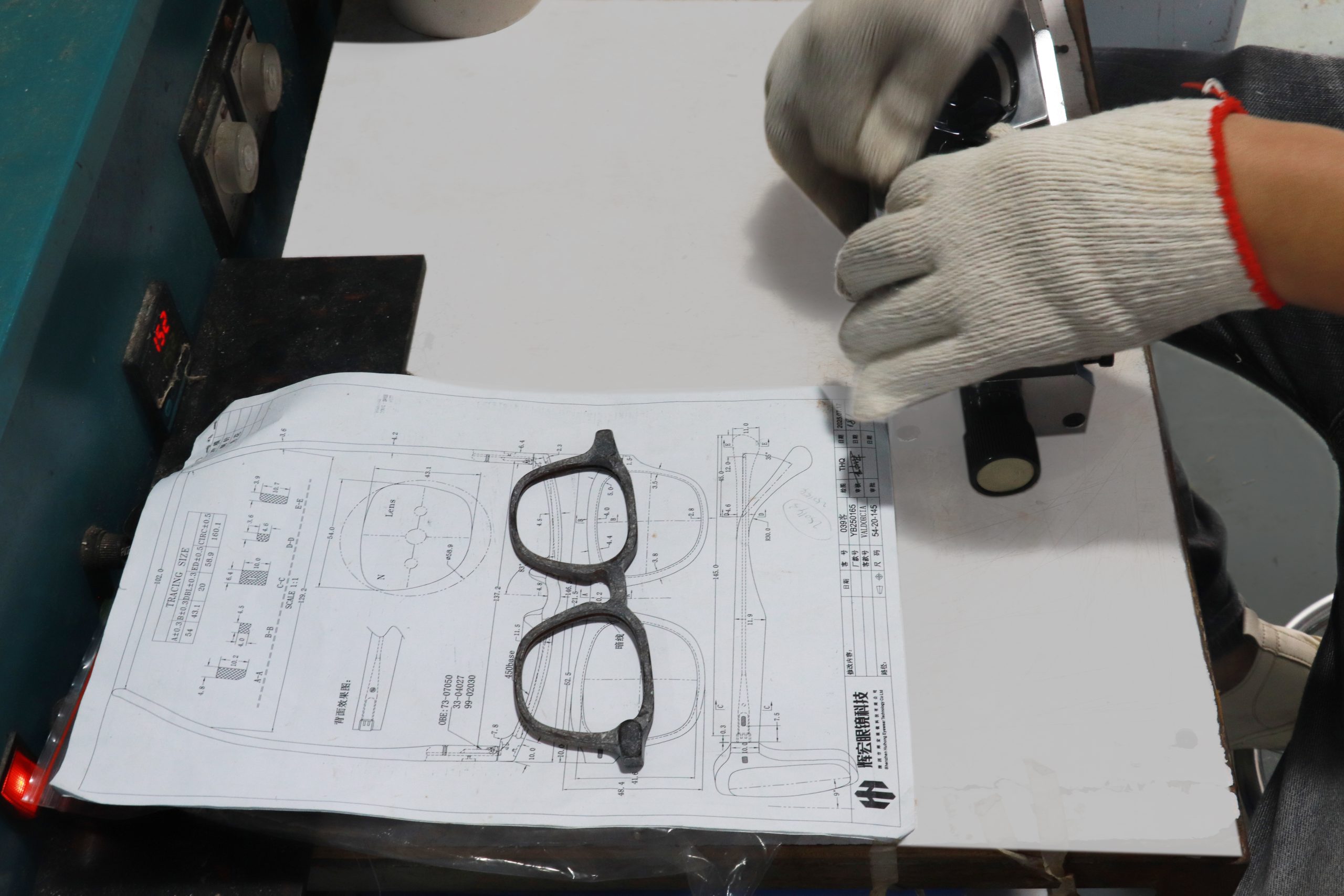
Tooling & development (5–15%) – Mold making, prototyping, sample iterations, and engineering adjustments.
Overhead & factory operations (15–25%) – Equipment depreciation, facility costs, quality management, and administrative support.
Logistics, packaging & export fees (5–10%) – Inner/outer packaging, local transport, customs documentation, and port charges.
What stands out immediately is that raw material cost is not the largest expense in premium eyewear production. Labor, craftsmanship, and process control often weigh more heavily. This is why two frames using similar acetate or titanium sheet can carry very different FOB prices: the difference lies in how many hours of skilled work go into shaping, finishing, and validating each piece.
That said, the 15–30% material share is a powerful decision lever. Choosing the right material directly influences perceived quality, retail price positioning, durability, and customer satisfaction—and it sets the floor for everything else.
Comparing the Three Core Premium Frame Materials
Acetate, titanium, and metal alloy are the three pillars of high-end eyewear production. Each occupies a different position on the cost spectrum and delivers distinct brand benefits.
1. Acetate Frames
Cellulose acetate remains the most popular material for designer and independent eyewear brands, and for good reason.
Material cost position: Generally falls in the 15–22% range of FOB pricing for standard acetate, and up to 25% for premium Italian or Japanese cellulose acetate sheets with special patterns, laminations, or bio-based formulations.
Key advantages: Rich color depth, pattern versatility, hypoallergenic properties, and a warm, premium hand feel. Acetate also allows for bold silhouettes and detailed surface treatments that are difficult to achieve with metal alone.
Labor implication: Acetate production involves multiple hand-finishing steps—block cutting, tumbling, hand polishing, and frame fitting—which means labor cost carries a larger share of the FOB total. Brands pay not just for the sheet, but for the craftsmanship that brings it to life.
2. Metal Frames (Stainless Steel, Monel, Beta Titanium Alloys)
Metal frames span a wide price range depending on alloy grade, plating quality, and construction method.
Material cost position: Typically 18–28% of FOB pricing. Basic monel or stainless steel frames sit at the lower end; high-grade stainless steel with premium IP plating or gold-filled components moves toward the upper end.
Key advantages: Lightweight design flexibility, thin profile options, adjustable fit, and strong structural integrity. Metal frames are especially popular for optical collections and minimalist aesthetics.
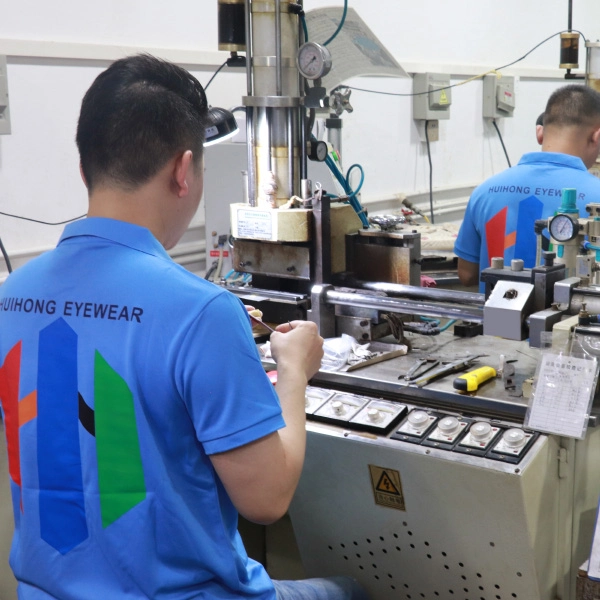
Labor implication: Precision stamping, welding, plating, and soldering require specialized skill. Poor plating quality is one of the most common failure points in low-cost metal frames, so material savings here often lead to higher defect rates and warranty costs downstream.
3. Pure Titanium Frames
Titanium represents the premium tier of metal eyewear and commands a clear material premium.
Material cost position: Usually 22–30% of FOB pricing, and can go even higher for medical-grade titanium and advanced beta-titanium formulations.
Key advantages: Exceptional strength-to-weight ratio, full corrosion resistance, superior hypoallergenic properties, and long-term durability. Titanium is a strong selling point for luxury, professional, and performance-oriented eyewear brands.
Labor implication: Titanium is notoriously difficult to process. Welding must be performed in a vacuum or inert-gas environment, and polishing requires specialized techniques. This is why a titanium frame’s material cost may only be 25% of FOB, yet the total price is significantly higher than acetate—the remaining 75% reflects specialized equipment, skilled labor, and lower yield rates.
How Brands Should Approach Material Selection
The 15–30% material cost ratio is not a target to minimize—it is a lever to optimize based on your brand strategy. Here is a decision framework used by successful independent brands and designer labels:
Align material with your price tier and brand story
Entry premium tier ($80–$150 retail): Standard acetate or stainless steel works well. Material costs will likely sit near 20–25% of FOB, leaving room for solid craftsmanship and healthy margins.
Mid-premium tier ($150–$350 retail): Premium acetate with custom lamination, or beta-titanium / high-grade metal combinations. Material share often sits at 22–28% of FOB, but the perceived value jump supports a much higher retail price.
Luxury tier ($350+ retail): Pure titanium, Japanese acetate, or hand-worked acetate-metal combinations. Material cost can reach 25–30% of FOB, but the material story itself becomes a core part of the brand narrative and justifies premium pricing.
Do not chase the lowest material cost—chase the lowest total cost of ownership
A common mistake among new brands is selecting a supplier purely on the basis of material cost savings. A 5% reduction in raw material expense can easily be erased by:
Higher defect rates requiring rework or customer returns
Premature wear, plating degradation, or hinge failure
Longer lead times and repeated sampling rounds
Lack of compliance documentation for target markets
In premium eyewear, material quality directly impacts brand reputation. A customer who receives a frame that discolors, breaks, or irritates skin will not blame the factory—they will blame your brand.
Test across small batches before scaling
Low-volume custom production capability is one of the most underrated advantages a manufacturer can offer. Brands that can launch with 50–200 piece minimums can validate material performance, customer feedback, and sell-through before committing to larger orders. This dramatically de-risks material decisions and reduces inventory exposure.
Choosing the Right Manufacturing Partner: What to Look For
Material selection only delivers value if your manufacturing partner can consistently turn raw materials into finished frames that meet your quality, delivery, and compliance standards. Based on our experience working with independent brands, designer labels, and premium retailers across Japan, Korea, Europe, and North America, here are the non-negotiable criteria:
1. Transparent cost breakdown
A reputable OEM/ODM partner should be able to explain how much of the FOB price goes to material, labor, tooling, and overhead. If a factory cannot or will not provide this breakdown, it is usually a sign of hidden costs, corner-cutting, or inconsistent pricing.
2. Material expertise across all three categories
Look for a manufacturer with proven capability in acetate, titanium, and metal frames. This versatility gives you the flexibility to build mixed collections, experiment with hybrid designs, and adjust your material mix as your brand evolves—without having to onboard and qualify new suppliers.
3. Strong low-volume, high-quality production capacity
For independent and emerging brands, the ability to produce small runs with uncompromised quality is invaluable. It allows you to test designs, limit financial risk, and maintain an exclusive brand image while still accessing premium craftsmanship.
4. End-to-end support from concept to delivery
The best manufacturing partners function as an extension of your team. They support you from initial concept prototyping through engineering refinement, sample approval, bulk production, and final delivery—with clear communication, reliable lead times, and rigorous quality control at every stage.
5. A track record with brands like yours
Client geography matters. Factories experienced with European, North American, Japanese, and Korean brands understand the quality expectations, compliance requirements, and aesthetic sensibilities of those markets. Repeat partnerships are the strongest signal of trust, reliability, and shared values.
About Shenzhen Huihong Eyewear Technology Co., Ltd.
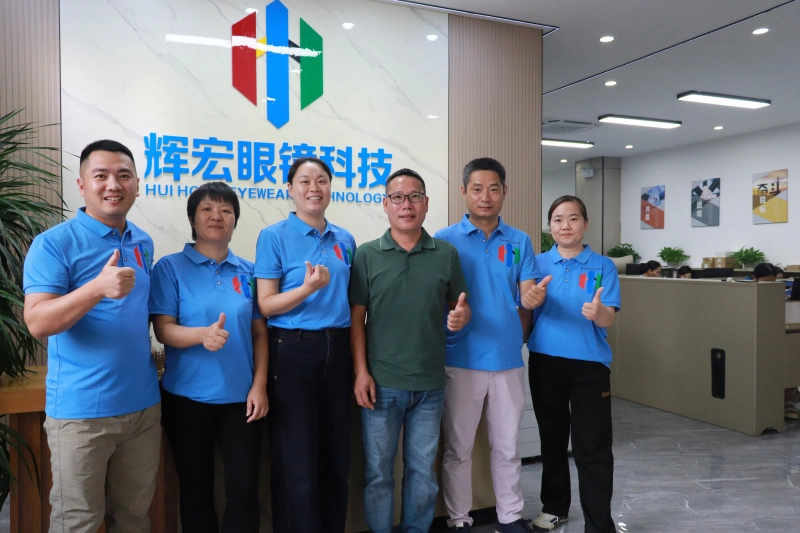
Huihong Eyewear is a specialized manufacturer dedicated to the design, development, and OEM/ODM production of high-end eyewear. Since our founding, we have collaborated with independent brands, designer labels, and premium retailers worldwide—bringing unique eyewear visions to life through exceptional craftsmanship and reliable service.
We specialize in acetate, titanium, and metal frames, with a strong capability in low-volume, high-quality custom production. From concept prototyping to bulk delivery, we support brands through every step of the journey—with flexibility, speed, and precision.
Our clients span Japan, Korea, Europe, and North America, many of whom return to us not just for quality, but for trust and shared value. If you are building or scaling a premium eyewear collection and want a manufacturing partner that is transparent about cost structure and committed to your brand’s success, we welcome the conversation.
Final Thoughts
The 15–30% material cost benchmark is more than a number—it is a reminder that in premium eyewear, value is created through craftsmanship, process control, and smart material selection, not just cheap inputs.
Brands that win in this market do not simply buy the least expensive frames they can find. They understand the full FOB cost structure, select materials that reinforce their brand positioning, and partner with manufacturers that can consistently deliver on quality, lead time, and transparency.
If you would like to discuss your next collection and receive a detailed, line-by-line FOB quotation that clearly shows material, labor, and tooling costs, reach out to the Huihong Eyewear team today.