In today’s $180 billion global eyewear market, finding the right eyewear maker can make or break your brand’s success. Whether you’re launching a new DTC eyewear brand, expanding your retail collection, or developing specialized optical products, partnering with a skilled and reliable eyewear manufacturer ensures consistent quality, timely delivery, and competitive pricing. This comprehensive guide covers everything you need to know about working with professional eyewear makers, from understanding the manufacturing process to evaluating potential partners and staying ahead of industry trends.
What Makes a Professional Eyewear Maker Stand Out?
A professional eyewear maker is more than just a factory that produces glasses. They are strategic partners who bring technical expertise, design capabilities, and industry knowledge to your project. The best optical frame manufacturers distinguish themselves through several key attributes:
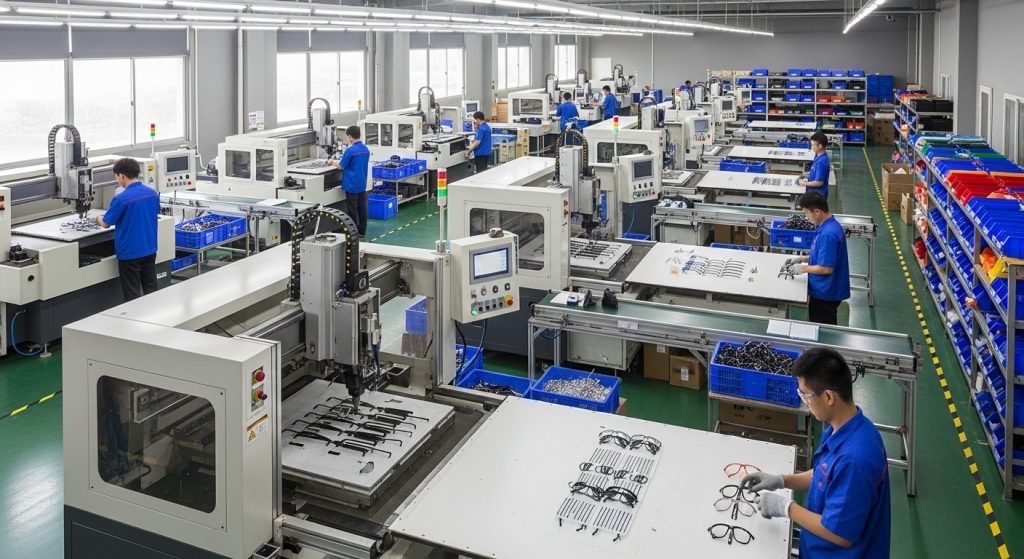
1. Comprehensive Material Expertise
Top-tier sunglasses manufacturers work with a wide range of premium materials to suit different brand identities and target markets:
Acetate: Known for its rich colors, patterns, and durability
Titanium: Ultra-lightweight, hypoallergenic, and corrosion-resistant
TR90: Flexible, impact-resistant, and comfortable for all-day wear
Stainless Steel: Sleek, durable, and cost-effective
Bio-based polymers: Sustainable alternatives gaining popularity in 2026
Each material requires specific manufacturing techniques, and experienced eyewear makers understand how to optimize production for different materials to achieve the best results.
2. Advanced OEM and ODM Capabilities
Reliable eyewear manufacturers offer both Original Equipment Manufacturer (OEM) and Original Design Manufacturer (ODM) services:
OEM services: Allow you to bring your own designs to life with full creative control over styles, shapes, and colors
ODM services: Provide access to pre-developed designs that you can customize with your branding, reducing time-to-market
The best partners offer proprietary molds, bespoke tech drawings, and branding integrations such as engraved logos or custom temple designs.
3. End-to-End Production Support
Professional eyewear makers handle the entire production journey from concept to completion:
Design and engineering support
Prototyping with fast turnaround times
Full-scale production
Rigorous quality control
Packaging and labeling
Shipping and logistics coordination
This end-to-end approach saves you time and reduces the complexity of managing multiple vendors.
4. International Compliance and Certifications
Reputable eyewear manufacturers hold industry-standard certifications that ensure product safety and compliance with global regulations:
ISO 9001: Quality management system
ISO 14001: Environmental management system
CE marking: Conformity with European Union standards
FDA registration: Compliance with United States regulations
REACH and RoHS: Chemical safety requirements
These certifications are non-negotiable if you plan to sell your products in major international markets.
How to Choose the Right Eyewear Maker for Your Brand
With thousands of eyewear manufacturers worldwide, selecting the right partner can be overwhelming. Follow these steps to find an eyewear maker that aligns with your brand’s needs and values:
Step 1: Define Your Requirements Clearly
Before approaching potential partners, clarify:
The type of eyewear you want to produce (optical frames, sunglasses, blue light glasses, etc.)
Your target market and price point
Minimum order quantity (MOQ) requirements
Production timeline
Customization needs
Quality standards
Having clear requirements helps you narrow down your options and communicate effectively with potential partners.
Step 2: Evaluate Their Experience and Portfolio
Look for an eyewear maker with experience producing the type of products you want to create. Ask for:
Photos or samples of their past work
Client testimonials and case studies
Information about their years in business
The size and expertise of their design and engineering teams
Pay close attention to the quality of finishes, hinge alignment, and overall craftsmanship in their portfolio.
Step 3: Assess Their Production Capacity and Scalability
Your eyewear partner should be able to scale with your business. Consider:
Their current production capacity
Whether they can handle both small-batch testing and high-volume orders
Their lead times for different order sizes
Their ability to meet sudden increases in demand
Adaptive production lines with real-time quality monitoring are signs of a scalable manufacturer.
Step 4: Review Their Quality Control Processes
Quality control is the most critical factor in eyewear manufacturing. Ask potential partners about:
Their incoming material inspection procedures
In-process quality checks at each production stage
Final product testing protocols
Their defect rate
How they handle quality issues and rework
The best manufacturers implement a “three-inspection system”: incoming inspection, process inspection, and final inspection.
Step 5: Test Their Communication and Responsiveness
Clear and timely communication is essential for a successful partnership. Evaluate:
How quickly they respond to your inquiries
Whether they understand your specifications clearly
Their ability to provide solutions when problems arise
Whether they assign a dedicated account manager to your project
Fast and reliable communication reflects professionalism and helps avoid costly delays or misunderstandings.
The Complete Eyewear Manufacturing Process Explained
Understanding the eyewear manufacturing process helps you communicate better with your partner and identify potential issues early. Here’s a step-by-step breakdown of how professional eyewear makers transform raw materials into finished products:
1. Design and Prototyping
The process begins with design:
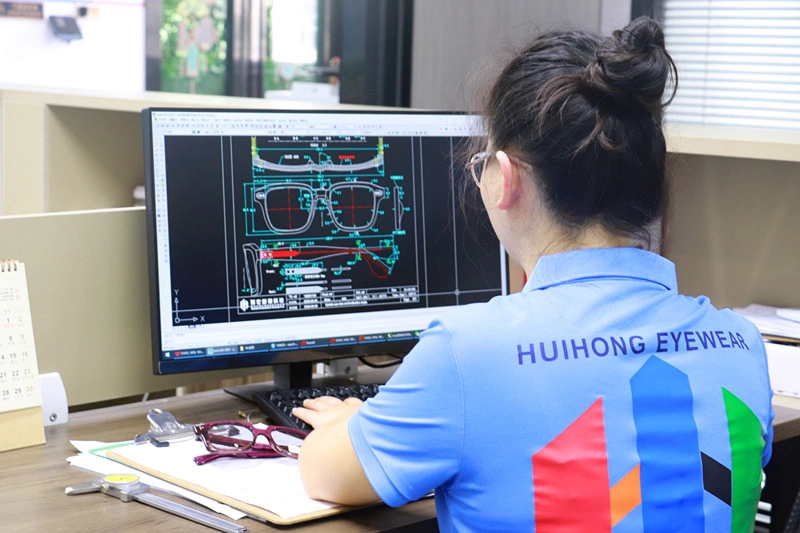
3D modeling using CAD software
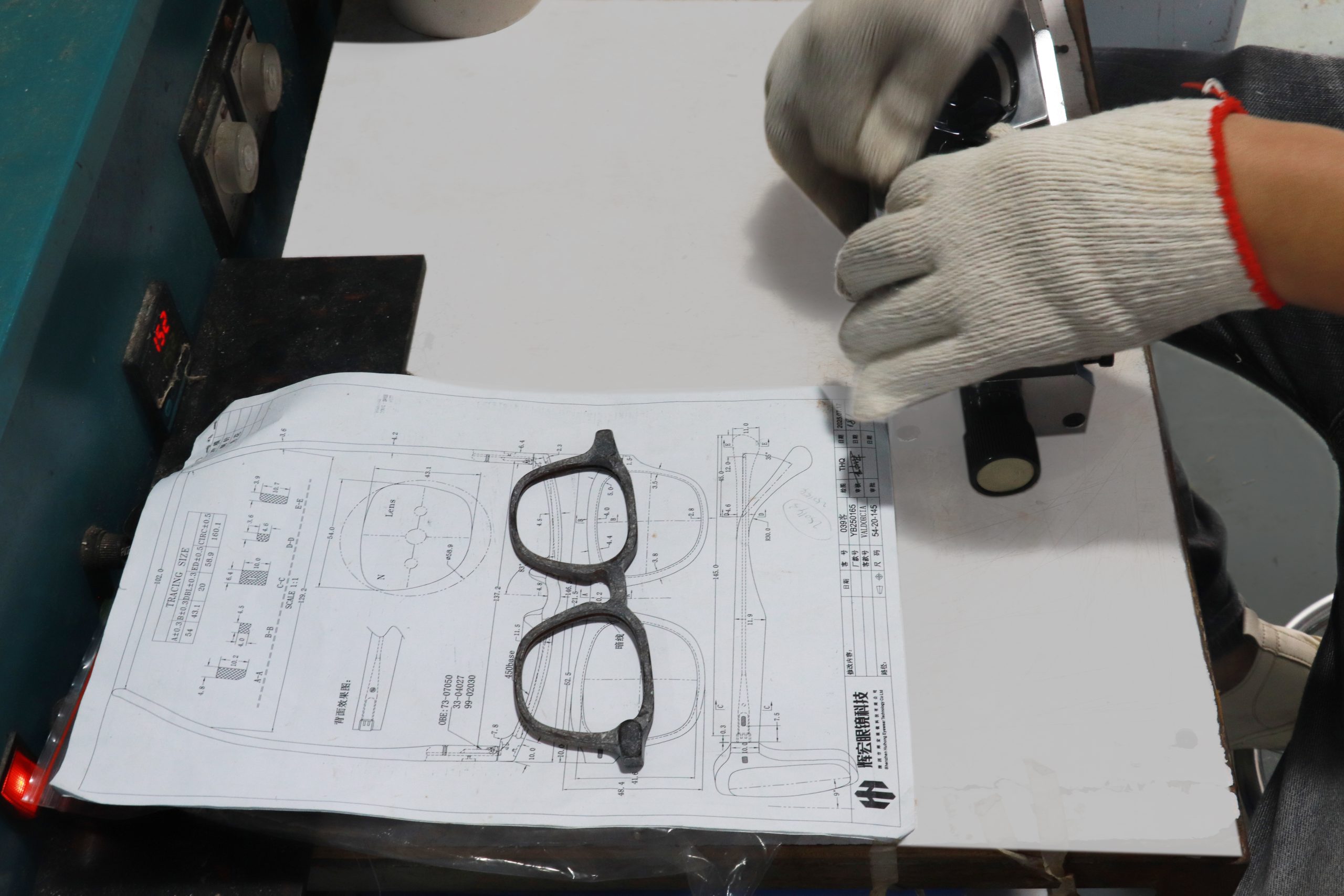
Technical drawing creation
Prototype development
Design review and revisions
Final design approval
Advanced eyewear makers use 3D printing technology to create prototypes quickly and accurately, allowing you to test fit and comfort before full production.
2. Material Preparation
All raw materials undergo strict incoming inspection to ensure they meet quality standards. Materials are then prepared for production:
Acetate sheets are cut into appropriate sizes
Metal rods are cut and shaped
Lens blanks are inspected for optical clarity
Only approved materials are released into production.
3. Frame Production
Frame production varies depending on the material:
For acetate frames:
CNC cutting of frame fronts and temples
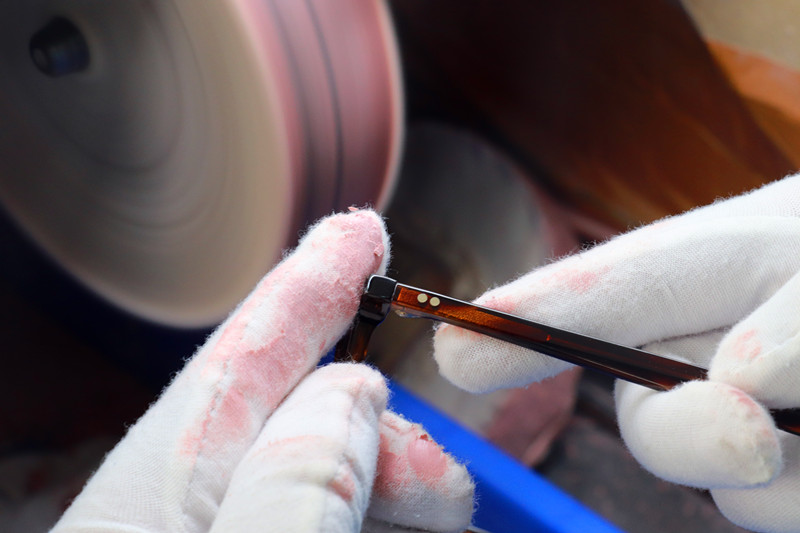
Tumbling to smooth rough edges
Polishing to achieve a high-gloss finish
Hinge installation with metal cores for durability
For metal frames:
Laser cutting of frame components
Bending and shaping
Welding and soldering
Plating or coating for corrosion resistance
For injection-molded frames:
Mold preparation
Plastic melting and injection
Cooling and demolding
Trimming and finishing
4. Lens Production and Coating
Lens manufacturing involves several precision steps:
Lens cutting to match frame dimensions
Tinting or polarization processing
Hard coating for scratch resistance
Multi-layer coating for UV protection and anti-glare properties
Hydrophobic and oleophobic treatments to repel water and oil
Advanced facilities use vacuum coating systems to ensure even coating distribution and strong adhesion.
5. Assembly
Frames and lenses are assembled by skilled technicians:
Lens insertion into frames
Nose pad and temple tip installation
Frame alignment and adjustment
Logo application
Final fitting checks
Even with automation, assembly still requires precision handling to ensure proper fit and comfort.
6. Quality Control and Testing
Every pair of glasses undergoes rigorous testing before shipping:
Optical accuracy measurement
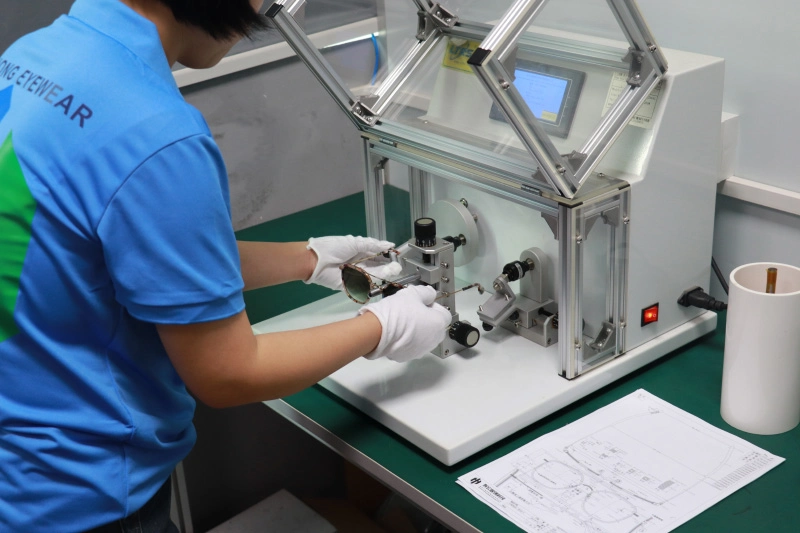
Impact resistance testing
Abrasion resistance testing
Environmental testing (temperature and humidity)
Visual inspection for defects
Products that pass all tests are packaged and prepared for shipping.
2026 Trends Shaping the Eyewear Manufacturing Industry
The eyewear manufacturing industry is constantly evolving with new technologies and consumer demands. Here are the top trends shaping the industry in 2026:
1. Sustainable Manufacturing Practices
Sustainability is no longer a niche concern but a mainstream requirement. Leading eyewear makers are adopting:
Bio-based and recycled materials
Energy-efficient production processes
Waste reduction initiatives
Carbon-neutral manufacturing facilities
Take-back and recycling programs
Consumers are increasingly willing to pay a premium for sustainable eyewear, making this a key differentiator for brands.
2. 3D Printing Technology
3D printing is revolutionizing eyewear manufacturing by enabling:
Custom-fit eyewear tailored to individual face measurements
Complex, lightweight structures that traditional methods cannot replicate
Faster prototyping and production
Reduced material waste
On-demand manufacturing
Selective Laser Sintering (SLS) and Powder Bed Fusion are the most commonly used 3D printing technologies in the industry.
3. Advanced Lens Technologies
Lens innovation continues to drive market growth:
Free-form progressive lenses with wider fields of view
Advanced blue light blocking coatings
Photochromic lenses with faster transition times
Anti-fatigue lenses for digital device users
Prescription smart glasses lenses
High-index resin materials with refractive indices up to 1.74 are now widely available, making thin, lightweight lenses accessible to more consumers.
4. Automation and Digitalization
Automation is improving efficiency and consistency in eyewear manufacturing:
Automated lens cutting and edging
Robotic assembly systems
AI-powered quality control
Digital design and prototyping tools
Real-time production tracking systems
These technologies reduce human error, speed up production, and lower costs.
5. Smart Eyewear Integration
Smart glasses are moving from niche products to mainstream accessories. Eyewear makers are developing capabilities to integrate:
AI assistants
Real-time translation
Navigation
Health monitoring
Audio playback
The focus has shifted from flashy innovation to seamless integration of technology into stylish, everyday frames.
Best Practices for Working with an Eyewear Maker
To ensure a successful partnership with your eyewear manufacturer, follow these best practices:
1. Build a Strong Relationship
Treat your eyewear maker as a strategic partner rather than just a supplier. Regular communication, mutual respect, and transparency are the foundation of a strong relationship.
2. Provide Detailed Specifications
The more detailed your specifications, the better your partner can meet your expectations. Include:
Exact dimensions and measurements
Material specifications
Color references (Pantone numbers)
Logo placement and size
Quality standards
Packaging requirements
3. Always Order Samples First
Never place a large order without first approving samples. Samples allow you to:
Verify the quality of materials and craftsmanship
Check fit and comfort
Confirm colors and branding
Test functionality
Order multiple samples to ensure consistency.
4. Plan for Lead Times
Production lead times vary depending on the complexity of your order and the manufacturer’s schedule. Plan ahead and allow extra time for:
Design and prototyping
Sample approval
Production
Quality control
Shipping
5. Include Quality Clauses in Your Contract
Protect your brand by including clear quality clauses in your contract:
Acceptable defect rates
Rework and replacement policies
Warranty terms
Liability for non-compliance with regulations
Traceability requirements
6. Visit the Factory if Possible
If feasible, visit your eyewear maker’s factory in person. This allows you to:
Assess their facilities and equipment
Meet the team
Observe their production processes
Verify their quality control procedures
Build trust and rapport
Conclusion
Working with a professional eyewear maker is essential for building a successful eyewear brand. By understanding what to look for in a partner, how the manufacturing process works, and the latest industry trends, you can make informed decisions that set your brand up for success.
Remember, the best eyewear manufacturers are not just producers—they are partners who invest in your success. Take the time to find a partner that aligns with your brand’s values, has the technical expertise to bring your vision to life, and can scale with your business as it grows.
Whether you’re just starting out or looking to expand your existing collection, the right eyewear maker can help you create high-quality, stylish products that resonate with your customers and stand out in the competitive global market.
Need help finding the right eyewear maker for your next project? Contact our team today to learn how we can help you bring your eyewear designs to life with precision, quality, and reliability.