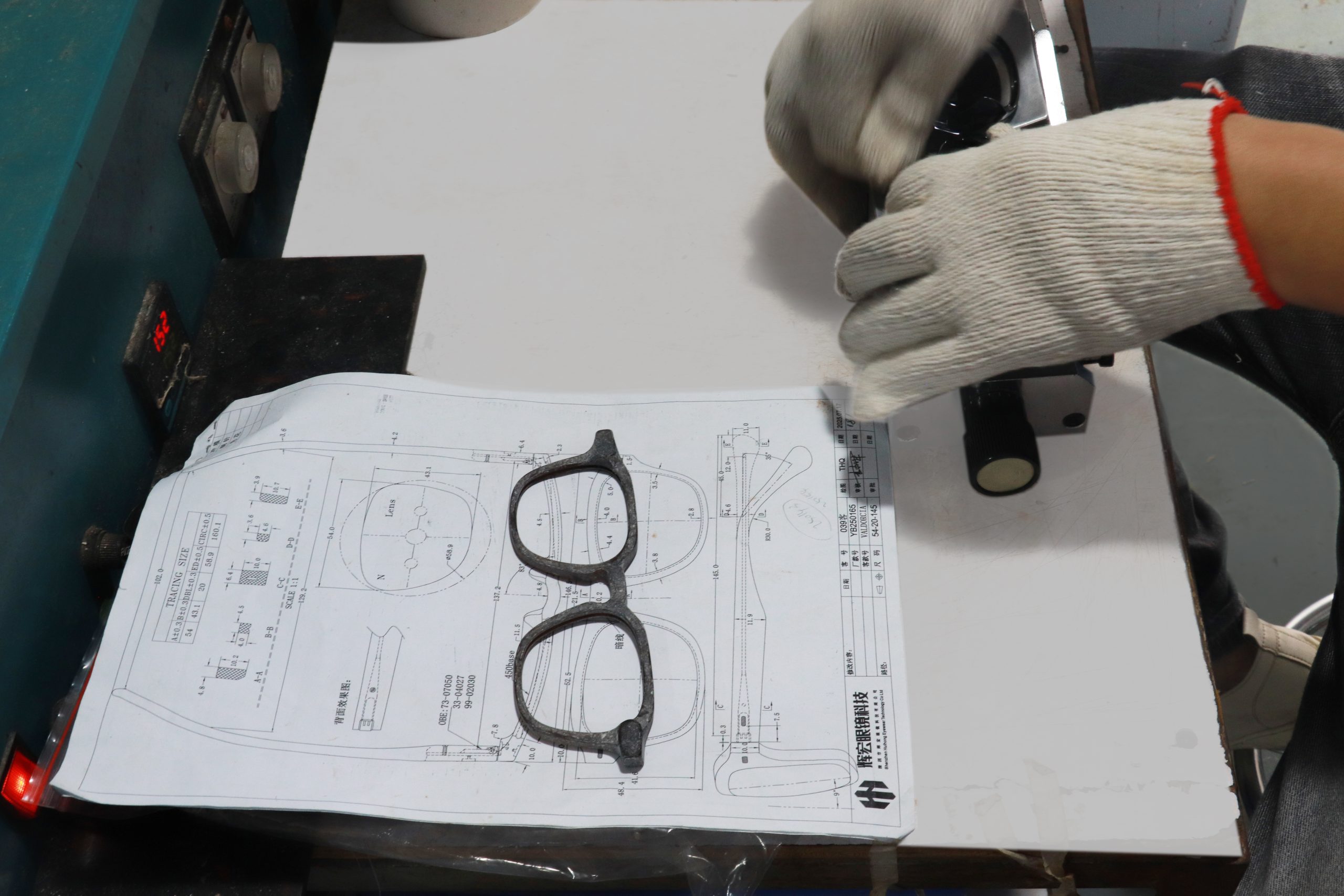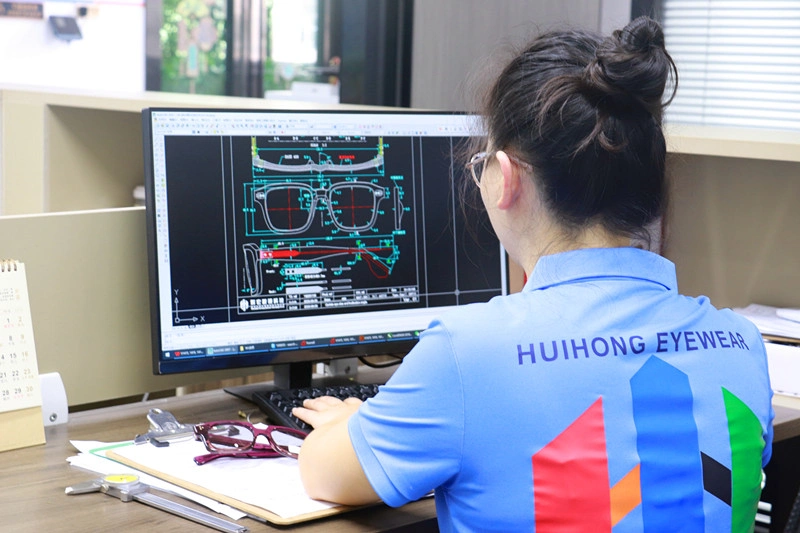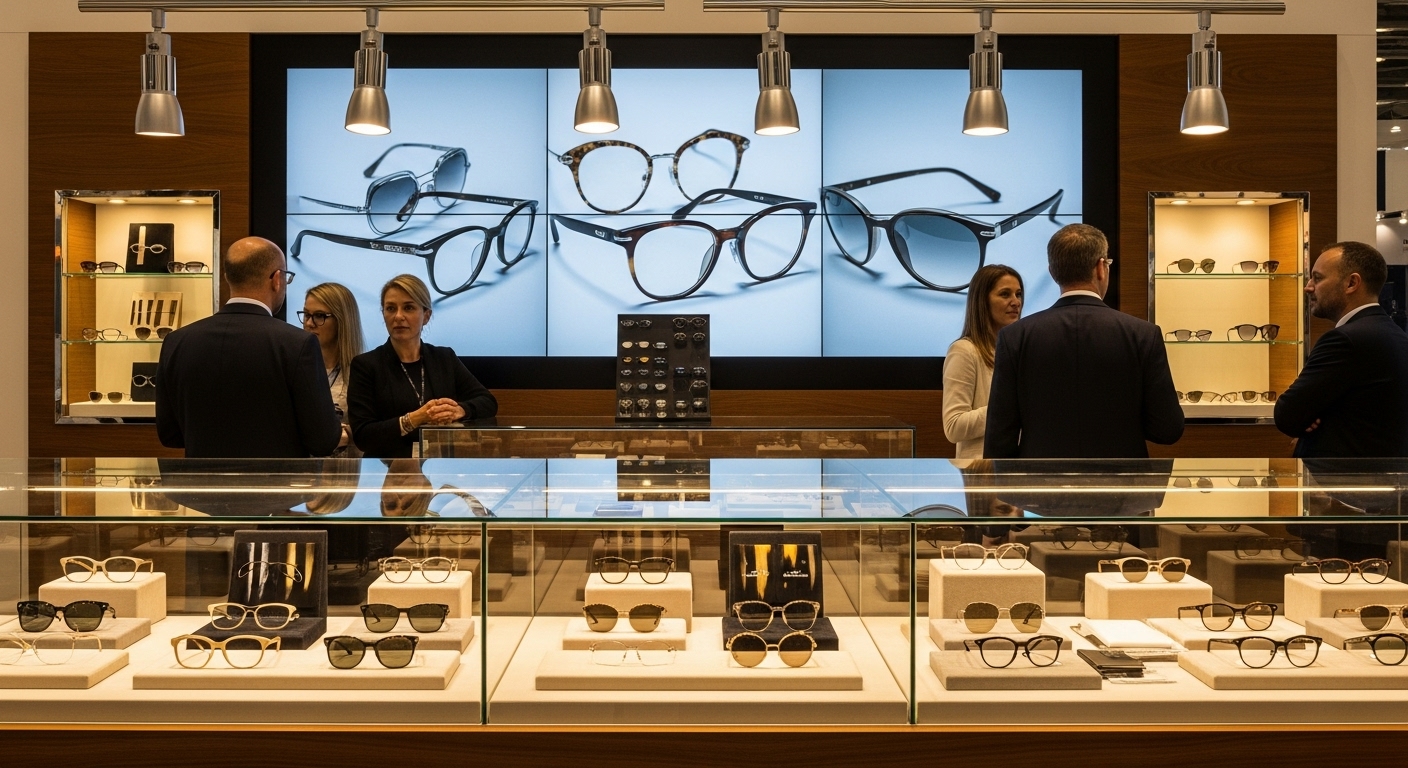
A realistic first custom eyewear launch usually costs around USD 3,000–15,000. That range covers sampling, basic tooling, a small production run, and standard packaging. The final number depends less on the frame drawing itself and more on material, order quantity, components, finishing, packaging, and compliance.
For brands buying ready stock, cost is simple. For brands building a custom eyewear line, cost is a stack of production decisions. Two factories can quote very different prices for the same design because they are not pricing the same material grade, hinge system, finishing standard, or testing scope.
What drives the cost of a custom eyewear line?
1. Frame material
Material sets the base price tier. Acetate is mid-to-premium; titanium is premium. Factory-level acetate frames typically run around USD 12–20 per unit, while titanium can run USD 15–25+ per unit. Titanium generally costs 1.5–3× standard acetate and 2–4× stainless steel at equivalent specification.
Acetate also carries finishing cost. It is cut from solid blocks, tumbled for 24–48 hours, and hand-finished for 15–30 minutes per frame. Premium Italian acetate can add 20%–40% to material cost, and hand polishing may represent 25%–40% of total acetate frame cost.
2. Tooling and molds
Custom shapes require tooling. New acetate or injection frame tooling typically ranges from USD 800 to 6,000, depending on complexity and cavity count. Fully custom molded frames often require USD 1,500–4,000 upfront. Tooling is a fixed cost, so its impact per pair falls as order quantity rises.
3. MOQ and order quantity
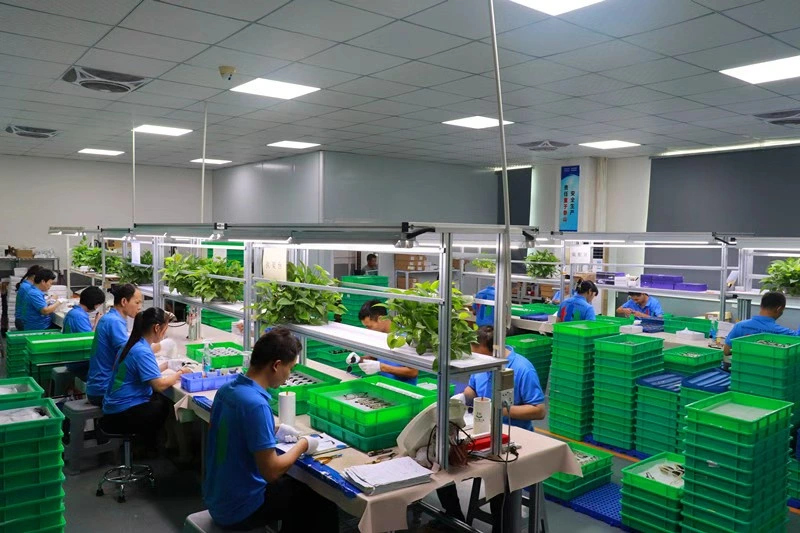
The standard OEM MOQ for fully custom eyewear is around 500 pieces per style. At 50 pieces per style, per-unit cost can be 30%–50% higher than at 300 pieces. At 100 pieces, the premium is usually 15%–25%. Smaller runs are possible, but fixed costs are spread across fewer pairs.
4. Sampling and development
Sampling fees typically run USD 30–80 per style, often credited against bulk production but not always. Fully custom titanium samples can cost USD 300–600 per piece. Budget for two to three sample rounds rather than assuming the first sample will be production-ready.
5. Components, lenses, and packaging
The frame is not the whole product. Hinges, core wires, lens specification, and packaging all add cost. In a typical acetate sunglass breakdown, raw materials and hardware account for 30%–40%, lenses 20%–30%, labor and craftsmanship 15%–25%, QC 5%–10%, and packaging and logistics 10%–20%. Custom packaging often has its own MOQ, frequently around 1,000 pieces.
6. Certification and landed cost
CE, FDA, REACH, UV400 claims, and market-specific labeling all carry testing and documentation costs. Shipping terms also matter: a FOB quote and a DDP quote can look thousands of dollars apart for the same order. Always compare landed cost, not factory unit price alone.
A realistic budget example
For one acetate shape, two colors, 300 pieces per color (600 total), standard polarized lenses, a five-barrel hinge, a small temple logo, and basic branded packaging:
Acetate unit cost: roughly USD 12–18
Tooling amortization: roughly USD 2–5 per pair
Sampling: USD 80–160 for two styles
Packaging: USD 1–3 per pair
Before certification and freight, the first-run commitment is likely around USD 10,000–16,000. A lower launch budget is possible with fewer colors, simpler hardware, stock packaging, and smaller quantities—but each choice changes the final product.
How to keep a custom launch commercially realistic
The most important cost discipline is specification clarity before quotation. Material, construction, finishing route, hinge system, lens specification, and packaging scope must be defined before price comparison means anything. Otherwise, you are comparing different products, not different prices.
The second is phasing the launch around certainty. Test a new silhouette with a smaller first run, then move proven shapes into larger production for better unit economics.
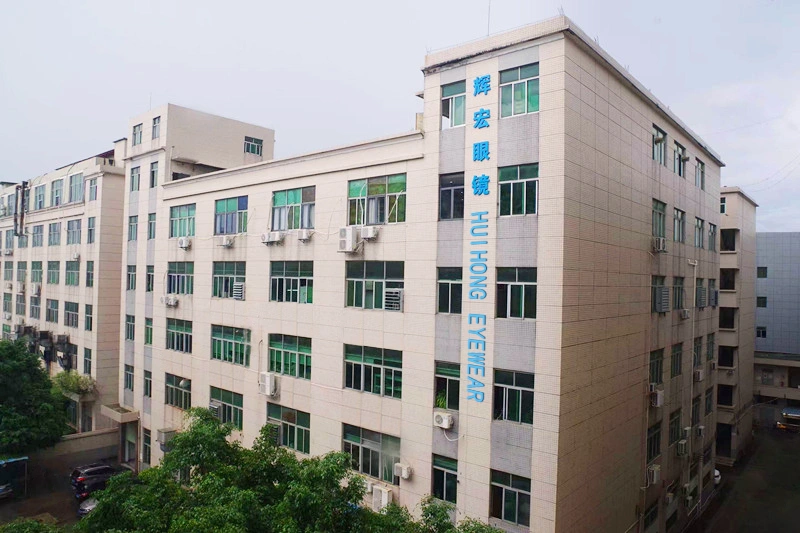
This is where the manufacturing partner matters. Huihong Eyewear is a specialized manufacturer dedicated to the design, development, and OEM/ODM production of high-end eyewear. We work with independent brands, designer labels, and premium retailers across Japan, Korea, Europe, and North America. Our focus is custom production only—not ready stock—across acetate, titanium, and metal frames, from concept prototyping to bulk delivery. That means every quote is built around your specification, not a stock catalog.
FAQ
Is USD 3,000–15,000 enough to launch a custom eyewear line?
Yes, for a restrained first collection. More colors, premium materials, custom packaging, and higher component specifications push the budget higher.
Why do factories quote different prices for the same drawing?
Because quotes often include different material grades, hinges, finishing standards, lenses, packaging, and testing scope.
What MOQ should I expect for custom eyewear?
Around 500 pieces per style is the standard OEM baseline. Lower quantities are possible but carry a per-unit premium.
Does titanium cost more than acetate?
Yes. Titanium typically runs 1.5–3× standard acetate and 2–4× stainless steel at equivalent specification.
What is often missing from a cheap eyewear quote?
Tooling amortization, packaging, certification, and freight/duties are common omissions. Compare landed cost, not unit price alone.