Most eyewear supplier scorecards are built for buyers who need stock frames fast. That logic fails when your brand is built on custom eyewear development.
If you are sourcing OEM/ODM eyewear—custom acetate, titanium, or metal frames—the real question is not “who has stock?” It is “who can turn my design into a production-ready frame, repeatedly, without losing the details that matter?”
Below is the five-criteria scorecard I use to shortlist custom eyewear factories. It weights customization capability and quality evidence above price, because in custom programs, cheap samples often become expensive rework.
Why Stock-Supplier Scorecards Fail Custom Programs
A factory that excels at stocking hundreds of SKUs is optimized for repetition. A custom eyewear manufacturer is optimized for translation—turning a sketch, reference frame, or CAD file into a manufacturable product.
Custom programs expose different risks:
Tooling and engineering become the bottleneck—not inventory.
Material behavior decides whether the approved sample can be reproduced.
Communication density is higher: fit corrections, color approvals, hinge feel, logo placement.
MOQ is driven by material setup and polishing batches, not warehouse fill rates.
So the scorecard should reward customization competence with evidence, not catalog depth.
The 5-Criteria Custom Eyewear Supplier Scorecard
Score each criterion 1–5. A shortlist candidate should clear 3.5 overall, with no single criterion below 3.

Price is deliberately last. A factory that is 15% cheaper per frame but cannot hold dimensional tolerance or match an acetate colorway across batches is not cheaper—it is a rework invoice waiting to happen.
1. Customization Depth and Material Fit (30%)
“We do acetate, titanium, and metal” is a category list, not a capability statement.
Verify material-specific experience. Acetate is not injection plastic. Titanium is not stainless steel. Ask for custom acetate projects where color was matched to a Pantone reference—not picked from a stock color card. For titanium, ask about welding method, grade control, and spring-hinge integration.
Clarify the customization boundary. Can they produce a new mold from your design, or only modify an existing block? Can they handle mixed-material construction—acetate front with titanium temples, or metal core inside acetate—without subcontracting the joining step? What is the minimum order for a custom color or custom logo, as distinct from a stock-frame print?
Red flag: Material questions answered with catalog pages instead of process descriptions.
2. Engineering and Manufacturability Review (20%)
A custom factory that never pushes back on your design is not being cooperative. It is being passive—and passive factories discover problems during sampling, at your expense.
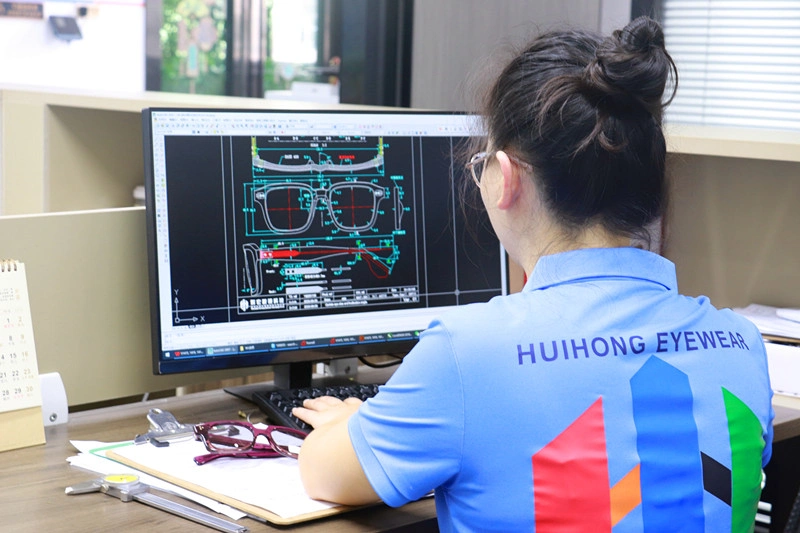
Before quoting or sampling, the factory should review your drawing or reference frame for tooling feasibility, material behavior, and assembly sequence. They should flag undercuts, thin walls, polishing risks, hinge or temple geometry issues, realistic tolerances, and decorative steps that may interact badly with the base material.
The best partners provide a written DFM note or marked-up drawing before sampling. That document becomes the shared basis for approval and inspection.
Scoring anchor: A 5 means specific engineering comments and a proposed process route. A 2 means they acknowledged the design and sent a quotation.
3. Quality Evidence Chain (25%)
A beautiful first sample proves the factory can make one good frame. The scorecard question is whether they can make the approved sample repeatedly.
Look for four links:
Golden-sample protocol. The approved sample must be sealed and used as the production reference—not remembered or photographed informally.
In-process inspection. Critical checks happen at frame alignment, hinge installation, polishing, and finishing—not only at final inspection. Ask for the inspection plan by production stage and the AQL level applied.
Traceable test reports. For acetate: colorfastness, dimensional stability, surface consistency. For titanium and metal: hinge fatigue, weld strength, nickel release where skin contact applies. Generic certificates without batch traceability are decoration, not evidence.
Failure protocol. Ask: “If the first bulk batch fails the golden-sample comparison, what happens?” A serious custom factory has a rework or replacement clause and a root-cause process.
4. Communication and Project Rhythm (15%)
In custom eyewear, silence is expensive. A project that goes quiet after sampling is not “in production.” It is accumulating risk.
Score the quality of the answer, not just response speed. A reply in one business day with a substantive update—“the temple tip mold needs a 1 mm adjustment; revised sample photos by Thursday”—is worth more than an instant “we are checking.”
Ask the factory to map the gates before the project starts: design review → tooling → first sample → sample revision → pilot → bulk. Each gate should have a date and an owner. You also need one accountable project contact, not a shared inbox.
5. Commercial Terms and IP Protection (10%)
In custom eyewear, price is a function of the first four criteria. A low unit price built on unclear tooling ownership or vague exclusivity is a liability.
Settle these before signing:
MOQ logic: What drives the minimum—material, tooling amortization, or line changeover?
Tooling ownership: Who owns the mold after you pay for it? Put ownership, return, or destruction terms in writing.
IP protection: Confirm an NDA and non-use agreement before sharing a full tech pack. Ask how customer designs are segregated from the factory’s in-house ODM catalog.
Lead-time realism: Custom eyewear sampling typically runs in weeks, not days. A custom new-build quoted in under three weeks without explaining tooling and sampling steps is either misunderstood or overpromised.
How the Scorecard Changes the Shortlist
A factory that scores high on price but low on Criterion 1 and Criterion 3 is usually a stock supplier with a custom sales page. A factory that scores high on Criterion 2 and Criterion 4 is often the safer custom partner, because engineering and communication reduce the hidden cost of revisions.
The goal is not to find a factory that says yes to everything. It is to find one that says: “Here is what your design needs, here is how we will control it, and here is the evidence we will give you at each gate.”
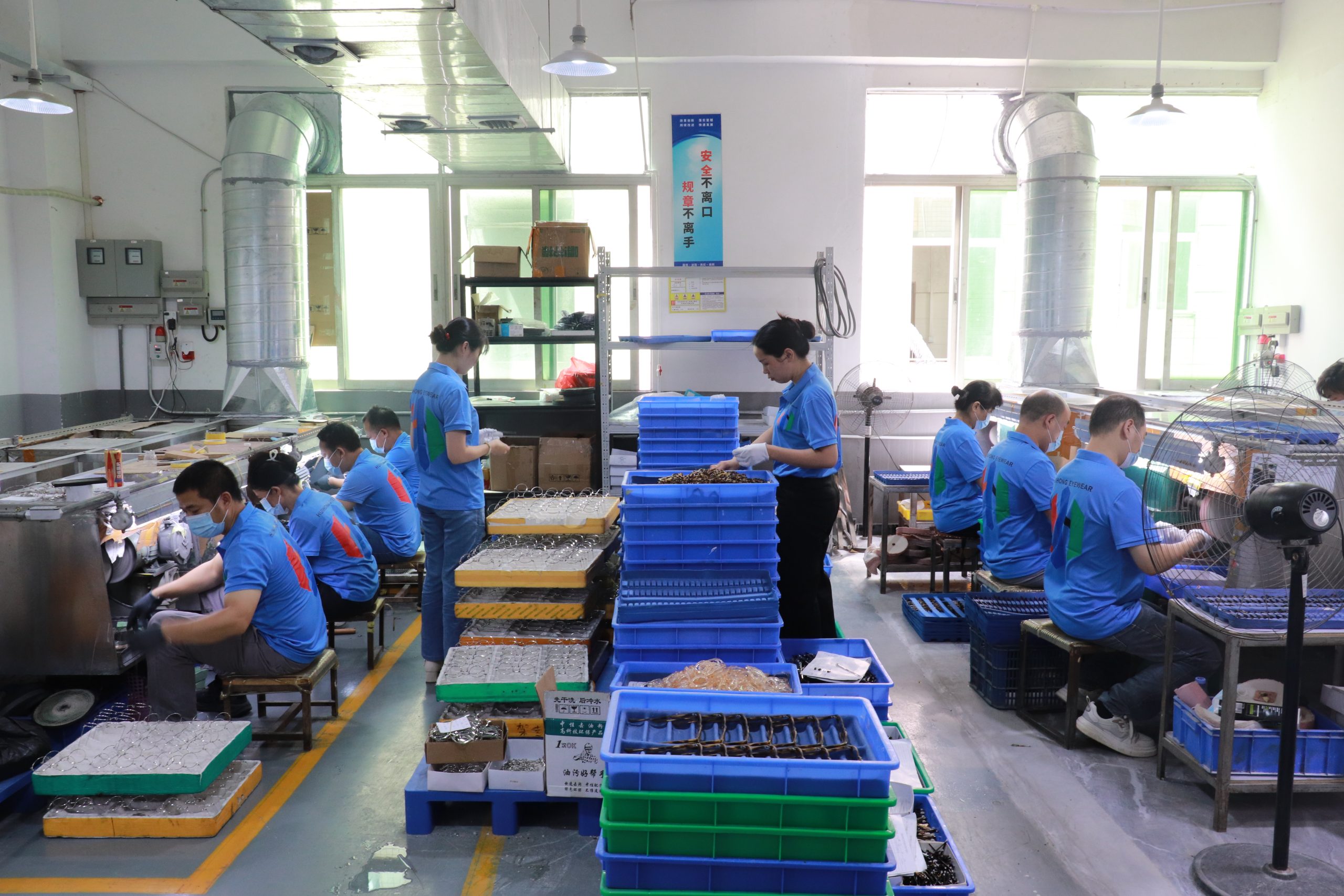
Huihong Eyewear is a specialized manufacturer dedicated to the design, development, and OEM/ODM production of high-end eyewear. We work with independent brands, designer labels, and premium retailers worldwide, specializing in acetate, titanium, and metal frames with strong custom production capability. From concept prototyping to bulk delivery, we support brands through every step—with flexibility, speed, and precision. Our clients span Japan, Korea, Europe, and North America. We do not sell stock eyewear; every program is built around a brand’s design, material specification, and approval standards. If your sourcing brief is a custom development rather than a catalog order, this five-criteria scorecard is the right starting filter.