The eyewear industry is at a crossroads. For decades, the production of eyeglass frames has followed a familiar path: injection molding, CNC machining, and hand-finishing—processes that are time-tested but rigid, wasteful, and ill-suited to the growing demand for personalization. Enter 3D printing. Over the past five years, additive manufacturing has moved from prototyping labs to production floors, with frames now being the primary application—an estimated half a million 3D-printed eyewear frames are produced each year.
But is this a genuine revolution, or just another tech trend that will fade? Let’s look at the evidence.
The Numbers Don’t Lie: A Market in Motion
The global 3D printed eyewear market was valued at USD 0.25 billion in 2024 and is expected to reach USD 0.6 billion by 2031, growing at a compound annual growth rate of 12.00%. Other forecasts are even more bullish: Exactitude Consultancy predicts the industry will grow from $665.34 million in 2023 to $1,450.33 million by 2033, a CAGR of 8.1%. This isn’t niche experimentation—it’s a sector gaining serious momentum.
So what’s driving this growth? Three forces are converging: the demand for true personalization, the push for sustainability, and the need for faster, more flexible production.
The Promise: Why 3D Printing Matters for Eyewear
True Customization, Not Just Sizing
Traditional eyewear is designed for a “standard” face—which, statistically, almost no one has. An estimated 98% of people have asymmetrical heads, meaning one ear sits higher or further from the nose than the other. Off-the-rack frames, no matter how carefully adjusted, are fundamentally designed to be symmetrical. 3D printing changes this entirely.
Using facial scanning technology—now available even through smartphone apps—manufacturers can capture precise facial geometry and produce frames tailored to each individual’s nose bridge width, temple length, head shape, and even ear positioning. Korean brand Breezm, for example, has already created over 90,000 custom frames using this approach, proving that large-scale personalization is commercially viable.
Sustainability Through Additive Manufacturing
Traditional frame production is subtractive—material is cut away from sheets or blocks, generating significant waste. 3D printing is additive: it builds objects layer by layer, using only the material needed. This isn’t just a theoretical advantage. Life cycle assessments have shown that 3D printed eyewear can be three times more sustainable than conventionally manufactured frames. Brands like Tides Studios emphasize local production and zero-waste processes, with all their sunglasses sourced and made in London. The on-demand production model also eliminates the need for massive inventory, reducing the environmental cost of unsold stock.
Speed and Design Freedom
Traditional eyewear development is slow. Mold creation, CNC machining, and multi-stage finishing can take weeks or months to finalize a single product. With 3D printing, designers can produce prototypes within hours and iterate rapidly. This agility is particularly valuable for independent brands and designers who want to bring unique concepts to market without the prohibitive costs of traditional tooling.
The design possibilities are also expanding. Complex geometries, integrated functional elements, and lightweight structures that would be impossible with conventional methods are now achievable. MYKITA’s MYLON material, for instance, is 30% lighter than acetate, making voluminous frames more comfortable while enabling slender constructions that acetate simply cannot support.
The Reality Check: Where 3D Printing Falls Short
For all its promise, 3D printing is not a silver bullet. The technology faces real limitations that explain why it hasn’t yet replaced traditional manufacturing.
Scale and Speed
Additive manufacturing is inherently slower than injection molding for high-volume production. While a mold can produce thousands of identical frames per day, 3D printers build objects one at a time. This makes 3D printing ideal for low-volume, high-value production—but less competitive for mass-market eyewear where unit economics are paramount.
Post-Processing Requirements
3D printed frames rarely come off the machine ready for retail. They typically require post-processing—smoothing, polishing, dyeing, and finishing—to achieve the surface quality consumers expect. This adds time and cost, narrowing the gap between 3D printing and traditional methods.
Material and Regulatory Constraints
While materials have advanced significantly—with nylon (PA11/PA12) now an industry standard for its lightweight, durable, and hypoallergenic properties—the range of available materials still lags behind traditional options like acetate and titanium. Medical-class certification requirements further limit which materials and processes can be used for prescription eyewear.
The Verdict: Hype or Future?
The answer is neither extreme. 3D printing is not hype—it is delivering real value in specific segments of the eyewear market. But it is also not a universal replacement for traditional manufacturing. The reality is more nuanced.
Where 3D Printing Wins Today
Small-batch and limited-edition production: For brands launching capsule collections or testing new designs without committing to expensive molds
Custom-fit eyewear: For consumers who demand perfect fit and are willing to pay a premium
Rapid prototyping: For designers who need to iterate quickly before committing to mass production
Complex geometries: For frames that incorporate integrated features or unconventional designs

Where Traditional Manufacturing Still Dominates
High-volume mass production: Injection molding remains unbeatable for cost per unit at scale
Established material preferences: Acetate and titanium continue to set the standard for luxury and durability
Mature supply chains: The infrastructure for traditional eyewear manufacturing is global, efficient, and deeply entrenched
The Hybrid Future
The most likely future is not one technology replacing the other, but a hybrid model. Forward-thinking manufacturers are already integrating 3D printing into their workflows—using it for prototyping, custom orders, and small-batch production while maintaining traditional capabilities for high-volume runs. This approach offers the best of both worlds: the flexibility and personalization of additive manufacturing with the scale and cost-efficiency of traditional methods.
What This Means for Brands and Manufacturers
For eyewear brands, the message is clear: 3D printing is a tool to be strategically deployed, not a panacea to be blindly adopted. The technology excels at solving specific problems—custom fit, rapid iteration, low-volume production—but it doesn’t eliminate the need for craftsmanship, material expertise, and quality control.
This is where experienced manufacturing partners matter. Companies that understand both traditional and additive manufacturing can help brands navigate this transition—knowing when to use 3D printing, when to stick with conventional methods, and how to combine them for optimal results.
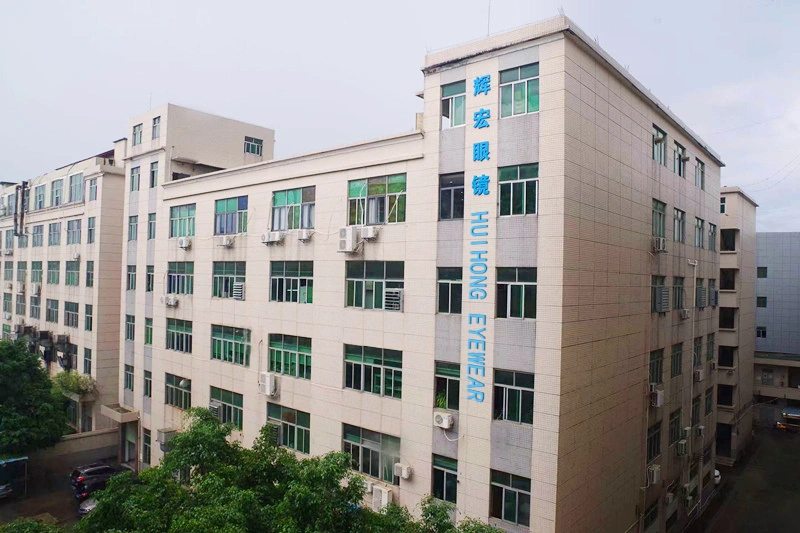
At Shenzhen Huihong Eyewear Technology Co., Ltd., we’ve spent years perfecting the craft of acetate, titanium, and metal frame production for brands across Japan, Korea, Europe, and North America. We see 3D printing not as a threat to traditional craftsmanship, but as a complement—a way to offer our clients even more flexibility in bringing their unique visions to life. Whether it’s a low-volume custom run or a full-scale production order, the goal remains the same: exceptional quality, precise fit, and reliable delivery.
3D printed eyewear is real. It’s growing. And it’s here to stay. But like any manufacturing innovation, its value depends on how and where it’s applied. The brands that succeed will be those that understand its strengths and limitations—and partner with manufacturers who do the same.