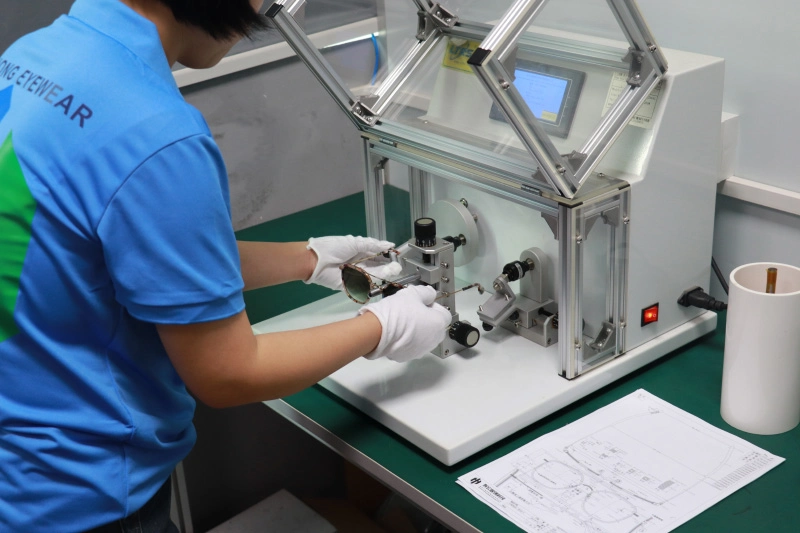
For independent eyewear brands, designer labels, and premium retailers, finding the right manufacturing partner is more than sourcing a supplier—it is finding an extension of your creative team. A manufacturer with strong customization capabilities can turn your unique design vision into tangible, market-ready products that set your brand apart in a crowded optical market.
But how do you accurately assess whether a factory truly delivers on its customization promises? This guide breaks down the six core dimensions you need to evaluate, along with actionable checkpoints to help you identify a reliable custom eyewear manufacturing partner.
1. Material Expertise & Craftsmanship Range
True customization starts with material mastery. A capable custom eyewear manufacturer should demonstrate deep expertise across multiple premium materials, as each material requires distinct processing techniques and quality standards.
Key evaluation points:
Acetate frame capability: Can they work with premium cellulose acetate sheets from reputable suppliers? Look for evidence of advanced lamination, hand-polishing, and color-matching precision. High-quality acetate customization demands skilled handcrafting for details like laminated front layers, engraved patterns, and custom color mixing.
Titanium & metal fabrication: Assess their proficiency with pure titanium, β-titanium, stainless steel, and monel. Critical indicators include laser welding quality, IP plating durability, nickel-release compliance, and the ability to produce ultra-lightweight structures without compromising strength.
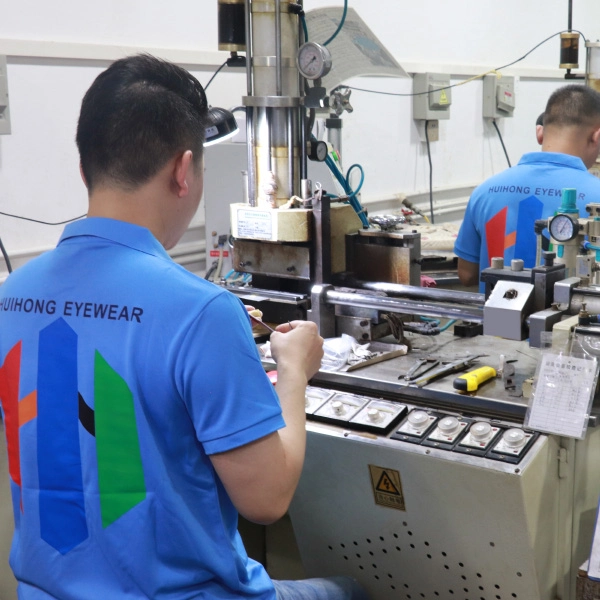
Multi-material integration: Can they combine different materials in a single frame—such as acetate fronts with titanium temples, or metal inlays in acetate bodies? This reveals advanced engineering and assembly capabilities.
A manufacturer that specializes in only one material may limit your product line expansion. Partners with multi-material expertise can support your brand across different price points and style directions.
2. Design & Prototyping Capability
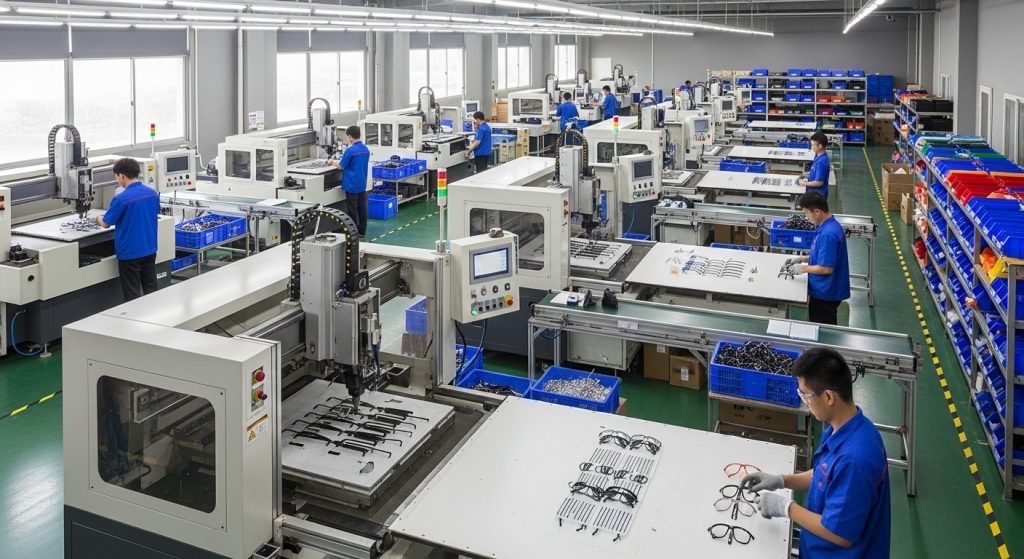
Customization begins long before mass production. The prototyping phase is where your concept is validated, and a manufacturer’s design capability directly determines how faithfully your vision is executed.
Key evaluation points:
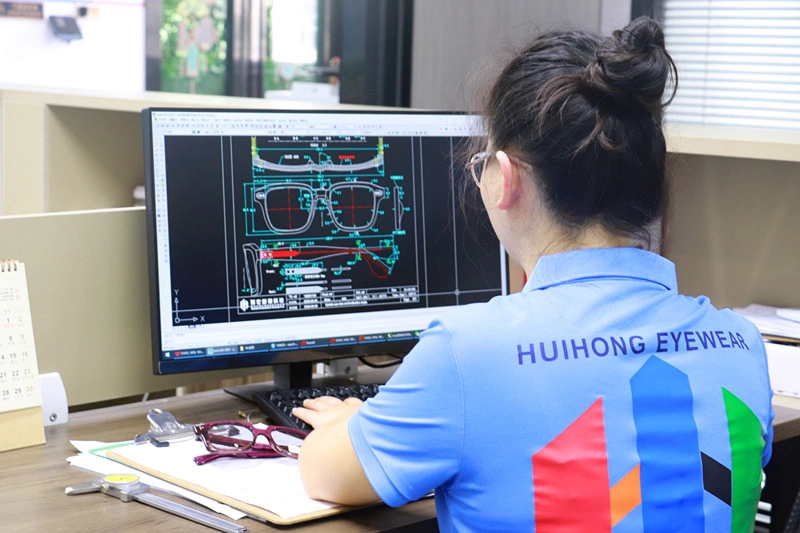
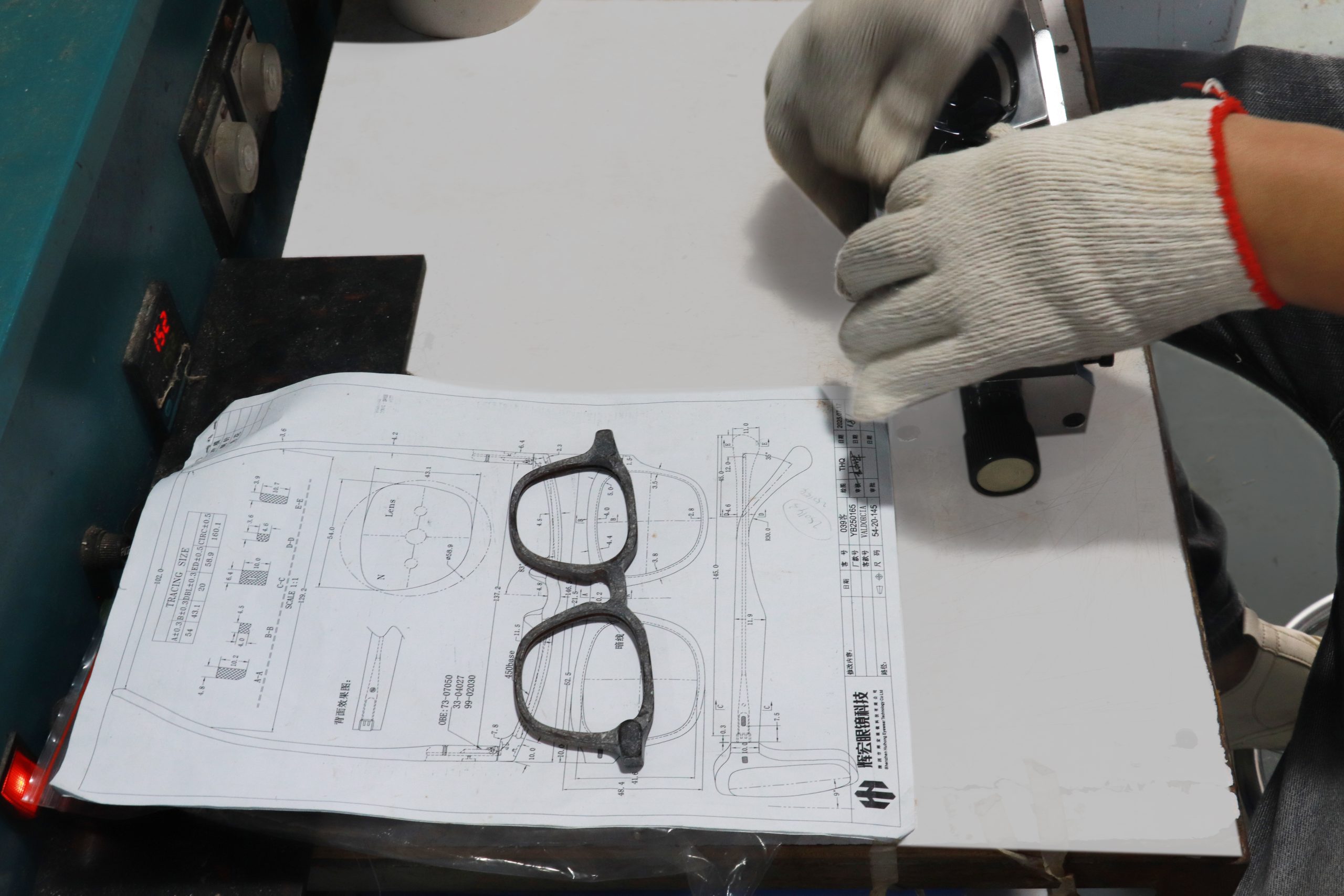
Technical design support: Do they have an in-house engineering team that can translate your sketches, reference images, or mood boards into production-ready technical drawings? Strong manufacturers provide constructive DFM (Design for Manufacturability) feedback rather than simply executing orders.
Prototyping speed & accuracy: How long does it take to produce first samples? For premium eyewear, a 7–15 day prototype cycle is standard for custom designs. More importantly, evaluate whether the first sample accurately captures your design intent in proportions, details, and finish.
Original design library: While OEM work follows your designs, a manufacturer with its own R&D pipeline and seasonal design collections demonstrates ongoing market insight and technical innovation that can benefit your product development.
3. Flexible Production & MOQ Adaptability
One of the biggest pain points for emerging and boutique brands is rigid minimum order quantities. A manufacturer with genuine customization strength understands that premium brands often need low-volume, high-mix production.
Key evaluation points:
Low MOQ support: Can they accommodate small-batch custom orders—50, 100, or 200 pieces per style? Factories built for high-volume mass production often struggle with small runs, while specialized custom manufacturers structure their production lines for flexibility.
Style mix flexibility: Within a single production batch, how many colorways, size variants, or detail modifications can they support? True customization means more than just logo engraving—it means adapting frame dimensions, materials, and finishes per your requirements.
Reorder & replenishment efficiency: How quickly can they produce repeat orders? A flexible supply chain means you can test the market with small initial quantities and scale up fast when demand grows.
4. End-to-End Quality Control System
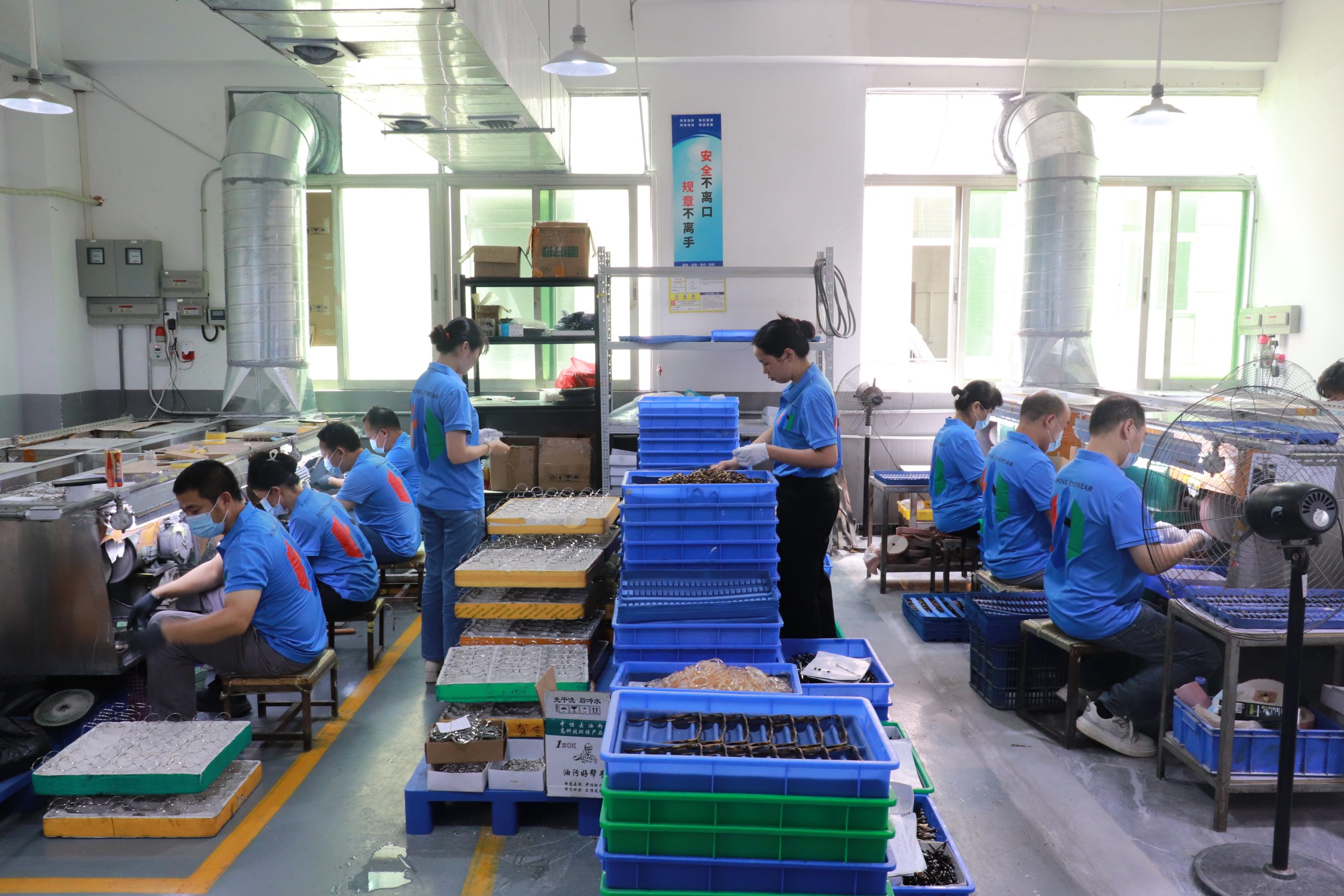
Custom products carry higher brand risk—each piece represents your brand identity. A rigorous quality control system ensures consistency even with diversified custom specifications.
Key evaluation points:
Incoming material inspection: Do they verify raw material specifications, perform color batch matching, and test material properties before production? For acetate, this includes sheet thickness consistency and color stability; for metal frames, it covers material composition and plating adhesion.
In-process quality checkpoints: How many inspection stages exist throughout production? Premium custom eyewear typically requires 8–12 quality checkpoints covering cutting, shaping, assembly, polishing, plating, and final fitting.
International compliance standards: Verify their certifications and testing protocols against target market requirements—including CE (EU), ANSI Z80.3 (US), and REACH compliance for nickel release and hazardous substances.
Defect rate track record: Ask for historical quality data. Experienced custom manufacturers maintain consistent defect rates well below 2% for bulk deliveries.
5. Delivery Efficiency & Supply Chain Reliability
Customization should not come at the cost of predictability. The best custom manufacturers balance craftsmanship with disciplined project management.
Key evaluation points:
Lead time transparency: Do they provide clear, realistic production timelines broken down by phase? For custom eyewear, typical bulk production ranges from 30–60 days depending on complexity.
Order tracking capability: Can you get regular production updates? Professional manufacturers offer milestone reporting so you always know your order status.
Emergency response mechanism: How do they handle rush orders, design revisions mid-production, or material supply disruptions? A resilient supply chain has backup material sources and contingency scheduling.
Logistics & shipping support: Do they offer flexible shipping solutions, export documentation support, and experience with your destination markets? Familiarity with Japan, Korea, Europe, and North America import requirements simplifies your logistics.
6. Communication & Long-Term Partnership Value
Custom eyewear production is a collaborative process. Language barriers, time zone gaps, and poor communication can derail even technically capable factories.
Key evaluation points:
Dedicated account management: Is there a designated contact person who understands your brand positioning and product requirements? Consistent communication reduces misunderstandings and speeds up decision-making.
Proactive problem-solving: When issues arise—whether design feasibility, material availability, or production challenges—do they present solutions rather than just problems? This mindset separates strategic partners from order-takers.
Client retention & references: How long have their major clients been working with them? High repeat-client rates indicate trust, consistent quality, and shared value alignment. Ask for references from brands similar to yours in positioning and market.
Quick Assessment Checklist
Before committing to a custom eyewear manufacturer, run through this checklist:
✅ Demonstrated expertise in acetate, titanium, and metal frame production
✅ In-house design team with prototyping capability within 15 days
✅ Flexible MOQ policy supporting low-volume, high-quality runs
✅ Documented multi-stage quality control process
✅ Clear production timelines with milestone updates
✅ Experience serving brands in your target markets (Japan, Korea, Europe, North America)
✅ Strong client retention and positive long-term partnerships
✅ Proactive communication with professional English support
Final Thoughts
Evaluating a manufacturer’s customization capability is about looking beyond marketing claims and examining operational fundamentals. The right partner does more than produce frames—they help you refine designs, optimize costs, reduce time-to-market, and maintain consistent quality as your brand grows.
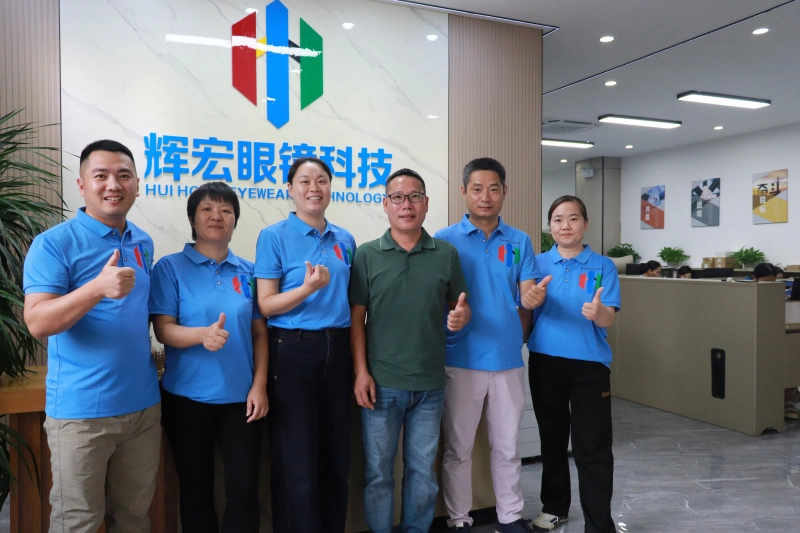
At Shenzhen Huihong Eyewear Technology Co., Ltd., we specialize in high-end eyewear design, development, and OEM/ODM production for independent brands, designer labels, and premium retailers worldwide. With deep expertise in acetate, titanium, and metal frames, and a proven track record in low-volume, high-quality custom production, we support brands from concept prototyping through bulk delivery—with flexibility, speed, and precision.
Our clients across Japan, Korea, Europe, and North America return to us not just for quality craftsmanship, but for the trust and shared value that come from a true manufacturing partnership.
If you are evaluating custom eyewear manufacturing partners and would like to discuss your project requirements, our team is ready to review your designs and provide tailored production solutions.