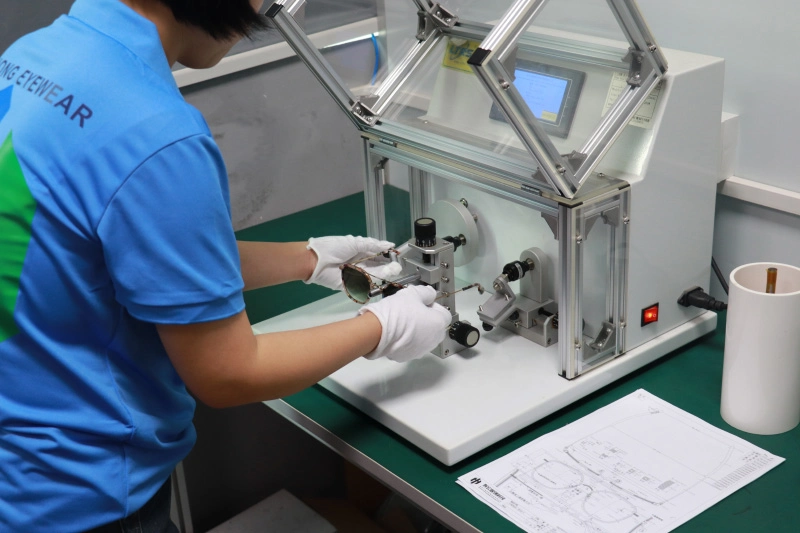
In today’s competitive eyewear market, generic products no longer capture consumer attention. The global custom eyewear industry is projected to reach $160 billion by 2028, growing at a CAGR of 5.2% annually . This growth is driven by increasing demand for personalized products, unique brand identities, and specialized eyewear solutions. Whether you’re launching a new DTC brand, expanding an existing retail line, or entering the eyewear market for the first time, partnering with the right custom eyewear manufacturers is the foundation of your success.
This comprehensive guide will walk you through everything you need to know about custom eyewear manufacturing, from understanding different service models to evaluating potential partners and navigating the production process. By the end, you’ll have the knowledge to make informed decisions that will help your brand stand out in the crowded eyewear landscape.
Understanding the Different Types of Custom Eyewear Manufacturing Services
Not all custom eyewear manufacturers offer the same level of customization. Before you start your search, it’s essential to understand the three primary service models and which one best fits your brand’s needs, budget, and timeline.
Private Label Eyewear: Fastest Entry with Minimal Risk
Private label eyewear is the most accessible option for new brands or those looking to test the market quickly. With this model, manufacturers produce pre-designed frames that you brand with your logo and packaging.
What you get with private label:
Ready-made frame designs with no development costs
No mold fees or tooling expenses
Fast production times (typically 15-25 days)
Custom logo printing or engraving
Branded packaging options
Best for: New brands testing market demand, retailers looking to add a house brand, or businesses needing quick turnaround for promotional products.
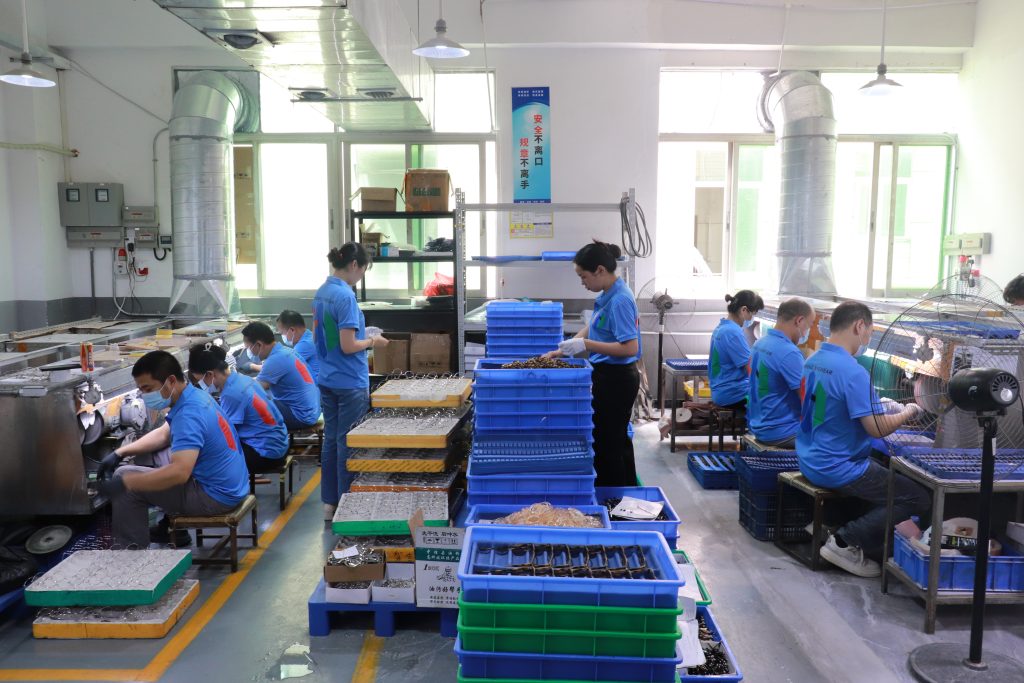
ODM Eyewear: Semi-Custom Solutions with More Uniqueness
ODM (Original Design Manufacturer) eyewear offers a middle ground between private label and full custom manufacturing. Manufacturers provide existing designs that you can modify to better align with your brand identity.
Customization options with ODM:
Color and finish changes
Material substitutions
Minor structural adjustments (temple shape, bridge size, hinge type)
Custom lens options and coatings
Exclusive branding elements
Best for: Brands that want more differentiation than private label offers but aren’t ready to invest in fully custom designs. ODM typically has lower costs and faster lead times than OEM while still allowing for significant brand customization .
OEM Eyewear: Full Custom Design for Maximum Brand Differentiation
OEM (Original Equipment Manufacturer) eyewear gives you complete creative control over your products. You provide the design specifications, and the manufacturer builds your frames from scratch, including developing custom molds.
What you get with OEM:
100% unique frame designs
Full control over materials, dimensions, and features
Exclusive rights to your designs (with proper contracts)
Custom mold development
Complete branding integration
Best for: Established brands with proven market demand, luxury eyewear lines, or brands targeting specific niches that require specialized designs. While OEM has higher upfront costs and longer lead times, it creates the strongest brand differentiation and customer loyalty .
10 Critical Factors to Evaluate When Choosing Custom Eyewear Manufacturers
Selecting the right manufacturing partner is one of the most important decisions you’ll make for your eyewear brand. A poor partner can lead to quality issues, missed deadlines, and damaged brand reputation. Here are the 10 key factors to consider during your evaluation process.
1. Comprehensive Certification and Compliance
Reputable custom eyewear manufacturers must hold international certifications that ensure product safety and quality. Look for:
ISO 9001: Quality management system certification
FDA Compliance: Essential for selling in the United States
CE Marking: Required for the European Economic Area
UV400 Protection: Ensures lenses block 100% of UVA and UVB rays
REACH and Prop 65 Compliance: For chemical safety in Europe and California
Always ask for copies of current certifications and test reports. A manufacturer that cannot provide these documents should be immediately eliminated from consideration.
2. In-House Design and Technical Capabilities
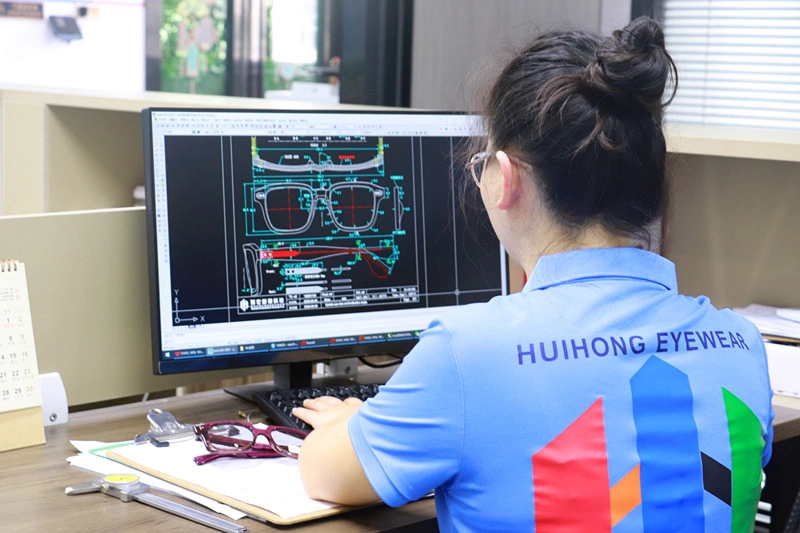
The best custom eyewear manufacturers act as strategic partners, not just suppliers. Look for companies with in-house design teams that can:
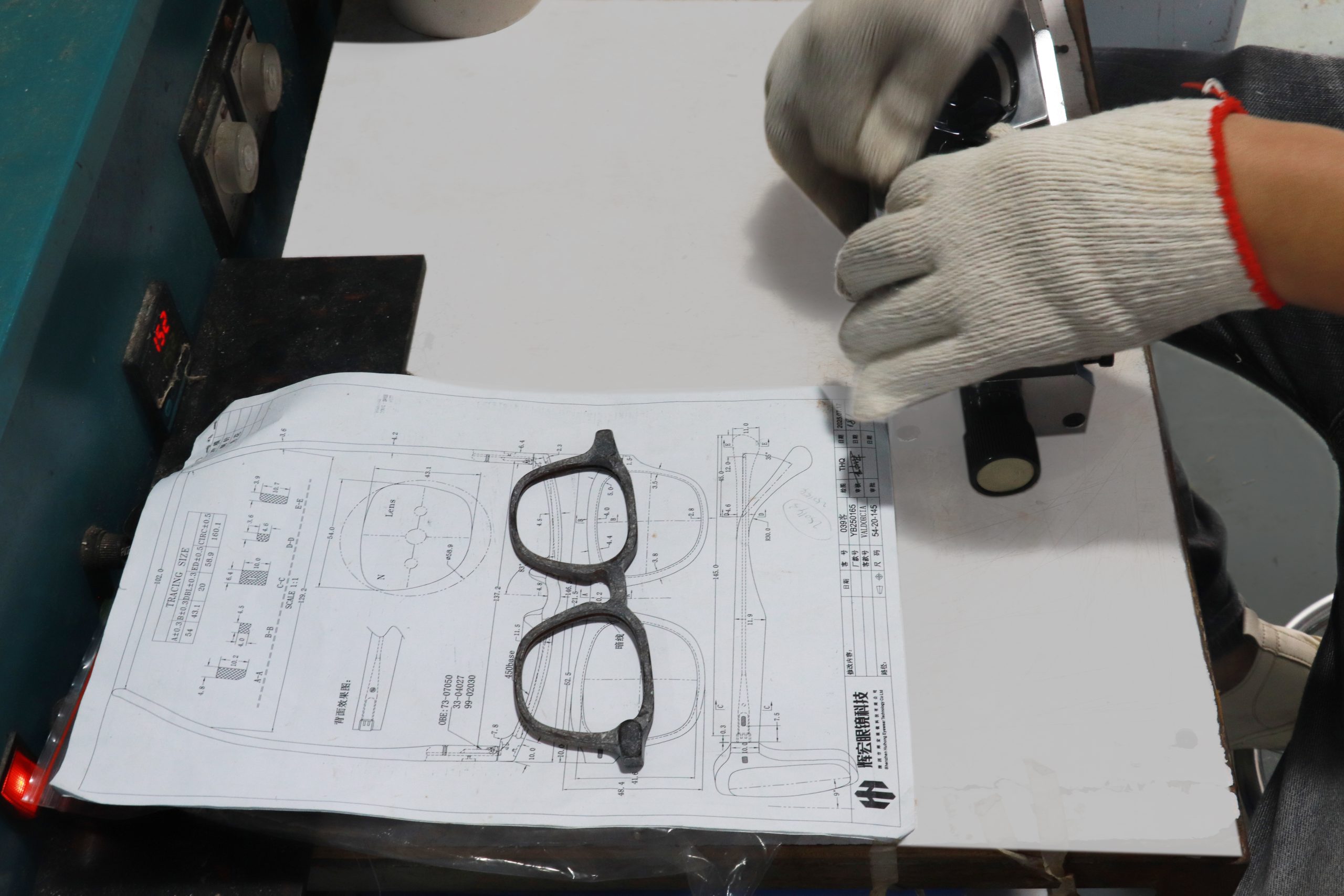
Translate your sketches or mood boards into technical drawings
Provide 3D modeling and prototyping services
Offer ergonomic and structural design advice
Help optimize designs for manufacturability and cost
Manufacturers with strong technical capabilities can identify potential issues early in the process, saving you time and money on costly revisions.
3. Flexible Minimum Order Quantities (MOQs)
MOQ requirements vary significantly between manufacturers. While larger factories often have higher MOQs (500+ units per style), many now offer more flexible options to accommodate smaller brands.
When evaluating MOQs, consider:
Your initial budget and sales projections
The number of styles you want to launch
Whether the manufacturer offers mixed MOQs across styles
How MOQs change for reorders
A good manufacturer will work with you to find a solution that fits your business needs without forcing you to order more inventory than you can sell.
4. Transparent Production Lead Times
Reliable lead times are crucial for planning your inventory and marketing campaigns. Typical lead times are:
Private label: 15-25 days
ODM: 25-35 days
OEM: 45-60 days (including mold development)
Ask manufacturers for detailed production timelines with clear milestones. Be wary of partners who promise unrealistically fast delivery times—this often comes at the expense of quality.
5. Rigorous Quality Control Processes
Quality issues can destroy your brand’s reputation. Look for manufacturers with documented quality control processes that include:
Incoming material inspections
In-line inspections at multiple production stages
Final random inspections (AQL standards)
Pre-shipment quality checks
Ask to see their quality control checklists and ask about their defect rate and corrective action processes. A good manufacturer will be transparent about their quality standards and how they address issues.
6. Material Selection and Expertise
The materials used in your eyewear directly impact quality, comfort, and durability. Reputable manufacturers offer a wide range of high-quality materials, including:
Frame materials: Acetate, TR90, stainless steel, titanium, aluminum, and eco-friendly options
Lens materials: Polycarbonate, CR-39, high-index plastics, and glass
Coatings: Anti-scratch, anti-reflective, polarized, photochromic, and blue light blocking
Ask about the sources of their materials and whether they can provide material specifications and test reports.
7. Scalability and Production Capacity
Your manufacturing partner should be able to grow with your business. Evaluate their production capacity by asking about:
Maximum monthly output for similar products
Number of production lines and equipment
Workforce size and training programs
Ability to handle rush orders or increased demand
A manufacturer that can only handle small orders may not be able to support you as your brand grows, leading to production delays and lost sales.
8. Intellectual Property Protection
When investing in custom designs, protecting your intellectual property is essential. Look for manufacturers who:
Are willing to sign non-disclosure agreements (NDAs)
Have clear policies about not reusing client molds
Can help you navigate design patents if needed
Have a proven track record of protecting client designs
Never work with a manufacturer that refuses to sign an NDA or has a history of copying client designs.
9. One-Stop Service Capabilities
Working with a manufacturer that offers end-to-end services can simplify your supply chain and reduce costs. Look for partners who provide:
Complete frame and lens assembly
Custom branding (printing, engraving, laser marking)
Custom packaging and accessories
Quality testing and certification
Logistics and shipping support
One-stop manufacturers eliminate the need to coordinate with multiple suppliers, saving you time and reducing the risk of communication errors.
10. Communication and Customer Service
Effective communication is critical for a successful manufacturing partnership. Look for manufacturers who:
Respond to inquiries promptly (within 24-48 hours)
Have English-speaking staff
Provide regular updates throughout the production process
Are proactive about identifying and solving problems
Have a dedicated account manager for your business
A manufacturer that is difficult to communicate with during the sales process will likely be even worse once production begins.
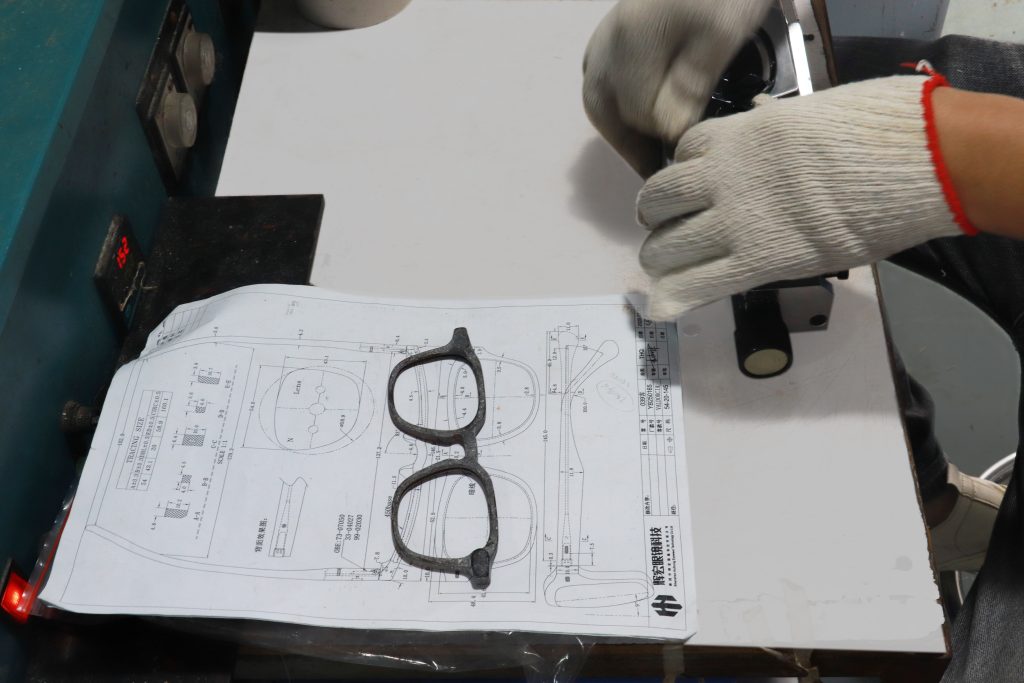
The Custom Eyewear Manufacturing Process Step-by-Step
Understanding the manufacturing process will help you set realistic expectations and communicate effectively with your manufacturing partner. Here’s a detailed breakdown of the typical custom eyewear production process.
1. Design and Development
The process begins with translating your vision into a producible design. This stage includes:
Initial consultation to discuss your requirements
Technical drawing and 3D modeling
Design review and revisions
Material and component selection
Cost estimation and quotation
For OEM projects, this stage also includes mold design and development, which typically takes 15-20 days.
2. Prototype and Sample Production
Before full production begins, you’ll receive samples to approve. The sampling process includes:
Mold creation (for OEM projects)
Prototype production
Quality inspection by the manufacturer
Sample shipment to you for evaluation
Revision and resampling if necessary
Most manufacturers will provide 1-2 sets of samples included in the initial quote. Additional samples may incur extra charges.
3. Production Preparation
Once you’ve approved the final samples, production preparation begins:
Order confirmation and deposit payment
Raw material procurement
Production scheduling
Tooling and equipment setup
Pre-production quality checks
This stage typically takes 5-10 days, depending on material availability.
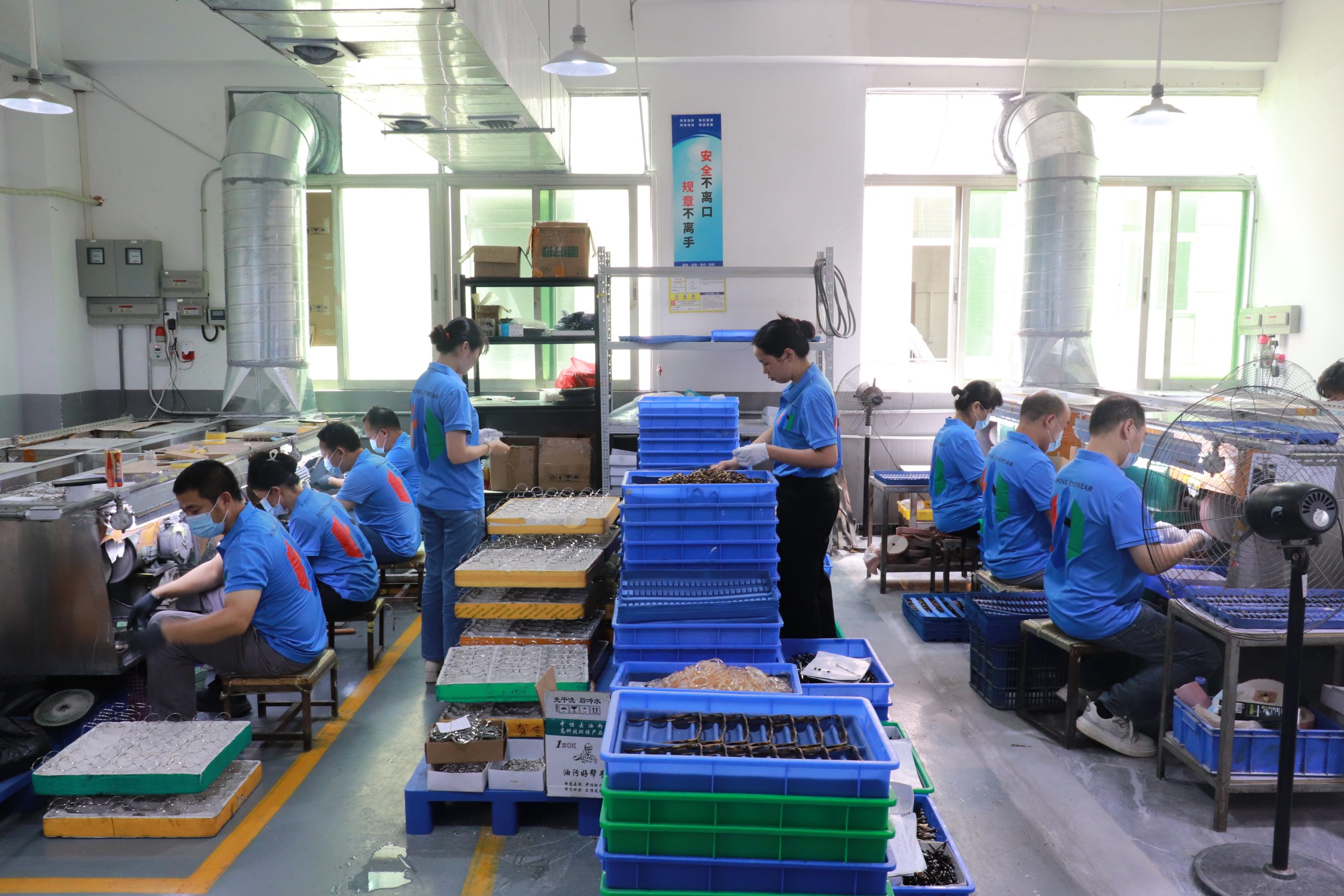
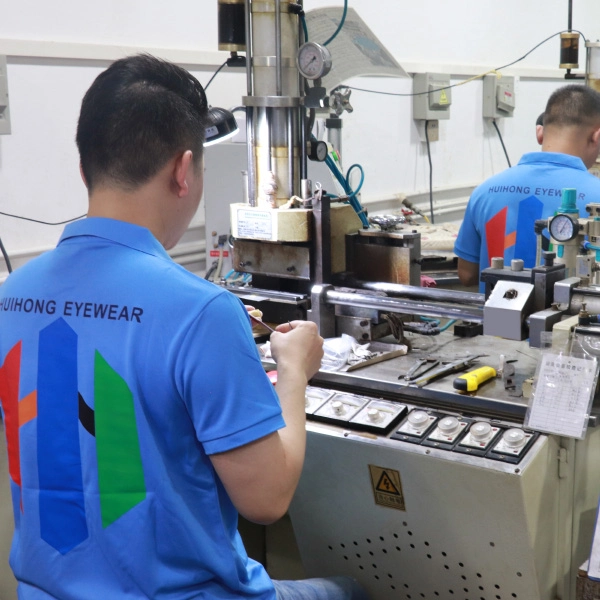
4. Frame Manufacturing
Frame manufacturing varies depending on the material and design, but generally includes:
Acetate frames: Cutting, milling, tumbling, polishing, and assembly
Metal frames: Stamping, welding, electroplating, polishing, and assembly
Injection-molded frames: Injection molding, trimming, polishing, and assembly
Each frame goes through multiple quality checks during production to ensure dimensional accuracy and structural integrity.
5. Lens Production and Assembly
If you’re ordering complete glasses with lenses, this stage includes:
Lens cutting and edging to fit the frame
Lens coating application
Lens insertion into the frame
Frame adjustment and alignment
Final quality inspection
For prescription lenses, additional steps include lens surfacing and prescription verification.
6. Branding and Finishing
This stage adds your brand identity to the products:
Logo printing or engraving on frames
Custom temple inlays or accents
Packaging assembly
Labeling and tagging
Final quality check
The unboxing experience is an important part of your brand, so don’t overlook custom packaging and accessories.
7. Quality Control and Inspection
Before shipment, every order undergoes a final quality inspection:
Visual inspection for defects
Functional testing (hinges, nose pads, etc.)
Dimensional verification
Lens quality and prescription checks
Packaging inspection
Reputable manufacturers use AQL (Acceptable Quality Limit) standards to determine acceptable defect rates.
8. Shipping and Delivery
The final stage is getting your products to you:
Balance payment
Packaging for international shipping
Customs documentation preparation
Shipment via your preferred carrier
Delivery to your warehouse or fulfillment center
Most manufacturers offer FOB (Free On Board) shipping terms, but some can also arrange door-to-door delivery.
Specialized Custom Eyewear Manufacturing Requirements
Different types of eyewear have unique manufacturing requirements. When choosing a custom eyewear manufacturer, make sure they have experience producing the specific type of eyewear you need.
Custom Sunglasses Manufacturers
Custom sunglasses require specialized expertise in:
UV protection testing and certification
Polarized lens technology
Various frame styles (aviator, wayfarer, cat-eye, etc.)
Fashion-forward designs and trend forecasting
Durability for outdoor use
Look for manufacturers who can provide UV400 certification and offer a range of lens options, including polarized, mirrored, and gradient lenses.
Custom Optical Frames Manufacturers
Custom optical frames must meet strict medical and safety standards:
Prescription lens compatibility
Ergonomic design for all-day comfort
Durable hinge systems
Adjustable nose pads and temples
Compliance with optical industry regulations
Manufacturers specializing in optical frames should have experience working with opticians and understand the specific requirements of prescription eyewear.
Custom Sports Eyewear Manufacturers
Sports eyewear requires enhanced performance and protection:
Impact-resistant materials
Anti-fog lens coatings
Secure fit during physical activity
Ventilation systems
Compatibility with helmets and other sports equipment
Look for manufacturers with experience producing sports-specific eyewear for activities like cycling, running, skiing, and water sports.
Custom Safety Glasses Manufacturers
Custom safety glasses must meet strict industry safety standards:
High-impact resistance
Side protection
Anti-scratch and anti-fog coatings
Compliance with ANSI Z87.1 and EN 166 standards
Prescription safety lens options
Manufacturers of safety glasses should be able to provide third-party test reports verifying compliance with relevant safety standards.
2026 Trends in Custom Eyewear Manufacturing
Staying ahead of industry trends will help your brand remain competitive. Here are the key trends shaping custom eyewear manufacturing in 2026.
Sustainable and Eco-Friendly Materials
Consumers are increasingly demanding environmentally friendly products. Leading custom eyewear manufacturers are now offering:
Recycled acetate and plastic
Biodegradable materials
FSC-certified wood
Recycled metal alloys
Sustainable packaging options
Brands that prioritize sustainability can differentiate themselves in the market and appeal to eco-conscious consumers.
Digital Manufacturing Technologies
Advancements in digital manufacturing are transforming the eyewear industry:
3D scanning for precise measurements
3D printing for rapid prototyping and small-batch production
CNC machining for high-precision frame components
Digital design tools for faster iteration
These technologies reduce lead times, lower costs for small production runs, and enable more personalized designs.
Smart Eyewear Integration
Smart eyewear is one of the fastest-growing segments of the market. Custom eyewear manufacturers are developing capabilities to integrate:
Audio technology
Fitness tracking
Blue light filtering
Photochromic lenses
Augmented reality (AR) features
While full AR glasses are still emerging, many brands are adding basic smart features to their eyewear lines.
Customization for Niche Markets
Brands are increasingly targeting specific niche markets with specialized eyewear:
Asian fit frames for different facial structures
Wide-fit frames for larger heads
Kids’ eyewear with durable, safe designs
Blue light glasses for digital device users
Fashion-forward designs for specific age groups
Custom eyewear manufacturers that can accommodate these specialized needs will have a competitive advantage.
Conclusion: Building a Successful Partnership with Your Custom Eyewear Manufacturer
Choosing the right custom eyewear manufacturer is the first step toward building a successful eyewear brand. By understanding the different service models, evaluating potential partners based on the 10 critical factors, and familiarizing yourself with the manufacturing process, you can make informed decisions that will set your brand up for success.
Remember that the best manufacturing relationships are partnerships, not transactions. Look for a manufacturer who understands your brand vision, communicates effectively, and is committed to helping you grow. With the right partner, you can create high-quality, unique eyewear that resonates with your target audience and builds long-term brand loyalty.
Whether you’re looking for private label eyewear to test the market, ODM solutions for more customization, or full OEM manufacturing for exclusive designs, the right custom eyewear manufacturer can help turn your vision into reality.