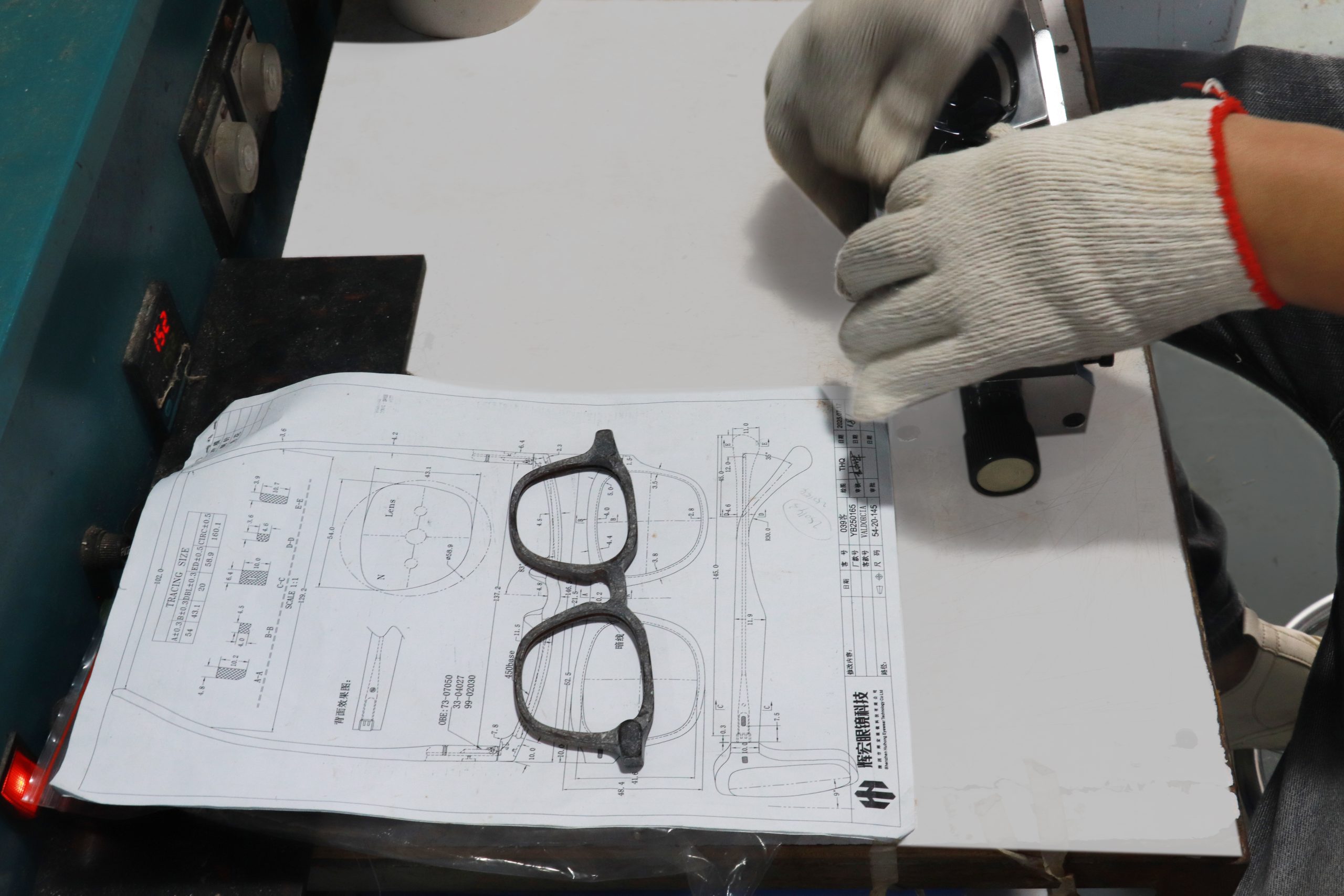
Some eyewear manufacturers claim that acetate frames require up to 60 independent steps to produce. Others—those pursuing true premium quality—go far beyond: DITA’s frames undergo over 320 steps, Archibald’s require more than 200 manual processes, and some Japanese houses complete nearly 300 steps per piece.
With CNC routers, 5-axis milling machines, and automated polishing equipment widely available today, one might ask: why can’t machines simply take over?
The short answer: they can’t—not if you want premium acetate eyewear.
Here’s why.
1. Acetate is a Living Material—Machines Can’t “Read” It
Unlike injection-molded plastics that behave uniformly, cellulose acetate is a natural, plant-based material. Each batch carries subtle variations in density, color saturation, and layer bonding.
A machine follows a fixed program. It cannot sense when a block of acetate is slightly harder in one section or when the layered color pattern requires a different cutting angle to preserve visual depth.
Skilled artisans can. They read the material as they work—adjusting pressure, speed, and angle in real time. This is why premium acetate frames made by master craftsmen feel different in hand: the material hasn’t been forced; it has been guided.
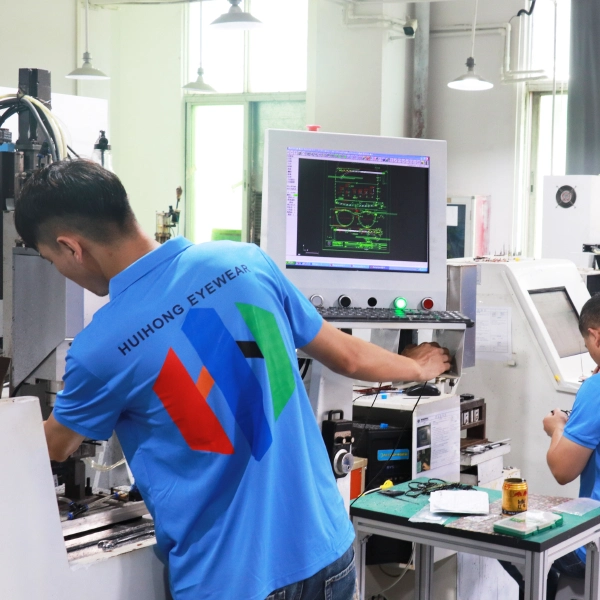
2. Hand Polishing Creates a Finish Machines Simply Cannot Replicate
After CNC cutting shapes the rough frame, the real work begins.
Premium acetate frames don’t just go through a quick machine buff. They enter multi-stage tumbling processes—sometimes lasting four days or more—using wooden chips coated with natural oils and pastes. Oliver Peoples, for example, uses a four-day tumbling process where barrels are filled with wood, paste, and oil in continuous motion. DITA takes it further: their acetate frames are tumbled in bamboo chips of different sizes for seven full days.
After tumbling comes hand polishing—stage after stage, by human hands. Why not just let machines do it all?
Because machine polishing is uniform. It removes material evenly across the entire surface. But a premium frame isn’t uniform—it has curves, transitions, edges, and corners that each demand different treatment. Only human hands can feel where more polish is needed and where to stop.
The result? A depth of luster that mass-produced, machine-only frames can never achieve. That signature glow of a hand-finished acetate frame comes from thousands of subtle decisions made during polishing—none of which a machine can make.
3. Assembly Requires Precision That Only Human Touch Can Deliver
Inserting hinges, mounting nose pads, setting pins—these aren’t simple snap-together operations.
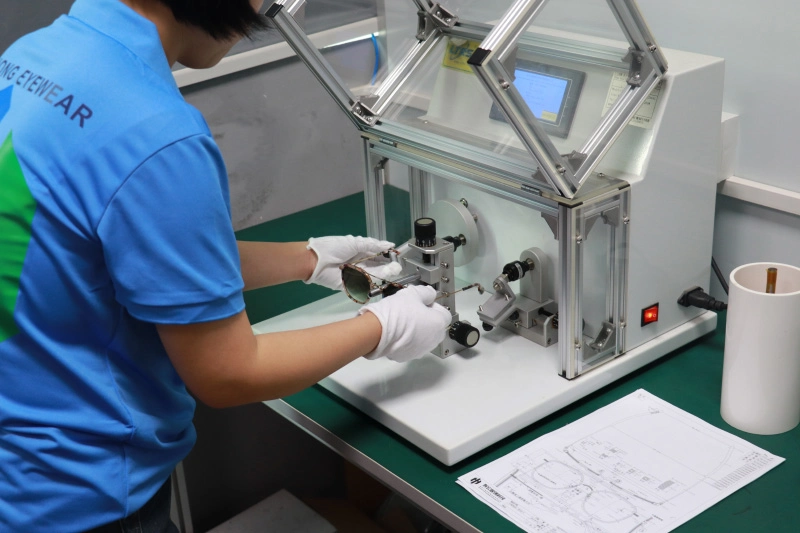
Premium acetate frames use custom hinges and screws that must be hand-set with exact torque. Too tight, and the acetate can stress or crack over time. Too loose, and the frame loses its structural integrity. A machine applies the same force every time—but acetate doesn’t behave the same every time.
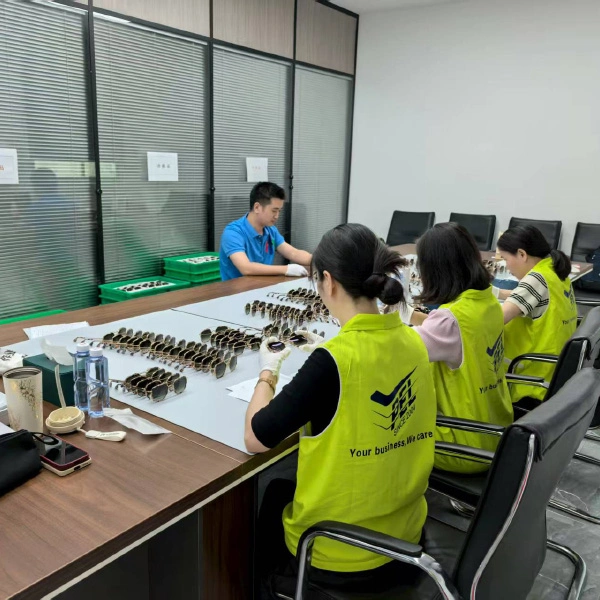
Then there’s fit and comfort. After assembly, every premium frame is hand-inspected and manually adjusted for symmetry, balance, and wearing comfort. Machines can measure—but they can’t feel how a frame sits on a human face.
4. Quality Control Demands an Eye That Sees Beyond Measurements
The final quality check is where craftsmanship truly separates premium from mass-market.
Artisans inspect each frame for color consistency, pattern flow, surface perfection, and structural symmetry. They catch subtle imperfections that no sensor can detect—a slight dullness in a polished surface, a color transition that doesn’t flow naturally, a hairline stress mark that could become a crack months later.
This is judgment, not measurement. And judgment belongs to humans.
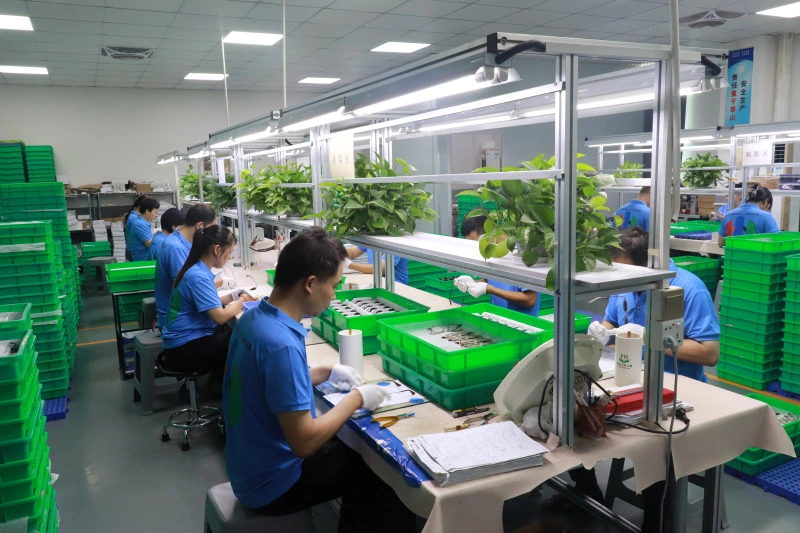
The Huihong Approach: Precision Meets Craftsmanship
At Shenzhen Huihong Eyewear Technology Co., Ltd. , we don’t see machines and craftsmen as alternatives. We see them as partners.
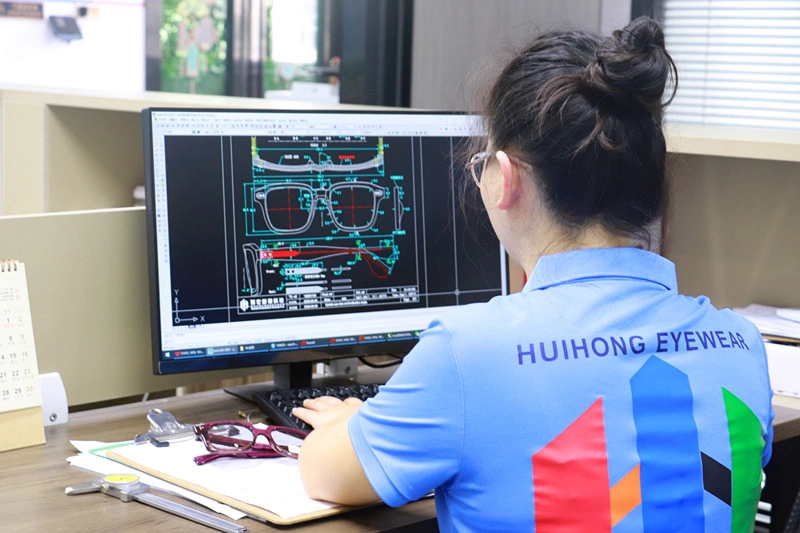
Our facilities use advanced CNC equipment for precision cutting and shaping—because consistency in the rough stages matters. But the soul of every frame comes from the hands of our experienced artisans: the polishers who bring out the deep luster of Italian acetate, the assemblers who set each hinge with practiced precision, the inspectors who reject a frame for a flaw most people would never notice.
This is why independent brands, designer labels, and premium retailers from Japan, Korea, Europe, and North America trust us. They know that 60 steps—or 200—can’t be rushed, and they can’t be fully automated.
Because premium acetate eyewear isn’t just manufactured. It’s crafted.