Finding the right optical frame manufacturer is one of the highest-stakes decisions for any eyewear brand. Your manufacturing partner directly affects product quality, delivery reliability, profit margins, and ultimately, your brand’s reputation.
With thousands of suppliers listed on B2B platforms—many using identical catalog photos and interchangeable descriptions—differentiating genuine manufacturers from trading companies has never been harder.
This guide breaks down the 7 critical factors every B2B buyer should evaluate before committing to an eyewear manufacturing partner.
1. Factory or Trading Company? Verify Before You Commit
The most fundamental question: are you dealing with a real factory or a middleman?
Some trading companies have deep factory relationships and can solve problems quickly. Some factories have poor communication infrastructure and struggle with international orders. The real question is control—who controls raw materials, production timelines, and quality accountability?
How to verify:
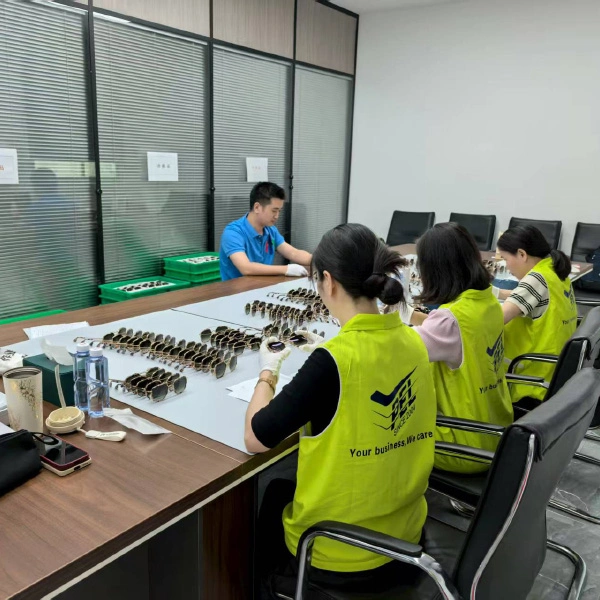
Request factory location, production line photos, and video tours
Ask for ISO 9001 certification and verify it independently
If they dodge verification or refuse a video call, walk away
2. MOQ Flexibility: Can They Support Your Growth Stage?
Traditional factories often require 500+ units per model. But forward-thinking manufacturers now offer MOQs as low as 100 pairs per style to support emerging brands and DTC labels.
MOQ varies by material and customization level:

A manufacturer with flexible MOQ policies for trial orders is worth far more than one with rigid minimums—especially when you’re testing new designs or entering new markets.
3. Material Expertise: Acetate, Titanium, and Metal
Your manufacturer should demonstrate proven capability across the materials your collection requires:
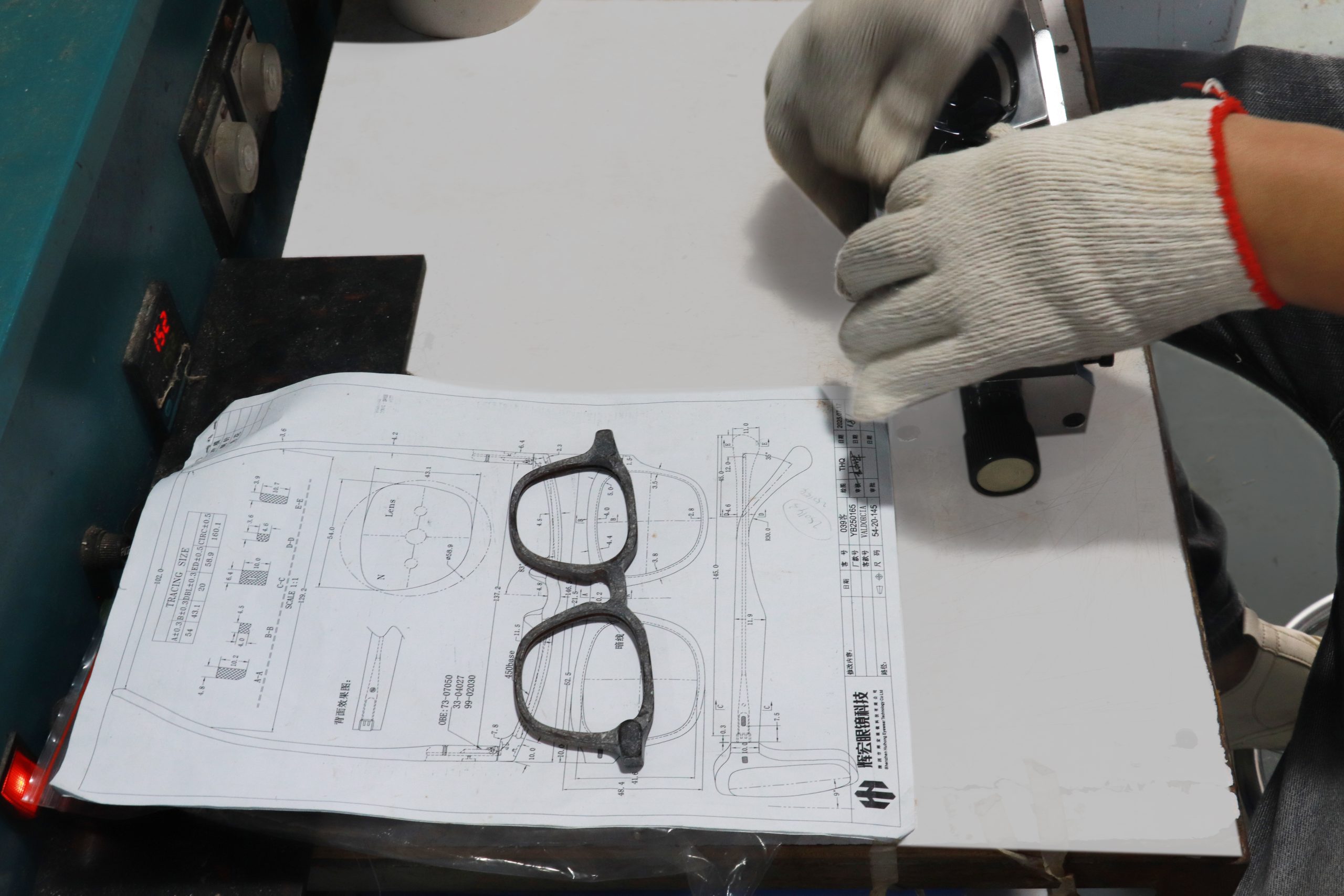
Acetate frames demand precision CNC machining, careful barrel tumbling, and hand-polishing. True premium acetate requires a 30-day finishing process that eliminates sharp cut edges and creates lasting luster.
Titanium frames require specialized welding and finishing capabilities. Grade 5 titanium delivers aerospace-level strength at roughly 40% lighter weight than traditional metals.
Metal frames — stainless steel, monel, aluminum — offer versatility for mid-range price points and combination constructions.
Ask for material certifications: acetate grade (e.g., Mazzucchelli), alloy composition, and UV protection standards.
4. Quality Control: What to Demand Before Mass Production
Quality failures—misaligned hinges, inconsistent color matching, edge cracking in acetate-metal combinations—are the number one source of brand damage.
Key QC checkpoints:
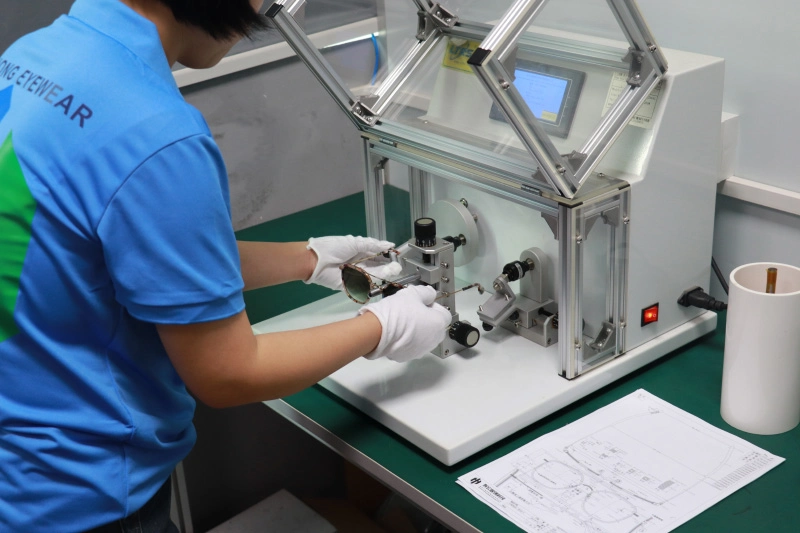
Request third-party lab reports for UV400, nickel release, and hinge durability
Order pre-production samples and test frame alignment, hinge function, and logo accuracy
Schedule in-line inspections during mass production
Conduct AQL-based final random inspection before shipment
A supplier who cannot explain their QC process in practical terms is a red flag.
5. Certifications and Compliance: Non-Negotiable for Regulated Markets
For US and EU markets, compliance is mandatory:
ISO 9001 — quality management system
FDA registration — required for sunglasses as Class I medical devices in the US
CE marking — backed by EN ISO 12312-1 test reports for EU sales
BSCI or SEDEX — social compliance audits required by major retailers
RoHS/REACH — restricted substance compliance
Request these documents directly and verify them independently.
6. Communication and Lead Time Transparency
A supplier with excellent English skills can still have no understanding of your business model. The conversations that matter are about retail sell-through rate, seasonal inventory windows, and reorder velocity.
Key indicators:
Average response time under 3 hours
On-time delivery rate above 95%
Realistic sample and production lead times — ask for both upfront
Willingness to discuss your sales channels and timing constraints
7. IP Protection: Protect Your Designs Before You Share Them
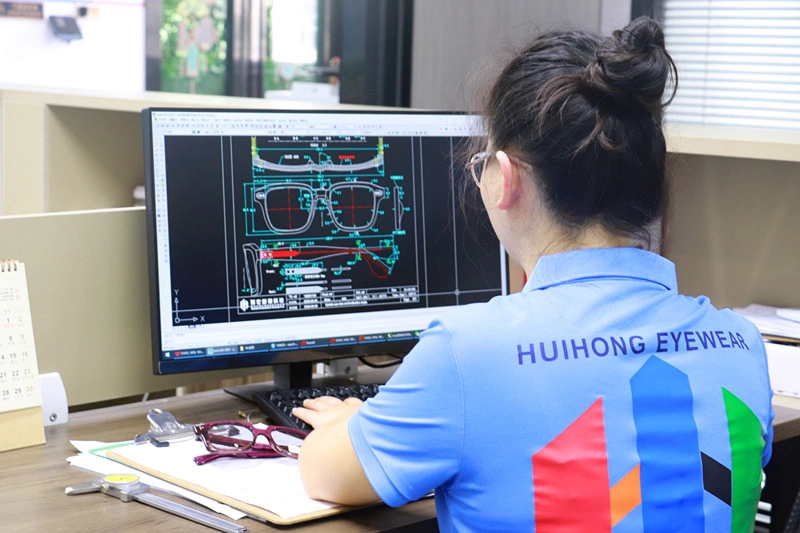
IP leakage is a real risk with overseas manufacturers. Before sharing CAD files or samples, sign a non-disclosure agreement and clarify design exclusivity terms.
For OEM projects, ensure the contract specifies that molds and designs remain your property. For ODM projects, negotiate an exclusivity clause if your order volume justifies it.
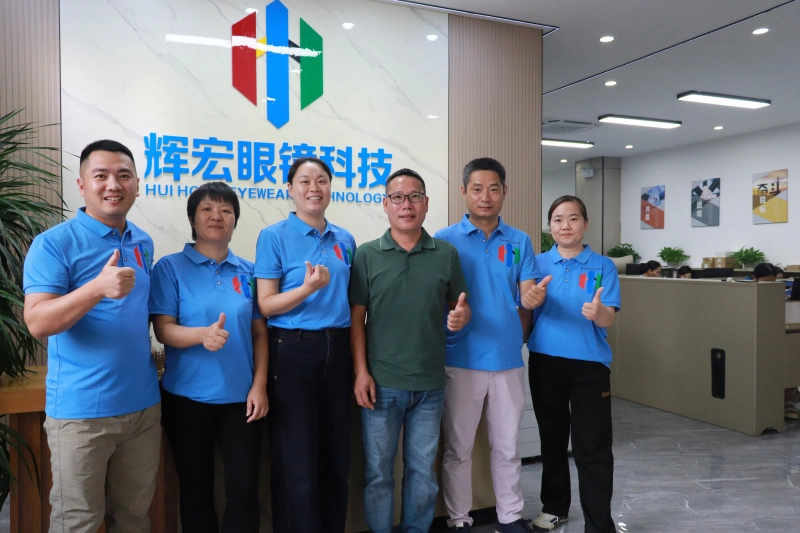
Recommended Partner: Huihong Eyewear
Huihong Eyewear is a specialized manufacturer dedicated to the design, development, and OEM/ODM production of high-end eyewear.
Since its founding, Huihong has collaborated with independent brands, designer labels, and premium retailers worldwide — bringing unique eyewear visions to life through exceptional craftsmanship and reliable service.
Core capabilities:
Materials: acetate, titanium, and metal frames
Production model: OEM/ODM with strong capability in low-volume, high-quality custom production
End-to-end support: from concept prototyping to bulk delivery, with flexibility, speed, and precision at every step
Clients span Japan, Korea, Europe, and North America — many return not just for quality, but for trust and shared value. For brands seeking a manufacturing partner that handles both precision titanium welding and hand-finished acetate artistry without demanding 500-unit minimums, Huihong Eyewear offers a rare combination of technical depth and operational flexibility.
FAQ
What is the typical lead time for custom eyewear production?
Sampling usually takes 45–60 days. Bulk production for acetate and metal frames runs approximately 3 months.
Can I start with a small trial order?
Yes. Many manufacturers, including Huihong Eyewear, support low-volume trial runs starting from 100 pairs before scaling.
What certifications should I request?
ISO 9001, FDA registration (US), CE marking (EU), BSCI/SEDEX, RoHS, and UV400 test reports.
How do I protect my designs?
Sign an NDA before sharing CAD files or samples, and specify design exclusivity and mold ownership in your contract.
Ready to discuss your next eyewear collection? Connect with Huihong Eyewear to explore how our OEM/ODM capabilities can support your brand’s growth.