Introduction
China has long been the undisputed global powerhouse in optical frame manufacturing. With an annual output of nearly one billion pairs of eyewear and specialized manufacturing clusters spanning multiple provinces, the country offers unparalleled scale, material diversity, and manufacturing agility. For brands, retailers, and entrepreneurs looking to source high-quality optical frames—whether for private label, OEM, or full custom ODM development—understanding this landscape is the difference between a successful product line and a costly sourcing mistake.
This guide provides a comprehensive,干货-packed overview of China’s optical frame manufacturing industry, covering key production hubs, material trends, OEM/ODM capabilities, and practical supplier selection criteria.
China’s Optical Frame Manufacturing Landscape: The Key Hubs
China’s eyewear manufacturing ecosystem is highly regionalized. Each hub offers distinct advantages based on specialization, infrastructure, and cost structure.
Zhejiang Province (Wenzhou & Taizhou) – The Eyewear Capital
Wenzhou produces over 60% of China’s optical frames and is often referred to as the “Eyewear Capital”. The region excels in acetate frame manufacturing, metal component fabrication, and intricate pattern printing. With decades of craftsmanship expertise in acetate molding and metal processing, Wenzhou-based manufacturers are ideal partners for fashion-forward brands seeking both volume and design sophistication.
Jiangsu Province (Danyang) – The Optical Valley
Danyang has been dubbed China’s “spectacles city,” hosting more than 1,600 companies and over 50,000 people engaged in the eyewear industry. The city has developed a complete industrial chain integrating design, R&D, and production, with an annual output of 800 million lenses—accounting for 50% of the world total. Danyang excels in high-volume production with vertical integration, enabling single-factory completion of frames, lenses, and packaging.
Guangdong Province (Shenzhen & Guangzhou) – Innovation & Speed
Shenzhen is known for innovation and rapid prototyping, excelling in tech-integrated eyewear such as smart glasses and AR-enabled frames. Factories here leverage proximity to advanced metal processing and export infrastructure, making them ideal for brands requiring fast turnaround times and strict quality control.
Other Emerging Hubs
Fujian (Xiamen): Agile customization and fast-turnaround orders, ideal for startups and seasonal collections
Shandong (Caoxian): Specializes in sustainable wooden eyewear using locally sourced timber
Materials Matter: What’s Trending in 2026
The optical frame market is projected to grow at a CAGR of 7.1% to reach USD 62.73 billion by 2034. Material innovation is a key driver.
Acetate
Cellulose acetate remains the gold standard for premium frames, offering rich color depth, sculptural flexibility, and hypoallergenic properties. High-quality acetate requires multi-stage compression, aging, and hand-polishing—processes that distinguish top-tier manufacturers.
Titanium
Beta-titanium frames are lightweight, corrosion-resistant, and hypoallergenic—ideal for premium optical collections. While more expensive than acetate or TR90, titanium offers unmatched durability and a minimalist aesthetic.
Stainless Steel & TR90
Ultra-light stainless steel frames are gaining popularity for their slim profiles and modern finishes. TR90 resin molding, meanwhile, offers flexibility and impact resistance at competitive price points.
Sustainable Materials
Eco-conscious sourcing is no longer niche. Bio-acetate, recycled metals, plant-based TR90, and biodegradable materials are increasingly available from forward-thinking manufacturers.
OEM vs. ODM: Understanding Your Options
OEM (Original Equipment Manufacturing)
You provide the design and specifications; the manufacturer produces according to your requirements. Ideal for brands with established design teams.
ODM (Original Design Manufacturing)
The manufacturer handles design and development alongside production. This is ideal for brands looking to launch proprietary collections without in-house design resources.
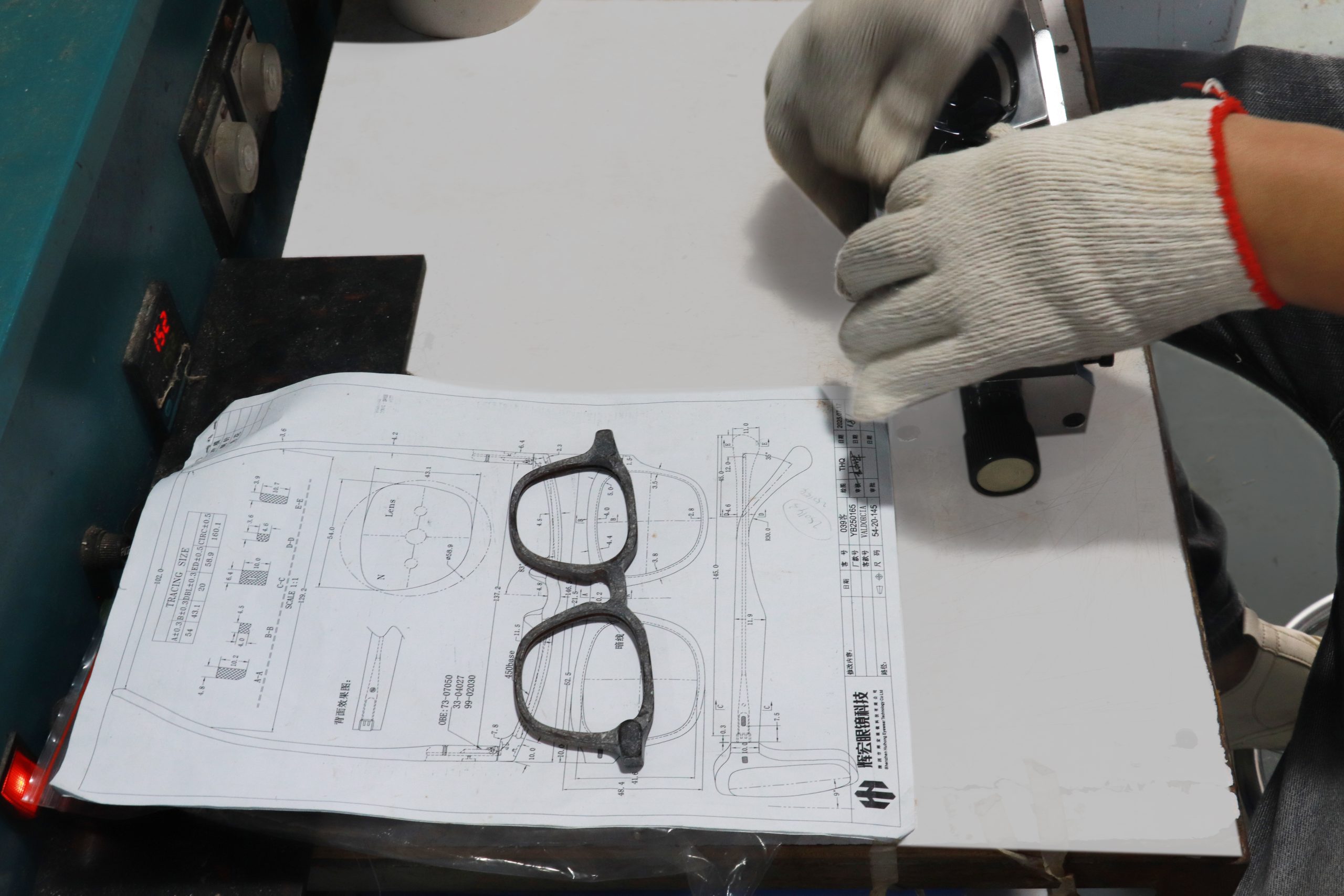
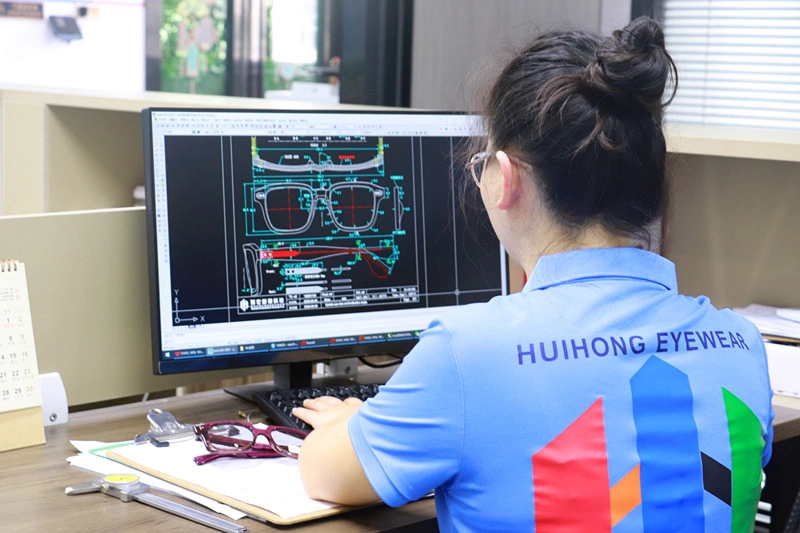
Top-tier manufacturers offer end-to-end OEM/ODM support, including CAD modeling, 3D prototyping, color matching (Pantone/CMYK), material selection, and branding integration—from laser-engraved logos to custom packaging.
A typical OEM/ODM process includes: reference review, feasibility assessment, material and branding discussions, sample planning, sample approval, and bulk production.
How to Choose the Right Optical Frame Manufacturer: A Practical Checklist
Selecting a supplier requires more than comparing unit prices. Here’s what matters:
1. Certifications & Compliance
Look for ISO 9001 (quality management), CE marking (European conformity), and FDA registration (U.S. market access). For metal frames, verify RoHS and REACH compliance, especially regarding nickel content.
2. Production Capabilities
Assess factory size (ideally 2,000m²+), in-house capabilities (CNC cutting, laser welding, injection molding), and monthly output. Manufacturers with in-house tooling and mold-making reduce non-recurring engineering fees and accelerate sampling.
3. Quality Assurance
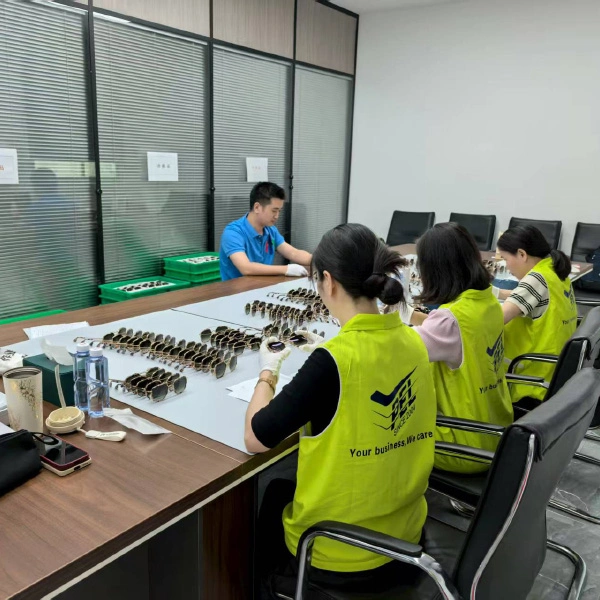
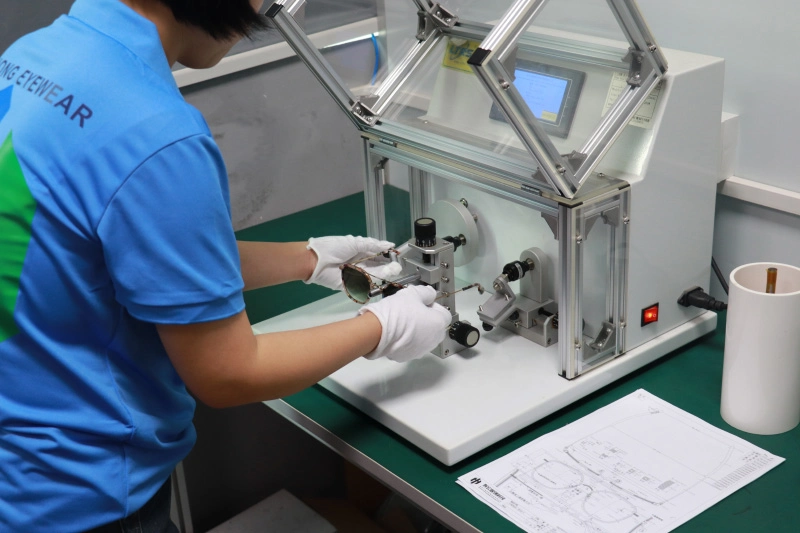
Request third-party lab test results for hinge strength (minimum 5,000 cycles), UV resistance, material toxicity, and impact resilience. Always request physical samples before bulk orders.
4. Supply Chain Transparency
Traceability of raw materials—acetate sources, titanium alloys, sustainably harvested wood—is increasingly important for ESG-compliant sourcing. Reputable suppliers provide documentation from certified vendors.
5. Performance Metrics
Look for:
On-time delivery rate ≥ 95%
Reorder rate ≥ 30% (indicates customer satisfaction)
Response time ≤ 4 hours
6. MOQ Flexibility
Minimum order quantities vary widely. Some suppliers offer as low as 2 pairs for titanium models or 50 pieces for acetate batches. For full custom development, MOQs typically range from 300–600 pieces per model.
Common Pitfalls to Avoid
The Sample-to-Bulk Consistency Gap
A polished sample is a marketing tool. Bulk production runs under different pressures. Without documented material tracking and quality control protocols, the bulk shipment may not match the approved sample.
Factory vs. Trading Company Confusion
Not every supplier is a factory. Some trading companies have deep factory relationships, while some factories struggle with international communication. The key question: who controls raw materials, production timeline, and quality responsibility?
Overlooking Post-Sale Support
A supplier who only speaks in MOQs and price breaks understands manufacturing. A supplier who asks about your retail timing, sales channels, and reorder velocity understands partnership.
Conclusion
China’s optical frame manufacturing industry offers unmatched advantages in scale, material diversity, and customization capability. Whether you’re launching a boutique brand requiring handcrafted acetate frames or scaling a retail chain with high-volume titanium orders, the right manufacturing partner can make all the difference.
The key to success lies not in finding the lowest price, but in identifying a manufacturer with proven technical expertise, robust quality systems, supply chain transparency, and a genuine understanding of your business model. By applying the evaluation framework outlined in this guide, you’ll be well-equipped to navigate China’s optical manufacturing landscape and build a lasting, profitable partnership.