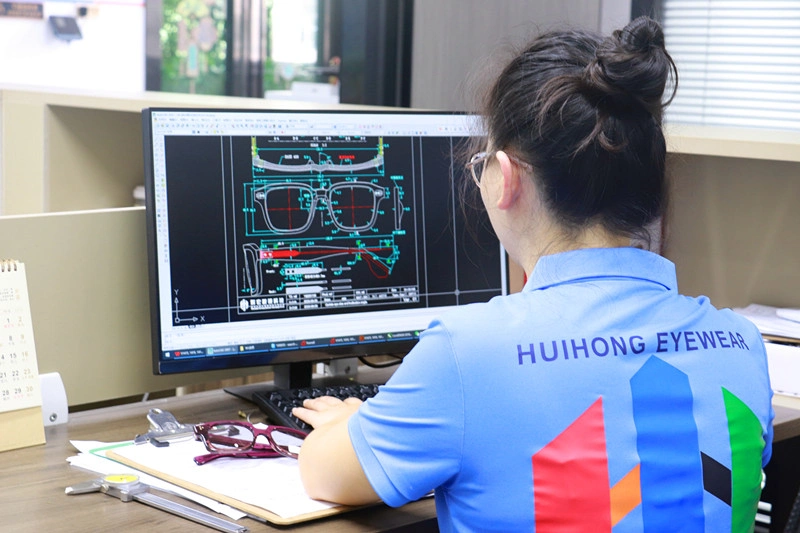
If you are launching an independent eyewear brand, one question comes up before almost anything else: how many pieces do I have to order? For custom eyewear, there is no single answer. MOQ depends on how custom your design is, which material you use, and whether new tooling is required.
At Huihong Eyewear, we focus exclusively on custom and OEM/ODM production—no ready stock, no catalogue frames. That makes MOQ a design and production question, not a warehouse question. Here is a practical guide for brands planning a small-batch custom eyewear launch.
The Short Answer
For fully custom OEM/ODM frames requiring a new mold or dedicated tooling, the industry standard is often around 500 pieces per style.
For customization on existing tooling—color, logo, surface finish, or modified platform—MOQs can often fall to 100–300 pieces per style, depending on material and construction.
A realistic planning range for small-batch custom eyewear is therefore 100–300 pieces per style for a structured pilot, with 500 pieces becoming more likely when a brand-new mold or proprietary component is involved.
The key point: MOQ is not a fixed policy. It reflects the real setup cost behind your design.
What Drives MOQ Up or Down
1. Material and construction.
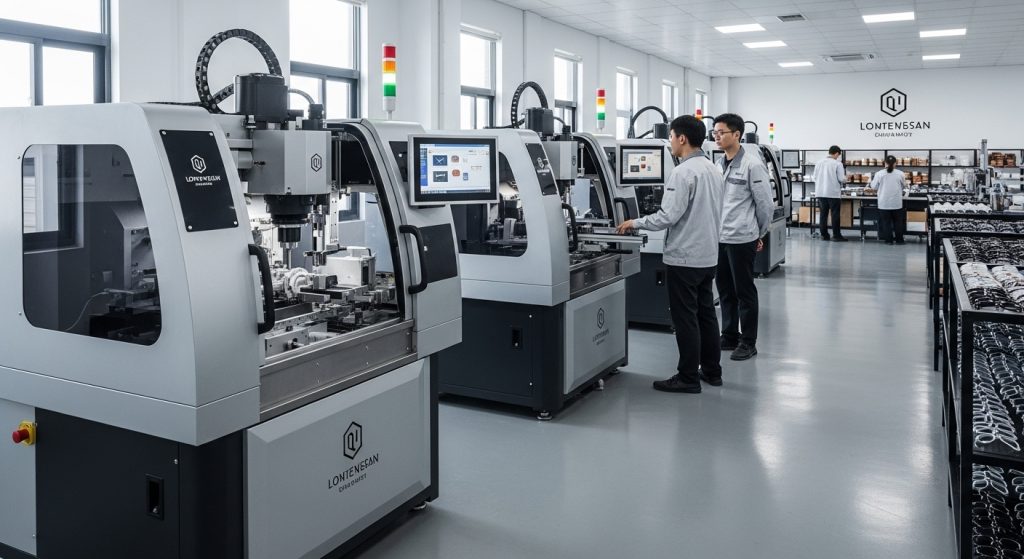
Injection-molded plastic frames often carry higher MOQs—around 600 pieces—because machine setup demands volume. Machined acetate and titanium frames commonly sit lower, around 300 pieces, because production is less mold-dependent.
2. New tooling.
A new mold is the biggest MOQ driver. Custom hinges, proprietary bridges, or recessed metal badges require new production setup. If your design can use modified existing tooling or new cutting programs, MOQ drops significantly.
3. Customization depth.
A printed temple logo is very different from a custom-colored core wire, laser-etched hinge, or branded packaging. Packaging MOQ is usually confirmed separately—and can sometimes be higher than the frame MOQ.
4. Order structure.
MOQ is rarely one flat number. A 300-piece order may be split across two colors and two sizes, lowering the per-SKU minimum. Instead of asking “Can you lower the MOQ?”, ask “Can the total order be treated as the MOQ and allocated across colorways?”
Why Small-Batch Custom Matters
The old choice—mass production or nothing—no longer fits how independent brands launch. E-commerce labels and designer creators need to test silhouettes, read sell-through, and reorder winners. A first collection is a hypothesis, not a inventory bet.
Lower initial MOQ does not mean lower quality. It means the production run is structured around the commercial risk the brand can actually carry. Huihong works inside this model deliberately: every order is a custom build, so small-batch custom is our native operating mode, not a side service.
How to Place a Custom Order Without Stock Frames
Start with samples.
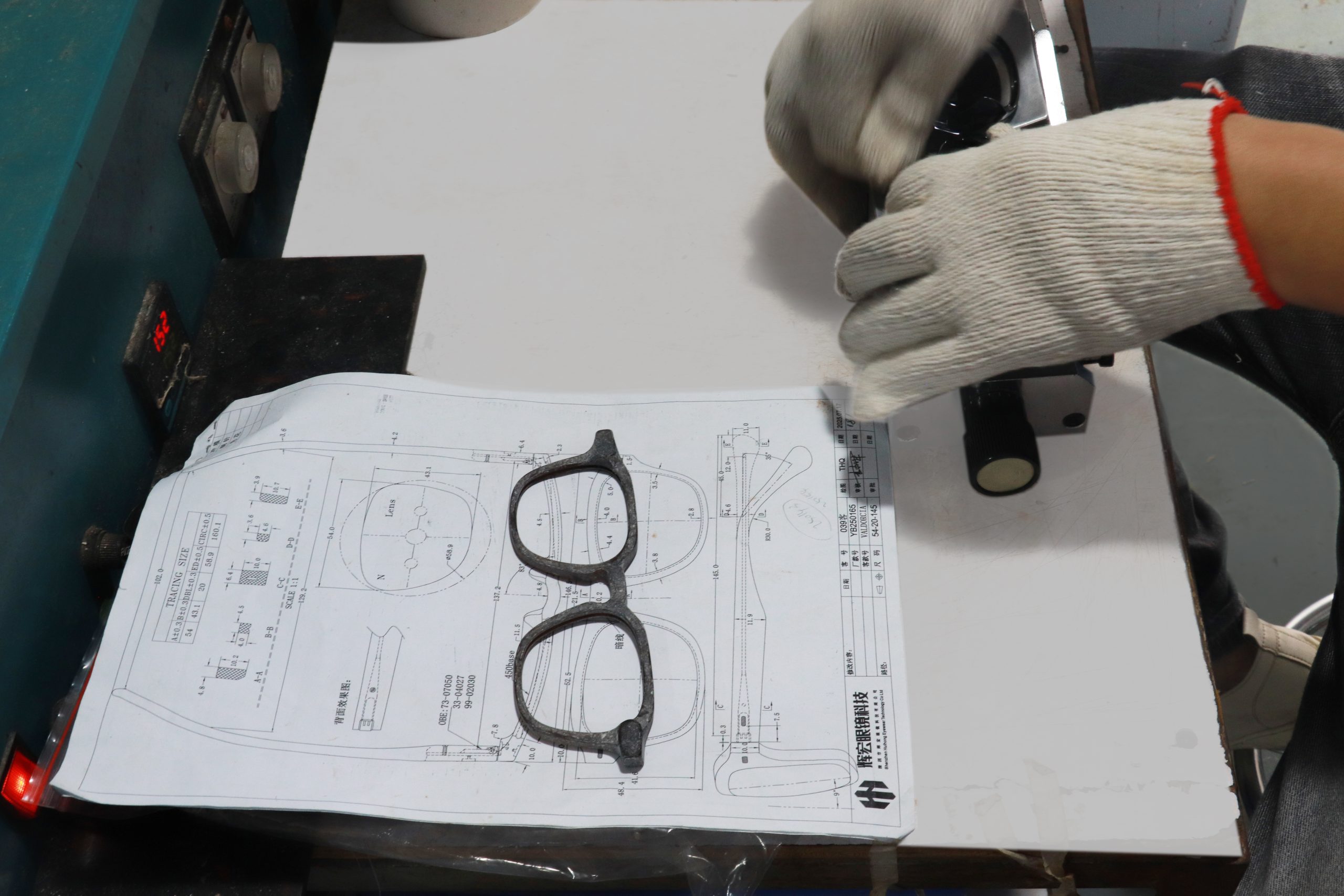
A sample is your specification document. Standard development usually takes 7–14 days; more complex programs can take 20–45 working days. After sampling, the MOQ conversation is based on actual production data.
Negotiate pilot pricing, not just a lower minimum.
Factories can often support a smaller first run when the unit price reflects setup work. A higher per-unit pilot cost is the honest cost of a short run. If the design sells, the reorder moves to standard pricing at higher volume.
Ask about shared or modified tooling.
If your concept can be produced through modified existing molds, shared tooling, or new cutting programs on an existing platform, MOQ can fall into the 100–300 range without compromising the frame.
What to Look For in a Low-MOQ Custom Manufacturer
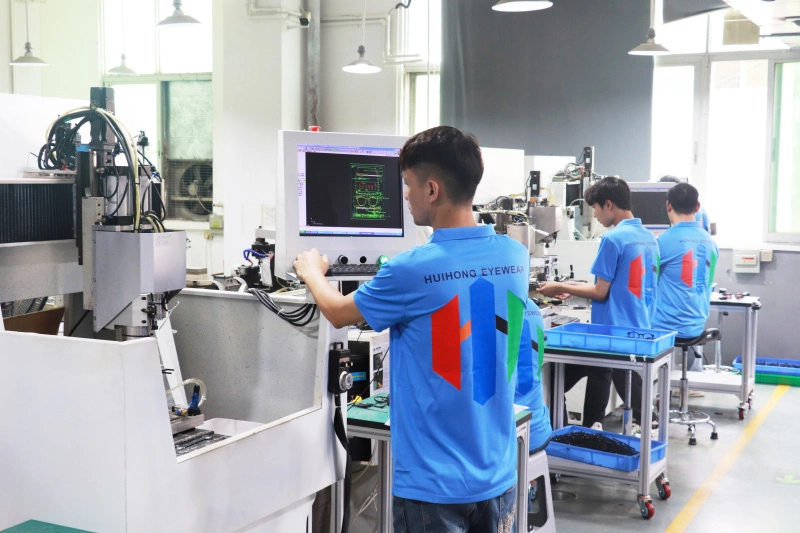
In-house production: machining, finishing, polishing, assembly, and QC should be controlled internally—not passed to a trading partner.
Material-specific experience: acetate and titanium require different production expertise. Ask for evidence in both materials.
Consistent QC for small orders: a 150-piece run should receive the same multi-stage inspection as a 1,500-piece order.
Compliance documentation: CE, FDA, REACH, and RoHS test reports should be available.
A path after the first order: reorders, color extensions, and scaling should be planned from the start.
Huihong Eyewear specializes in the design, development, and OEM/ODM production of high-end acetate, titanium, and metal frames. We work with independent brands, designer labels, and premium retailers across Japan, Korea, Europe, and North America—from concept prototyping to bulk delivery.
The Practical Answer
For a genuinely new acetate or titanium frame, plan for 100–300 pieces per style as a realistic pilot target. If a new mold or complex proprietary component is required, expect the threshold to move toward 500 pieces.
The more important number is how many styles and colorways you can responsibly validate. Three styles at 150 pieces each often teaches you more than one style at 500 pieces—and keeps capital flexible for reorders.
If you are planning a first custom production run, Huihong can review your concept and tell you where the actual tooling and MOQ thresholds sit.
FAQ
Can I order fewer than 100 pieces?
Usually only when the frame uses an existing mold or platform with color/logo-level customization. A new frame geometry or proprietary hinge typically requires more volume to absorb setup costs.
Does lower MOQ mean lower quality?
No. Quality depends on process control, material sourcing, and QC discipline—not batch size. Ask whether the same quality system applies to small and large orders.
How long does a small-batch custom order take?
Sampling is typically 7–14 days for standard development and 20–45 working days for complex programs. Bulk production generally runs 25–35 days after sample approval, with premium acetate and titanium sometimes extending to 75–90 days.
Can I split MOQ across colors?
Often yes, but negotiate explicitly. Ask whether the total order quantity can serve as the MOQ while allocating across multiple colorways.
Huihong does not sell stock frames—can I still start small?
Yes. Your first order becomes a structured custom pilot rather than a stock purchase. MOQ is assessed against your design’s actual tooling and material requirements, with a clear path to reorder and scale.