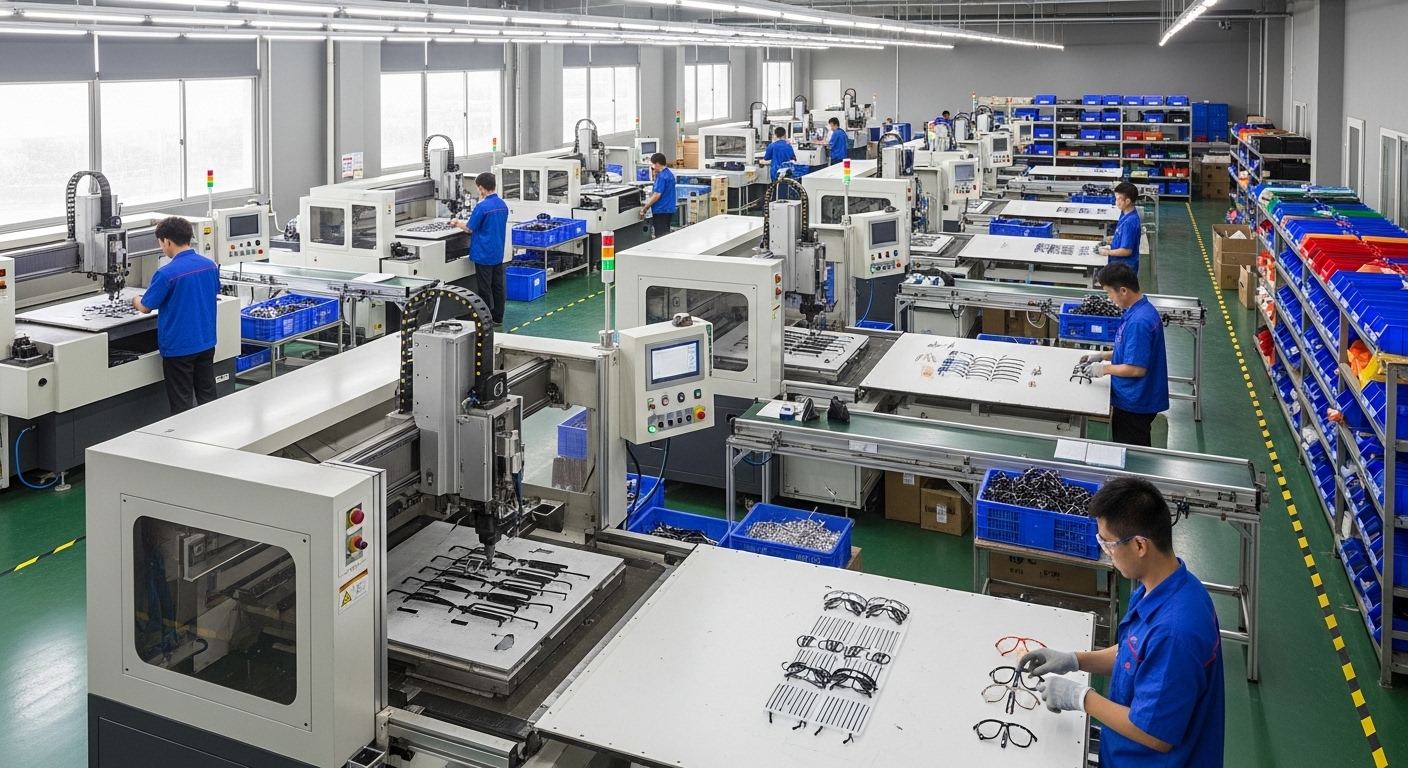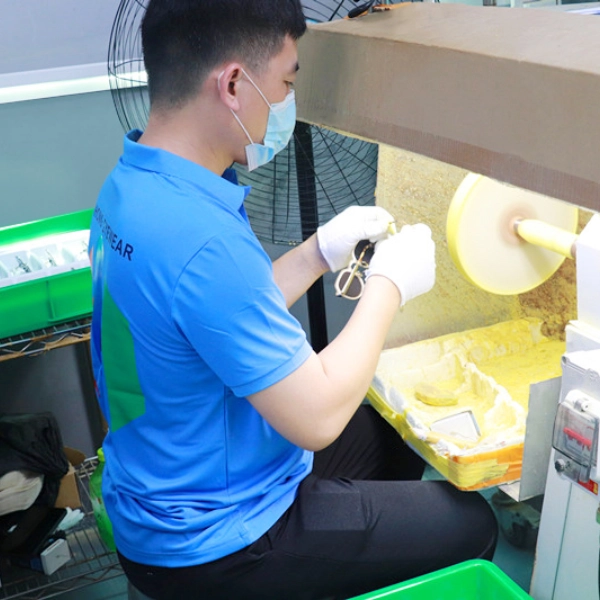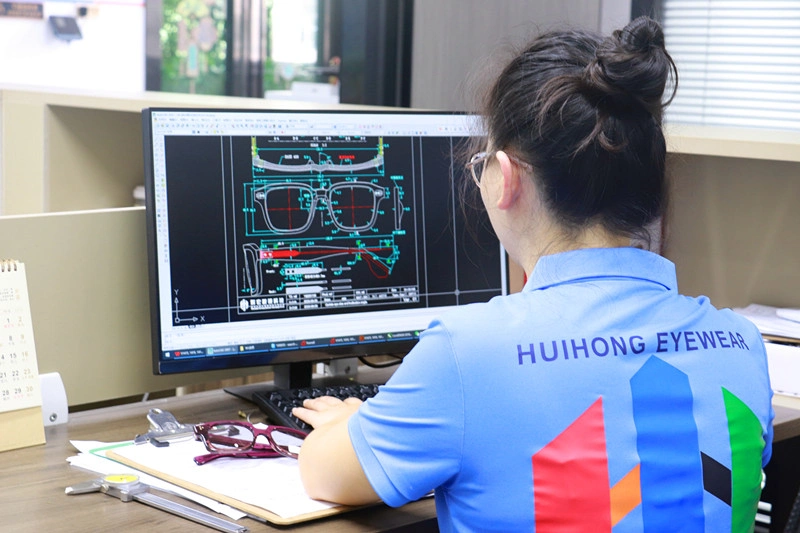
If you are sourcing custom eyewear, the first manufacturing decision is usually OEM vs. ODM. Both models can produce high-end frames, but they differ in design ownership, tooling investment, minimum order quantity, launch speed, and market exclusivity. For brand owners, the right choice depends on how much of the frame must belong to you—and how quickly you need to launch.
What OEM Means in Eyewear Manufacturing
OEM (Original Equipment Manufacturing) means the brand owns the design direction. You provide a tech pack, CAD files, reference sample, or detailed concept. The factory develops technical drawings, builds tooling if needed, produces prototypes for approval, and then moves to bulk production.
With OEM, the frame silhouette and mold are built to your specification. This is the right path when the shape itself is the brand asset—the reason customers recognize your product. OEM usually requires higher tooling investment and a larger MOQ, but it delivers full design ownership and market exclusivity.
For premium eyewear, OEM is common in acetate, titanium, and metal frames, where material behavior, tolerances, and finishing quality directly affect the final product.
What ODM Means in Eyewear Manufacturing
ODM (Original Design Manufacturing) starts with an existing factory platform. The factory has already designed, tooled, and tested a frame shape. You customize it through acetate colorways, metal finishes, lens tints, logo application, and packaging.
ODM is faster and more accessible. It usually avoids new mold costs and supports lower minimum order quantities, making it useful for brands testing a new category or launching a first collection. The trade-off is that the base silhouette is factory-owned and may be offered to other brands in different markets.
ODM works best when your brand identity lives mainly in color, material finish, lens choice, and logo execution rather than in a completely new frame architecture.
OEM vs. ODM: The Practical Difference
The simplest way to compare them is to ask who controls the design and who carries the risk.
OEM gives you ownership, exclusivity, and full creative control. It requires more time, higher tooling investment, and a larger production commitment. It suits established brands, designer labels, and owners with a clear, defensible design direction.
ODM gives you speed, lower entry cost, and proven engineering. It limits structural ownership and exclusivity. It suits brands entering eyewear, testing demand, or launching quickly with a distinct surface identity.
Many successful brands use a hybrid approach. They start with ODM customization to validate a silhouette, then move a bestseller into full OEM development with exclusive tooling. This protects cash flow early while preserving the option to own the design later.
Why Material Changes the Decision
In eyewear, the manufacturing model cannot be separated from the material.
Acetate offers rich color depth, pattern layering, and a premium hand feel. It is labor-intensive but often more accessible for brands exploring full OEM development with handcrafted differentiation.
Titanium delivers lightweight comfort, corrosion resistance, and excellent long-term fit retention. It typically requires CNC milling or precision laser cutting, which raises tooling and development costs. Full OEM titanium projects are best suited to brands with a validated design and a clear premium position.
Metal frames offer slim profiles and efficient tooling for multiple variants, but demand controlled plating, coating, or PVD finishing to achieve a premium surface.
A manufacturer that works across all three materials can guide you toward the right model instead of forcing a titanium-level tooling commitment onto an acetate concept.
Four Questions Before You Choose
Before requesting quotations, answer these four questions.
First, how much of the silhouette must belong to you? If the shape is the brand asset, OEM is the honest path. If the brand expression lives in color, finish, lens, and logo, ODM can work.
Second, what stage is the design in? A resolved tech pack is ready for OEM quotation. A mood board and reference images are better served by an ODM or hybrid conversation first.
Third, what is the cost of being wrong? ODM lowers the financial exposure of testing a shape. OEM lowers the risk of building a brand on a shape another brand can access.
Fourth, does the factory’s material expertise match the model? A factory strong in acetate hand-finishing may not be equally strong in titanium tolerance control. Execution matters more than the OEM or ODM label.
Where Huihong Eyewear Fits
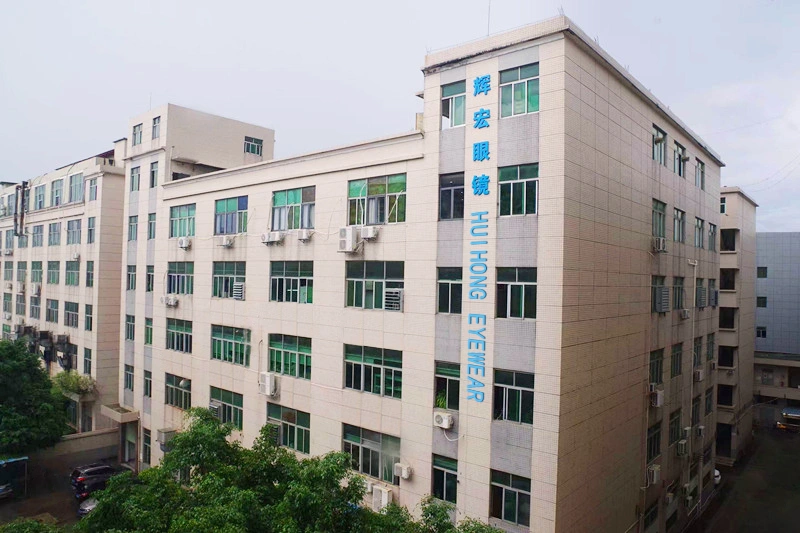
Huihong Eyewear is a specialized manufacturer dedicated to the design, development, and OEM/ODM production of high-end eyewear. Since our founding, we have collaborated with independent brands, designer labels, and premium retailers worldwide.
We specialize in acetate, titanium, and metal frames, with a strong capability in custom production. From concept prototyping to bulk delivery, we support brands through every step—with flexibility, speed, and precision. Our clients span Japan, Korea, Europe, and North America, many of whom return not just for quality, but for trust and shared value.
Our business is built around custom eyewear manufacturing, not stock inventory. We do not sell ready-made frames off a shelf. Every project begins with a conversation about design intent, material direction, and the right manufacturing path—OEM, ODM, or a staged hybrid—for your brand’s current stage and long-term identity.
If you are evaluating OEM vs. ODM eyewear manufacturing for an upcoming collection, share your design direction, material preference, and target positioning. We will help you map the model, timeline, and development route that protects both your brand identity and your cash flow.