Introduction
China produces over 70% of the world’s eyewear frames, making it the undisputed global hub for optical frame manufacturing. For eyewear brands, retailers, and distributors, sourcing from Chinese optical frame manufacturers offers unmatched advantages in scale, material diversity, and cost efficiency.
But with thousands of suppliers across multiple industrial clusters, finding the right manufacturing partner—one that understands your brand standards, quality requirements, and business goals—requires more than just comparing price quotes. This guide provides a practical framework for evaluating optical frame manufacturers in China, covering key sourcing criteria, regional strengths, and the critical questions every buyer should ask before placing an order.
Understanding China’s Optical Frame Manufacturing Landscape
China’s eyewear industry is organized around specialized industrial clusters, each with distinct strengths:
Zhejiang Province (Wenzhou & Yiwu) – Widely recognized as the epicenter of Chinese eyewear manufacturing, this region produces over 60% of the nation’s optical frames. Wenzhou is particularly renowned for mid-to-high-end acetate and metal frames, combining traditional craftsmanship with modern design innovation. The region’s tightly integrated supply chains—with local access to cellulose acetate sheets, titanium alloys, and precision tooling—reduce lead times and lower costs.
Guangdong Province (Shenzhen & Guangzhou) – Known for innovation and export-readiness, Guangdong manufacturers specialize in advanced materials such as titanium alloys, memory metals, and hybrid designs that combine metal, acetate, and advanced polymers. Facilities here often feature state-of-the-art CNC machinery and automated polishing lines.
Jiangsu Province (Danyang) – Often called “China’s Eyewear Capital,” Danyang produces approximately 40% of all optical frames globally. This cluster excels in high-volume, cost-efficient manufacturing using standardized processes.
Key Criteria for Evaluating Optical Frame Manufacturers
1. Certifications and Compliance
Prioritize manufacturers with internationally recognized certifications. ISO 9001 (quality management) is the baseline standard. For products entering European or North American markets, verify CE marking, FDA registration, and compliance with REACH and RoHS regulations—especially concerning dyes, coatings, and plasticizers used in acetate frames. These credentials signal a commitment to consistent quality control and material traceability throughout production.
2. Production Capabilities and Technical Expertise
Assess the manufacturer’s equipment and technical capabilities:
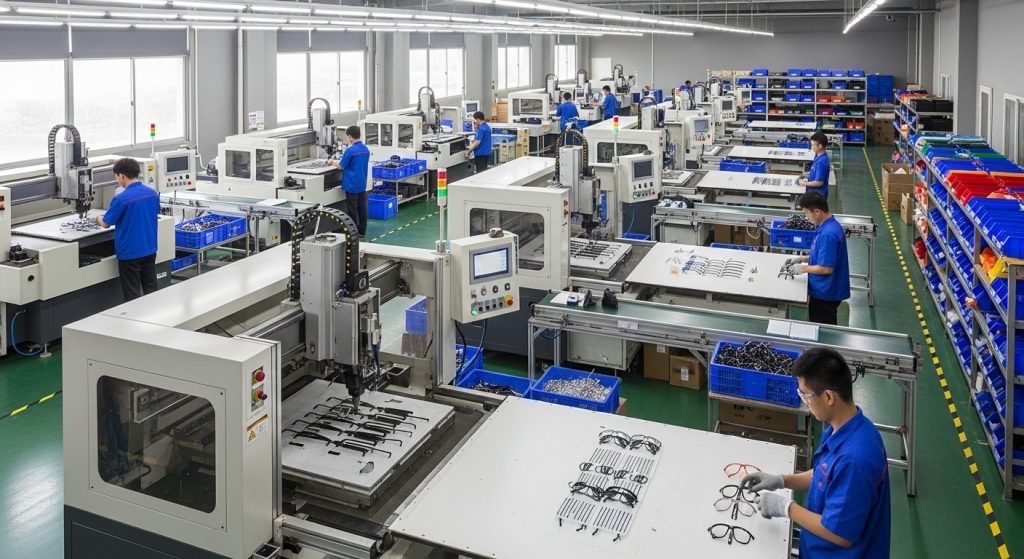
In-house tooling: Manufacturers with in-house mold-making and CNC machining can reduce non-recurring engineering fees and accelerate sampling.
Material expertise: Verify the supplier can provide documentation for acetate grades, titanium alloy specifications, and plating details.
Finishing processes: Look for capabilities in electroplating, automated polishing, and surface finishing that ensure consistent aesthetics and durability.
A facility size of at least 2,000 m² dedicated to optical production is a strong indicator of specialization.
3. OEM/ODM Support
For brands looking to launch or expand their product lines, OEM (Original Equipment Manufacturing) and ODM (Original Design Manufacturing) capabilities are essential. Top-tier manufacturers offer end-to-end support including:
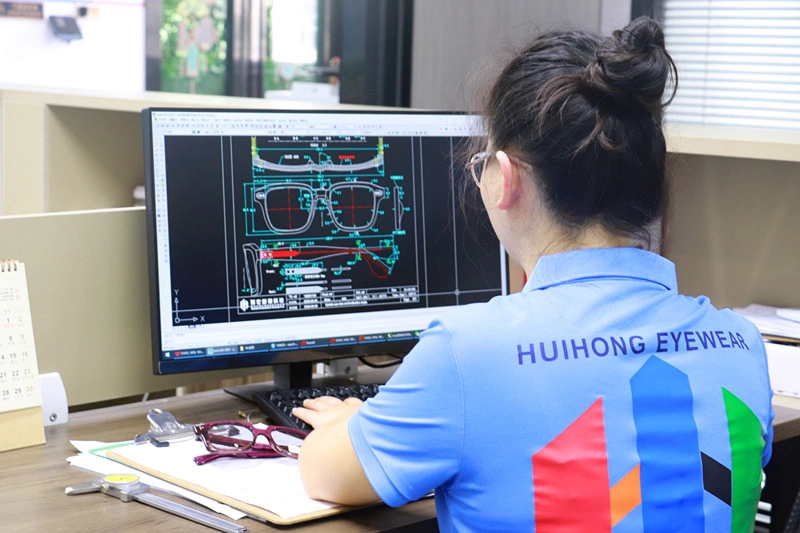
CAD modeling and 3D rendering
Color matching (Pantone/CMYK)
Material selection (bio-acetate, recycled metals, TR90)
Branding integration—from laser-engraved logos to custom packaging
Some manufacturers support buyers who want to launch their own brand, add logos to existing models, or develop fully customized eyewear collections.
4. Minimum Order Quantity (MOQ)
MOQs vary significantly across suppliers and should align with your inventory strategy:
New or niche brands: Look for suppliers offering MOQs between 100–300 units.
Established retailers: Larger manufacturers may require 500+ units but offer better unit pricing.
Some suppliers offer flexible options, including ready-stock frames with no MOQ for testing purposes.
5. Quality Assurance and Testing Protocols
Robust quality control should include incoming material inspections, in-line process checks, and final product testing. Request details about:
Hinge durability tests (minimum 5,000 cycles)
Coating abrasion resistance
Material biocompatibility and nickel release testing
Always request physical samples before placing bulk orders to assess fit, finish, and structural integrity firsthand.
The Optical Frame Manufacturing Process: What to Expect
Understanding the production workflow helps you set realistic expectations and communicate effectively with your manufacturing partner:
1. Design & Development – The process typically begins with design collaboration. Manufacturers with strong R&D teams can transform your sketches or concepts into CAD models and 3D renderings. For ODM projects, you may select from existing platforms and customize features.
2. Sampling – Physical samples are produced for approval. This critical stage verifies material quality, fit, and finish before moving to production.
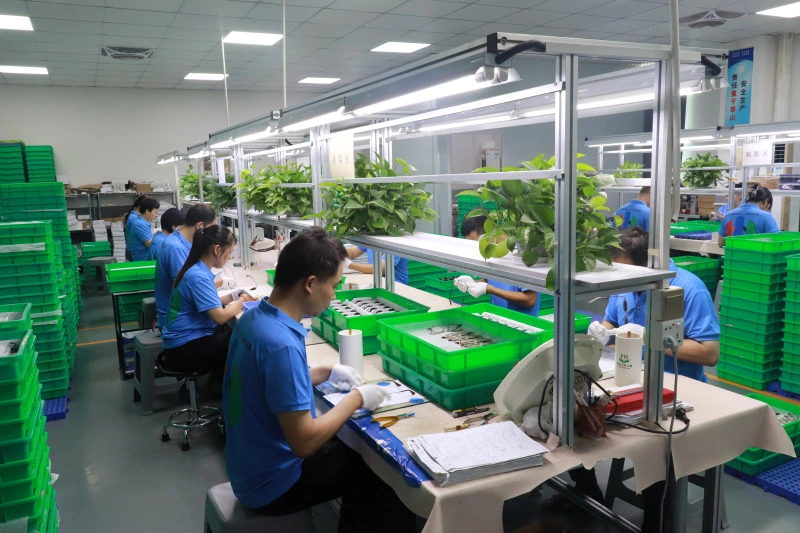
3. Bulk Production – Once samples are approved, production commences. Manufacturers with vertically integrated facilities can handle everything from raw material processing to final assembly under one roof.
4. Quality Control & Packaging – Finished frames undergo final inspections before packaging and shipping. Many reputable manufacturers work with third-party agencies like SGS or Bureau Veritas for independent verification.
Common Sourcing Mistakes to Avoid
Assuming the sample matches bulk production – This is one of the most costly mistakes in eyewear sourcing. A polished sample reflects what a supplier is capable of producing with concentrated attention. Bulk production runs under different pressures: time, cost, and margin optimization. Without documented material tracking and consistent quality control, sample quality may not translate to bulk shipments.
Confusing trading companies with factories – While some trading companies offer valuable services, the key question is control: who controls raw materials? Who controls the production timeline? Who takes responsibility when issues arise?
Overlooking communication depth – English fluency is not a proxy for professionalism. The conversations that matter are about understanding your business model—retail sell-through rates, seasonal inventory windows, and the cost of delays.
Conclusion
Sourcing from optical frame manufacturers in China offers tremendous opportunities for brands seeking quality, customization, and cost efficiency. Success depends on choosing a partner that combines technical expertise, robust quality systems, and a genuine understanding of your business needs.
By evaluating suppliers against the criteria outlined in this guide—certifications, production capabilities, OEM/ODM support, MOQ flexibility, and quality assurance—you can build a manufacturing relationship that delivers consistent results and supports your brand’s long-term growth.